Agentic AI

What is Agentic AI?

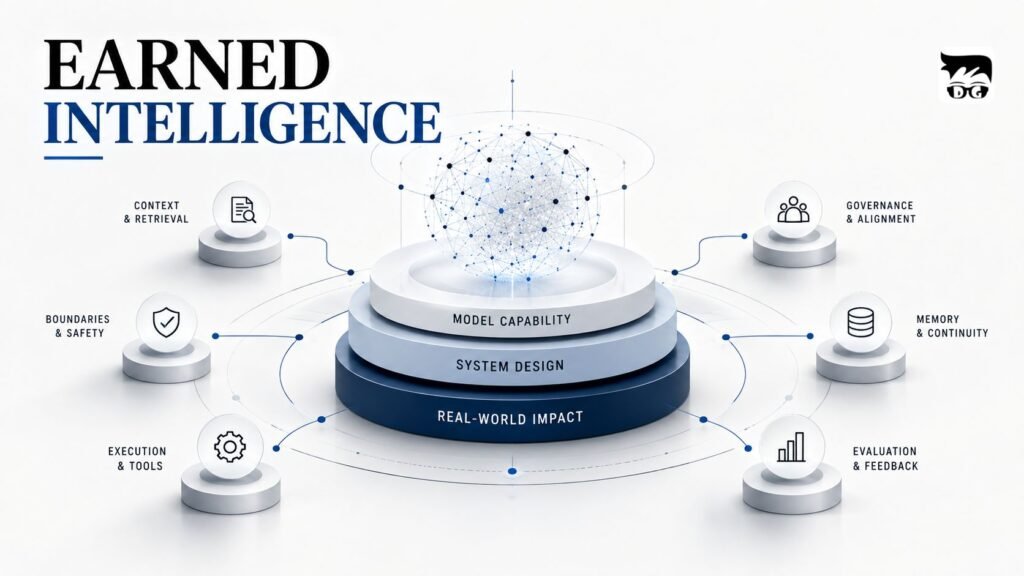
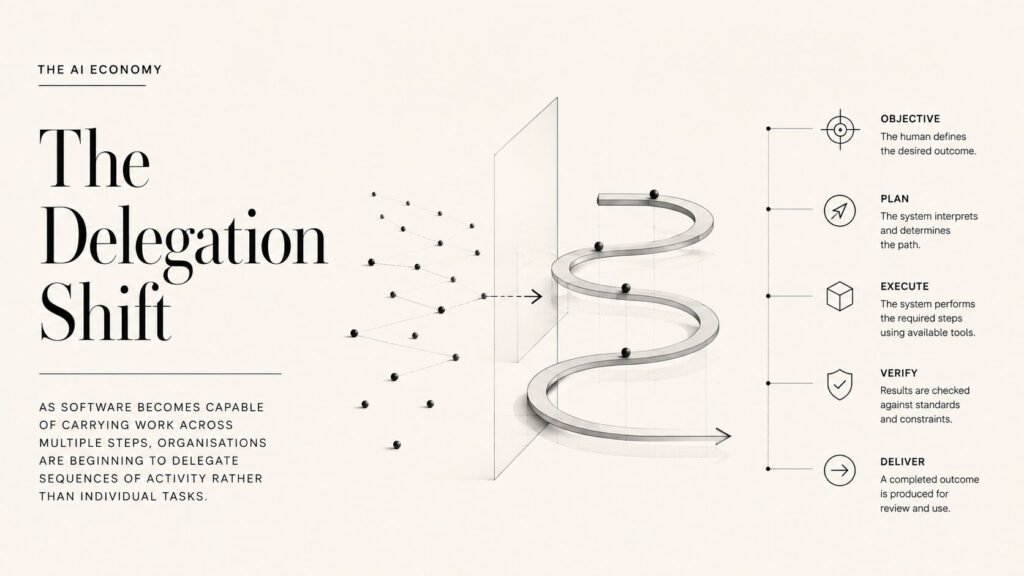
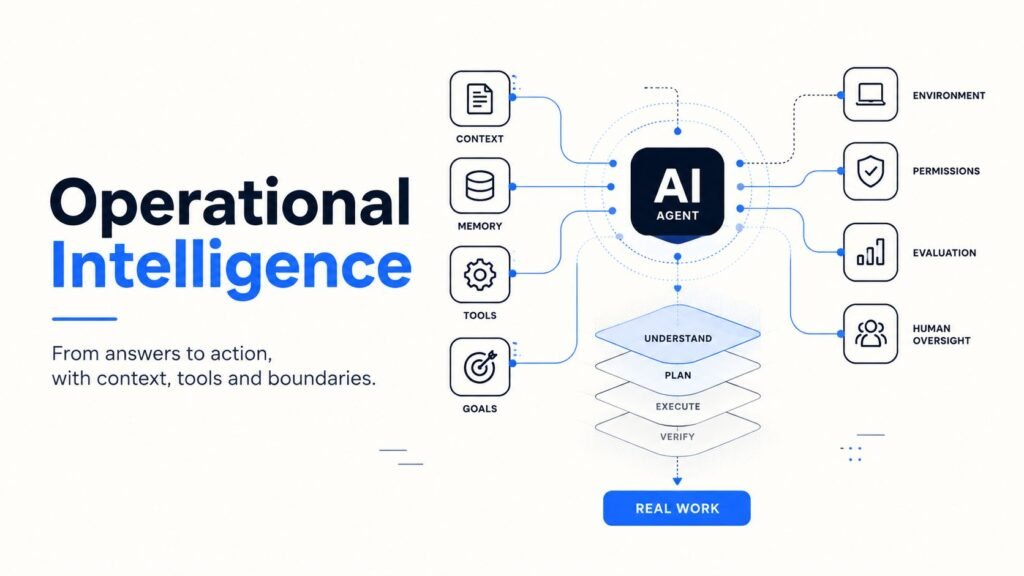
Agentic AI describes systems capable of autonomous decision-making and goal-oriented action. These AI agents can plan, reason, execute complex workflows, and interact with tools, data, and even other agents—often with minimal or no human input.

How Agentic AI Works

  • LLMs serve as reasoning engines for agents
  • Planning modules deconstruct goals into steps
  • Tools and APIs are connected via tool use interfaces
  • Memory enables context retention and learning
  • Orchestration frameworks coordinate multi-agent workflows

Benefits of Agentic AI

  • Enables true AI autonomy in operations
  • Boosts productivity across technical and research tasks
  • Improves adaptability in changing environments
  • Enables scalable collaboration between agents

Examples & Use Cases

  • DevOps agents managing deployments and alerts
  • Code-writing agents collaborating on software tasks
  • Research agents conducting autonomous investigations
  • Digital assistants automating multi-step business operations

Tools & Platforms

  • AutoGen (Microsoft)
  • CrewAI and LangGraph
  • Devika and OpenDevin
  • AgentOps and MetaGPT
Minimalist flat-style illustration showing the DeepSeek V3.2 architecture with a dual-layer circular core. The inner ring represents the Lightning Indexer, and the outer ring visualizes Sparse Attention pathways, all displayed in DataGuy brand colors

DeepSeek V3.2 Explained: Architecture, Sparse Attention, Reasoning & Enterprise Efficiency

DeepSeek V3.2 introduces DeepSeek Sparse Attention (DSA), a breakthrough that brings near-linear long-context scaling, faster inference, and GPT-5-level reasoning at significantly lower cost. This expert guide breaks down the architecture, Lightning Indexer, MoE design, benchmarks, pricing, and enterprise use cases.

DeepSeek V3.2 Explained: Architecture, Sparse Attention, Reasoning & Enterprise Efficiency Read More »

Minimalist editorial illustration of Claude Opus 4.5 showing a geometric AI core emitting structured thinking blocks, long-context memory ribbons, agentic workflow nodes, and tool-system modules

Claude Opus 4.5: The Complete Technical Breakdown of Architecture, Hybrid Reasoning, Long Context, Agents & Enterprise Capabilities

Claude Opus 4.5 isn’t just another model upgrade — it’s Anthropic’s strongest attempt yet at building an enterprise-grade intelligence layer that can reason deeply, orchestrate tools, and sustain multi-hour workflows with near-human consistency.

Claude Opus 4.5: The Complete Technical Breakdown of Architecture, Hybrid Reasoning, Long Context, Agents & Enterprise Capabilities Read More »

A clean, vector editorial illustration representing Google’s Gemini 3 model.

Google Gemini 3: A Complete Technical Breakdown of Architecture, Reasoning, and Multimodal Intelligence

An in-depth guide to Moonshot AI’s Kimi K2 Thinking — a trillion-parameter Mixture-of-Experts model designed for deep reasoning, tool integration, and scalable agentic intelligence. This article breaks down its architecture, training pipeline, efficiency optimizations, benchmarks, and real-world research implications.

Google Gemini 3: A Complete Technical Breakdown of Architecture, Reasoning, and Multimodal Intelligence Read More »

Minimalist editorial illustration of Moonshot AI’s Kimi K2 Thinking model — abstract network of expert nodes representing trillion-parameter reasoning in a Mixture-of-Experts architecture.

GPT-5.1: Architecture, Adaptive Reasoning, Multimodal Intelligence, Security & Enterprise Impact

An in-depth guide to Moonshot AI’s Kimi K2 Thinking — a trillion-parameter Mixture-of-Experts model designed for deep reasoning, tool integration, and scalable agentic intelligence. This article breaks down its architecture, training pipeline, efficiency optimizations, benchmarks, and real-world research implications.

GPT-5.1: Architecture, Adaptive Reasoning, Multimodal Intelligence, Security & Enterprise Impact Read More »

Minimalist editorial illustration of Moonshot AI’s Kimi K2 Thinking model — abstract network of expert nodes representing trillion-parameter reasoning in a Mixture-of-Experts architecture.

Kimi K2 Thinking — Moonshot AI’s Trillion-Parameter Reasoning Model Explained

An in-depth guide to Moonshot AI’s Kimi K2 Thinking — a trillion-parameter Mixture-of-Experts model designed for deep reasoning, tool integration, and scalable agentic intelligence. This article breaks down its architecture, training pipeline, efficiency optimizations, benchmarks, and real-world research implications.

Kimi K2 Thinking — Moonshot AI’s Trillion-Parameter Reasoning Model Explained Read More »