Skip to content
DataGuy
  • AI
    • AI BLOGS
    • GEN AI
    • AI DEFINITIVE GUIDE
    • PROMPT ENGINEERING
    • AI HUB
    • AI RESEARCH
  • ML
  • BIG DATA
  • DATA SCIENCE
  • BLOG
  • OFFBEAT
    • GAMIFY
    • THE MELODY
    • BYTES
    • SHORTS
    • THE SYMPHONY
    • WHISPERS
    • AVATARS
    • ROADMAPS
    • SPOTLIGHT
    • GLOSSARY
  • ANALYTICS
    • VIDEOS
      • DATA RIDDLES
      • DATA HUB
      • DATA INSIGHTS
      • DATA IN ACTION
      • DATA EXPLAINERS
      • DATA ANALYTICS
    • DATA ROLES
    • DATA INTERVIEW QUESTIONS
  • EBOOKS STORE
  • ABOUT
  • CONTACT
  • LOGIN
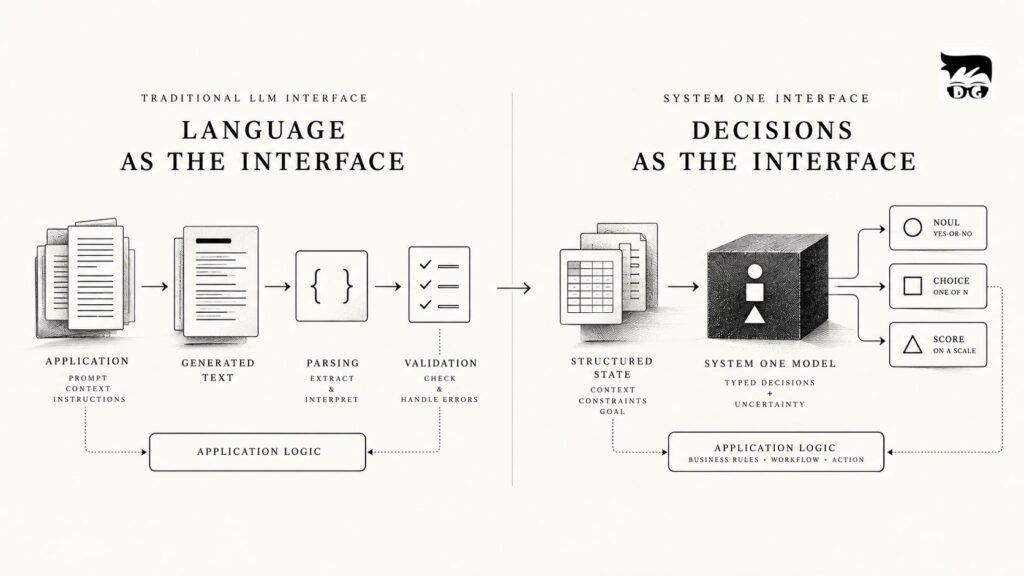
Diagram comparing a language model interface that generates text with a System One interface that produces typed decisions for software.

What Typed Intelligence Means for Software Architecture

Pradeep Kumar K / 7 October 2026

Typed intelligence changes how software can consume model output, moving from generated language that applications interpret toward structured decisions that can be composed directly with code.

What Typed Intelligence Means for Software Architecture Read More »
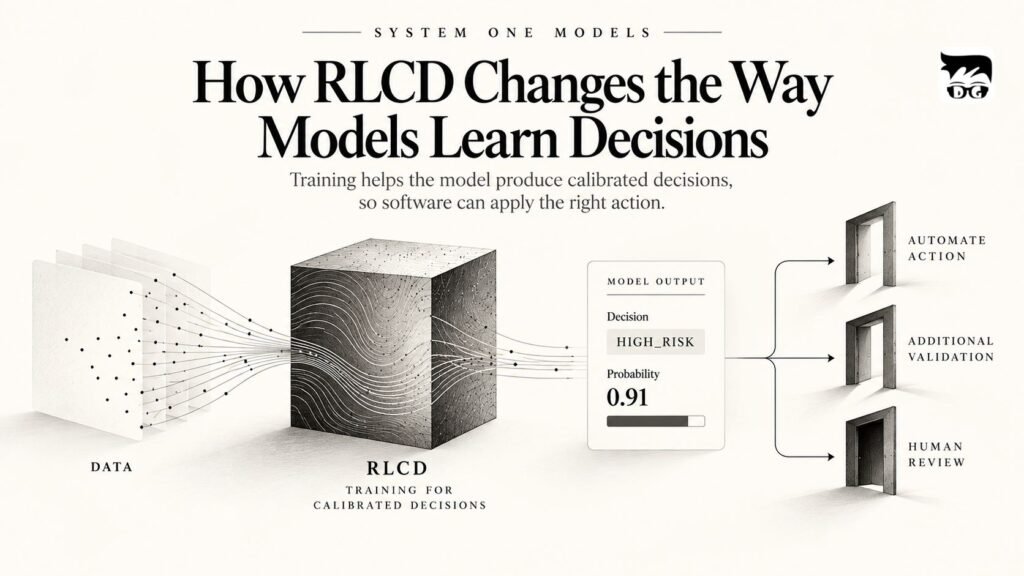
Editorial diagram showing RLCD training a System One Model to produce calibrated decisions with probability for software.

How RLCD Changes the Way Models Learn Decisions

Pradeep Kumar K / 6 October 2026

RLCD changes the training objective from producing correct answers to learning decisions with meaningful uncertainty. Explore what this means for System One Models.

How RLCD Changes the Way Models Learn Decisions Read More »

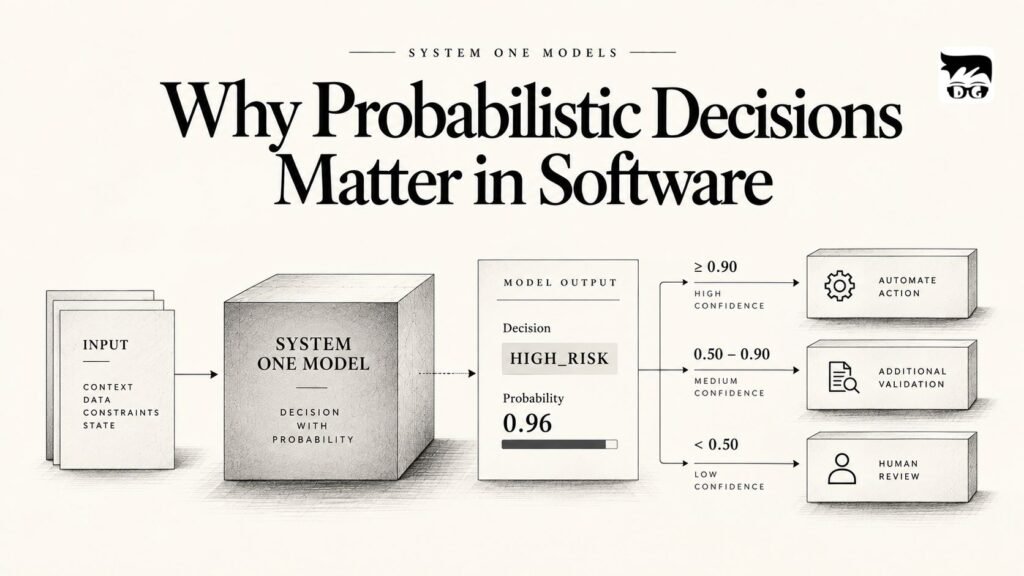
Diagram showing a System One Model producing a decision with probability before software determines the appropriate action.

Why Probabilistic Decisions Matter in Software

Pradeep Kumar K / 6 October 2026

System One Models can expose decisions together with probability and confidence, giving software a way to incorporate uncertainty into execution logic.

Why Probabilistic Decisions Matter in Software Read More »

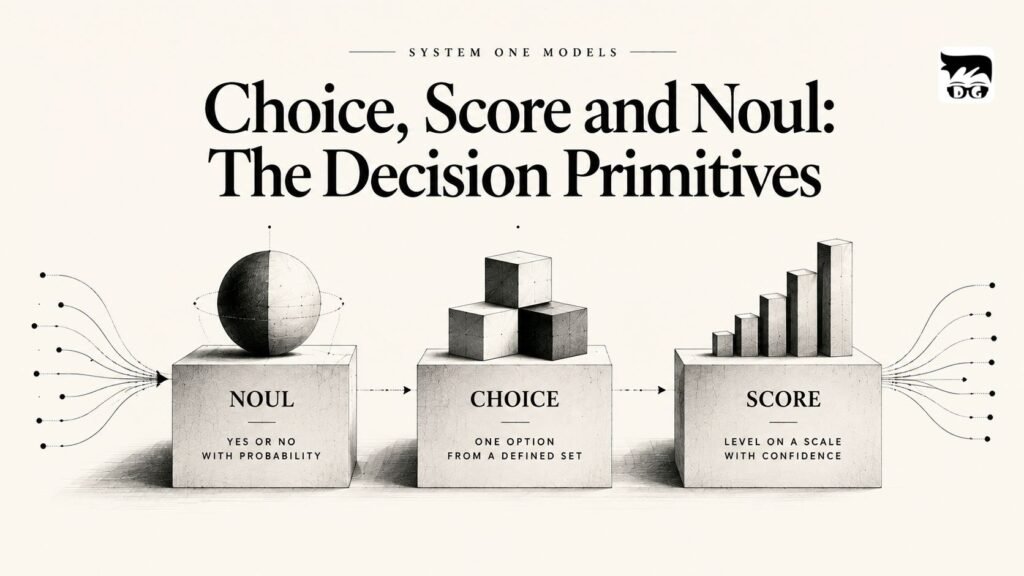
Diagram illustrating Noul, Choice, and Score as decision primitives in System One Models.

Choice, Score and Noul: The Decision Primitives

Pradeep Kumar K / 6 October 2026

System One Models use decision primitives such as Choice, Score and Noul to represent structured judgments that software can use directly.

Choice, Score and Noul: The Decision Primitives Read More »

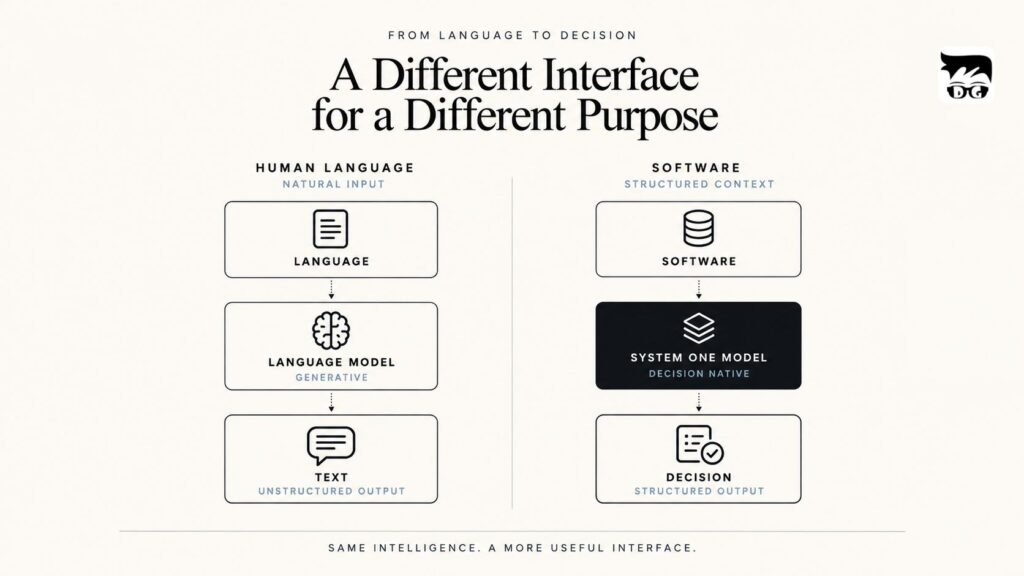
Diagram comparing language models that produce text with System One Models that produce structured decisions for software.

What Are System One Models?

Pradeep Kumar K / 22 September 2026

System One Models are designed to make structured, probabilistic decisions that software can use directly. Explore TypeSafe AI’s approach and the idea of machine-native intelligence.

What Are System One Models? Read More »

  • Data Science Interview Questions
  • Data Analytics Interview Questions
  • Data Engineering Interview Questions
  • ML Engineering Interview Questions
  • Business Intelligence Interview Questions
  • Big Data Engineering Interview Questions
  • Data Architect Interview Questions
  • Web Analytics Interview Questions

Copyright © 2026 DataGuy