
The Governance Economy
Governance is more than compliance. It is economic infrastructure. Explore why governance may become one of the most important productive systems of the intelligence economy.
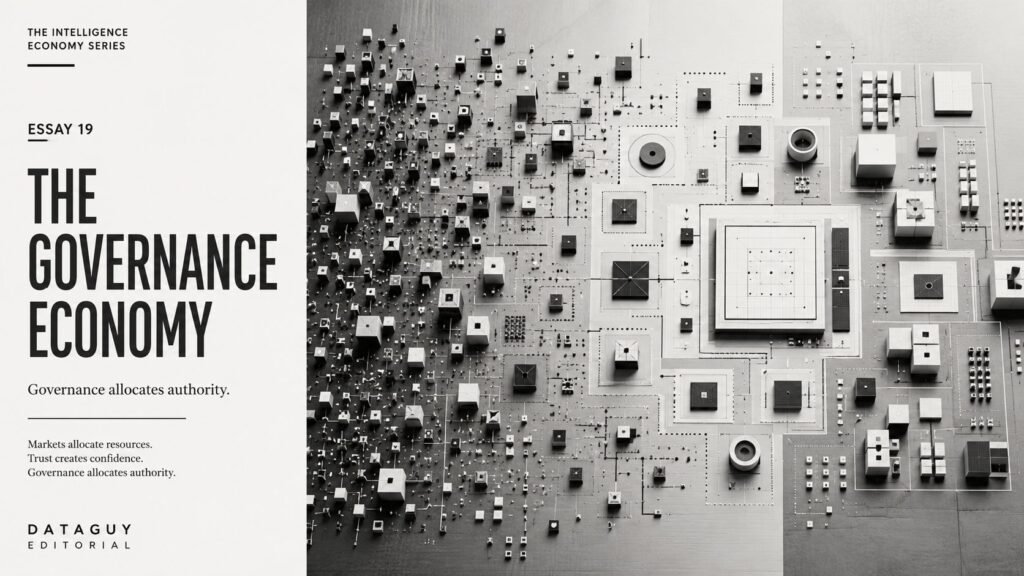
Governance is more than compliance. It is economic infrastructure. Explore why governance may become one of the most important productive systems of the intelligence economy.
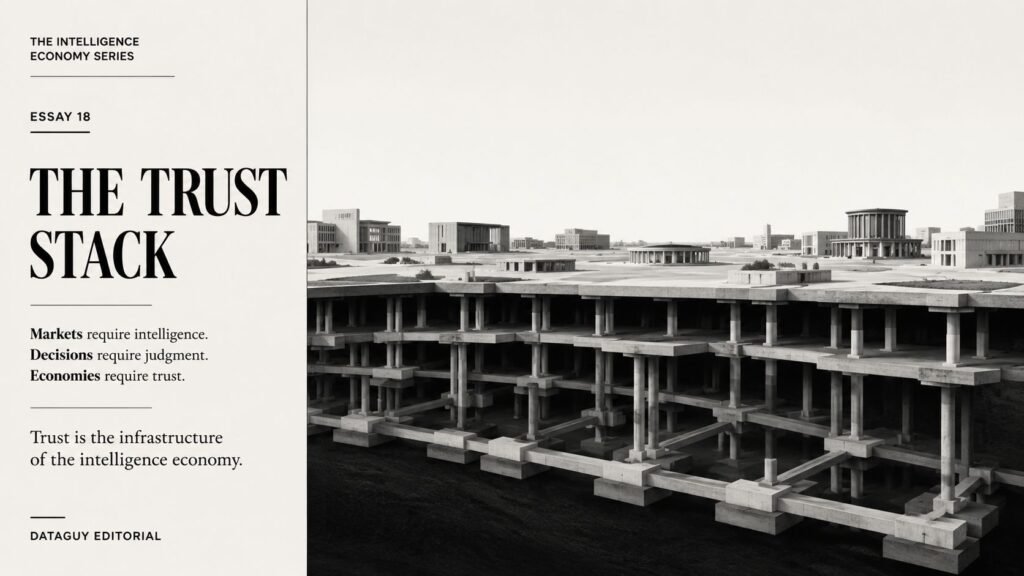
Trust is more than a social virtue. It is economic infrastructure. Discover why trust reduces uncertainty, lowers transaction costs, and enables intelligence and judgment to create value at scale.
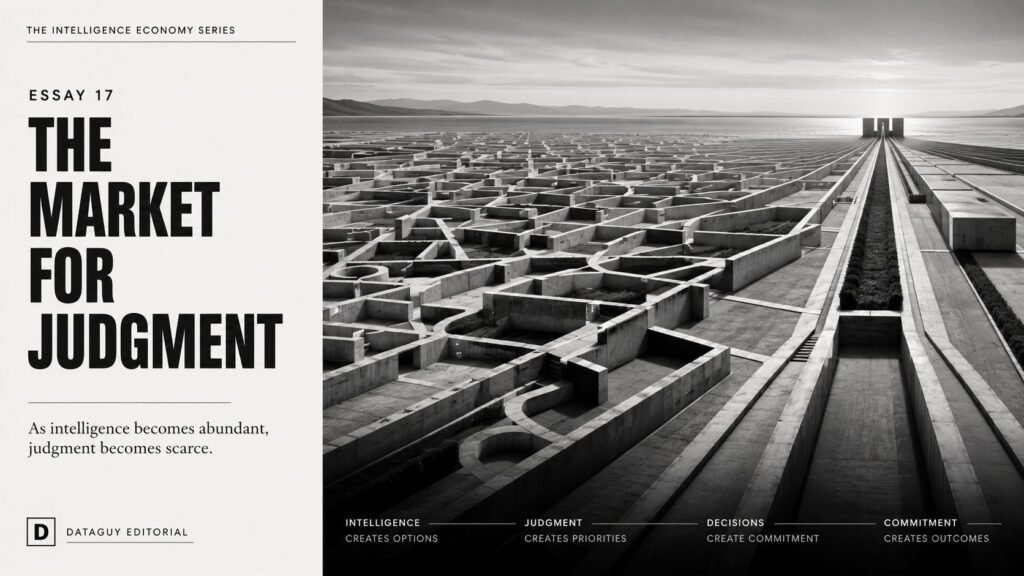
As intelligence becomes cheaper, faster, and more widely available, competitive advantage shifts toward the capability that intelligence cannot fully replace judgment. The intelligence economy may ultimately reward organizations not for what they know, but for how they decide.

The next stage of the intelligence economy is not automation. It is market formation. Discover how intelligence is becoming a tradable economic resource and why intelligence marketplaces may transform how organizations create, distribute, and consume intelligence.

Industrial economies coordinated labor. Information economies coordinated knowledge. Intelligence economies coordinate intelligence. Discover why coordination may become the defining capability of the intelligence economy.
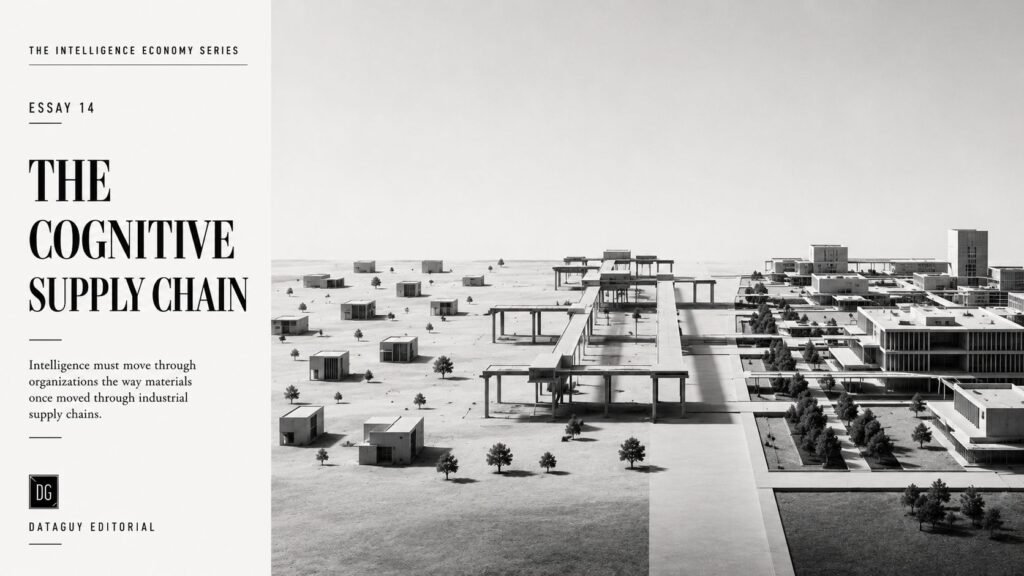
Every major economic era builds infrastructure for its most valuable resource. Industrial economies built supply chains for materials. Information economies built systems for knowledge. The intelligence economy may require something entirely new: a cognitive supply chain for intelligence itself.