
How TypeSafe Evaluates System One Workflows
TypeSafe evaluates System One Models inside structured software workflows rather than relying only on conventional model benchmarks. Here is what that methodology measures and leaves open.
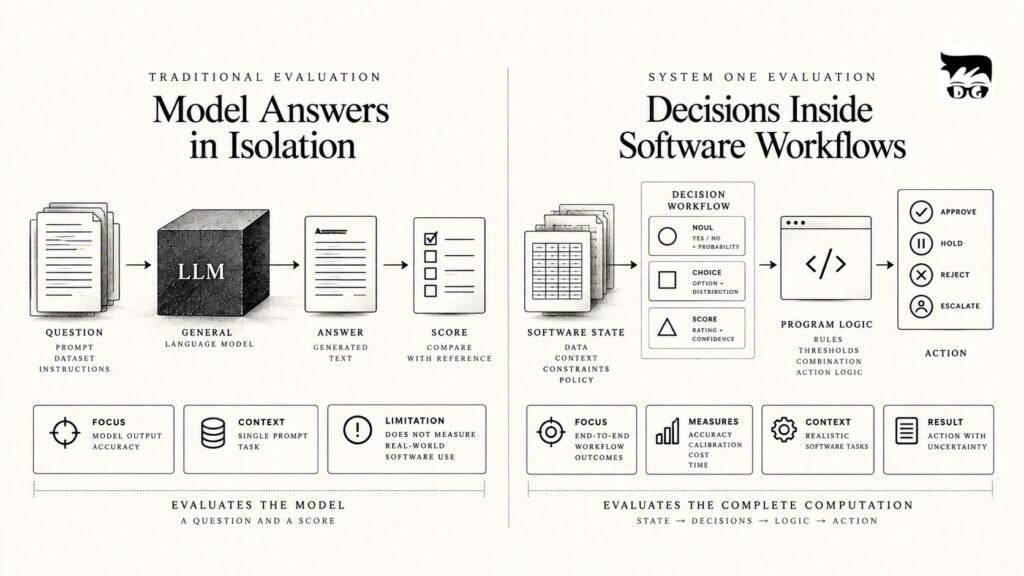
TypeSafe evaluates System One Models inside structured software workflows rather than relying only on conventional model benchmarks. Here is what that methodology measures and leaves open.
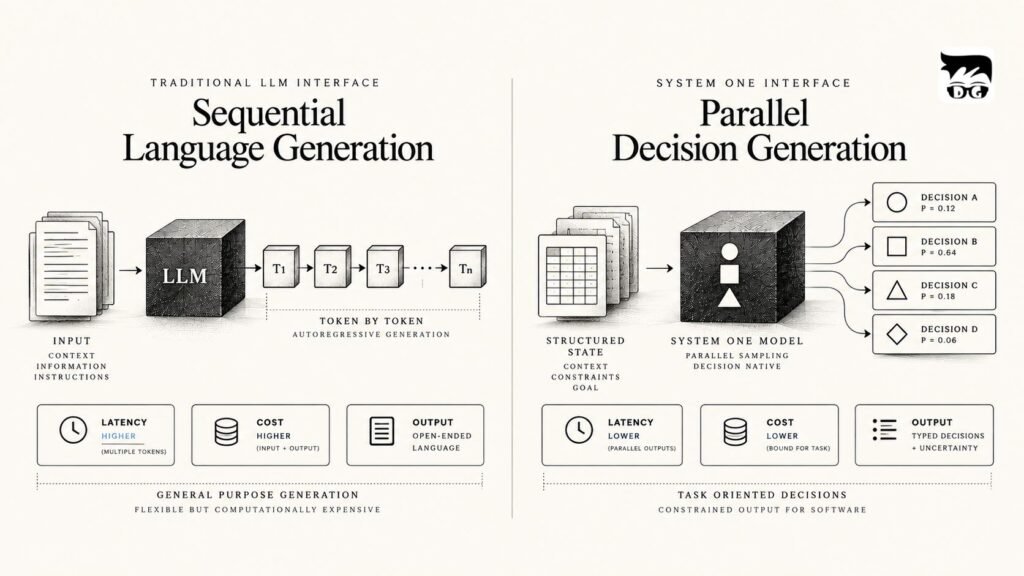
System One Models change the computational problem by focusing on bounded decisions rather than open-ended language generation. Explore what this could mean for latency, throughput, and inference economics.
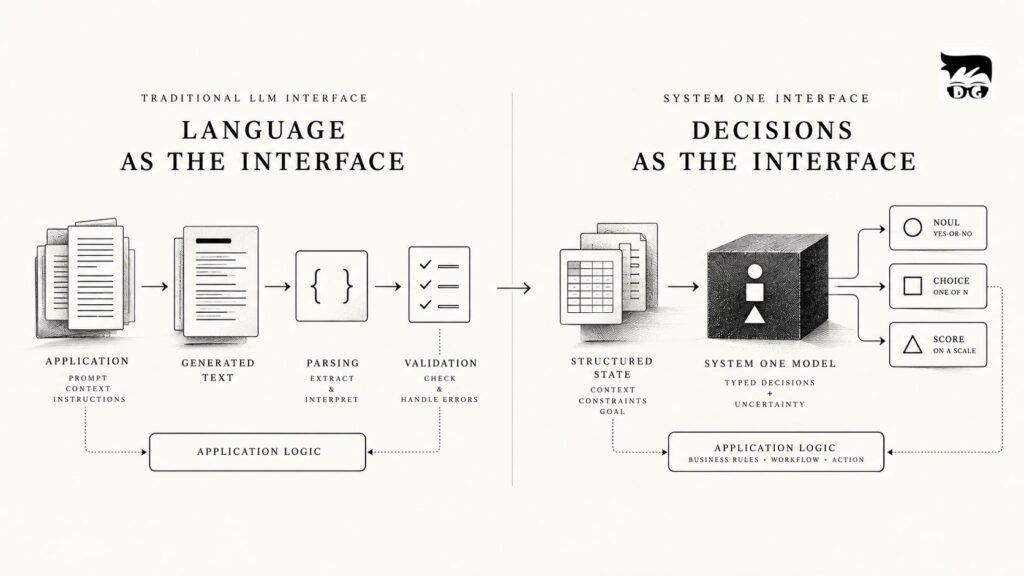
Typed intelligence changes how software can consume model output, moving from generated language that applications interpret toward structured decisions that can be composed directly with code.
What Typed Intelligence Means for Software Architecture Read More »
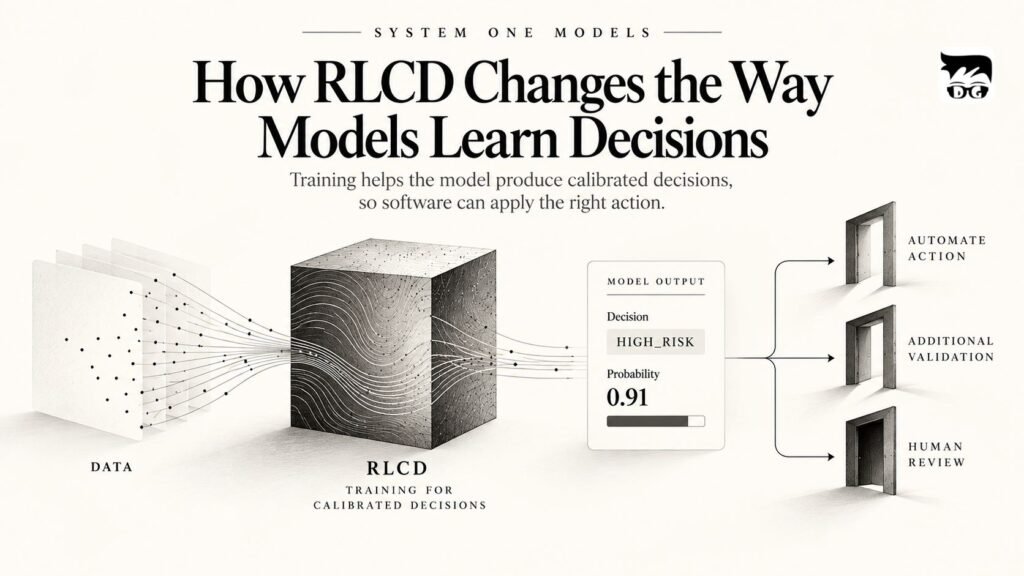
RLCD changes the training objective from producing correct answers to learning decisions with meaningful uncertainty. Explore what this means for System One Models.
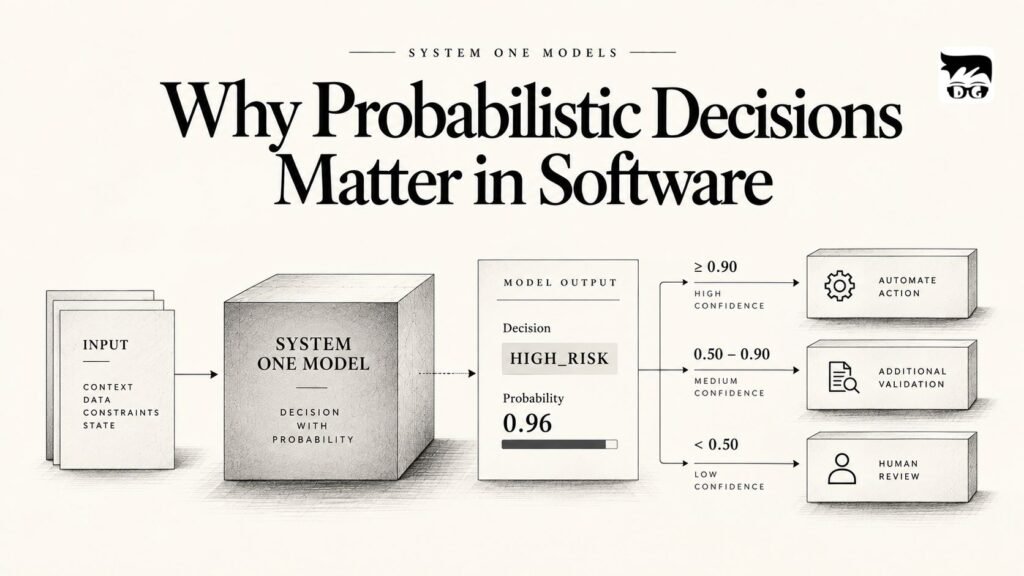
System One Models can expose decisions together with probability and confidence, giving software a way to incorporate uncertainty into execution logic.
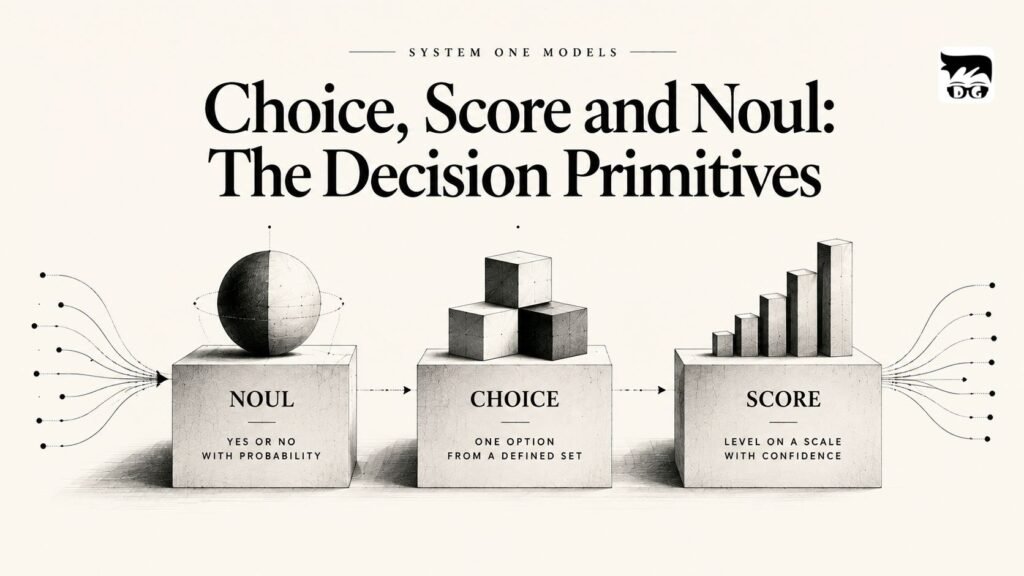
System One Models use decision primitives such as Choice, Score and Noul to represent structured judgments that software can use directly.