
The New Theory Of The Firm
The intelligence economy is reshaping the economics of coordination. Explore why firms exist, how intelligence changes organizational boundaries, and what the future firm may look like.
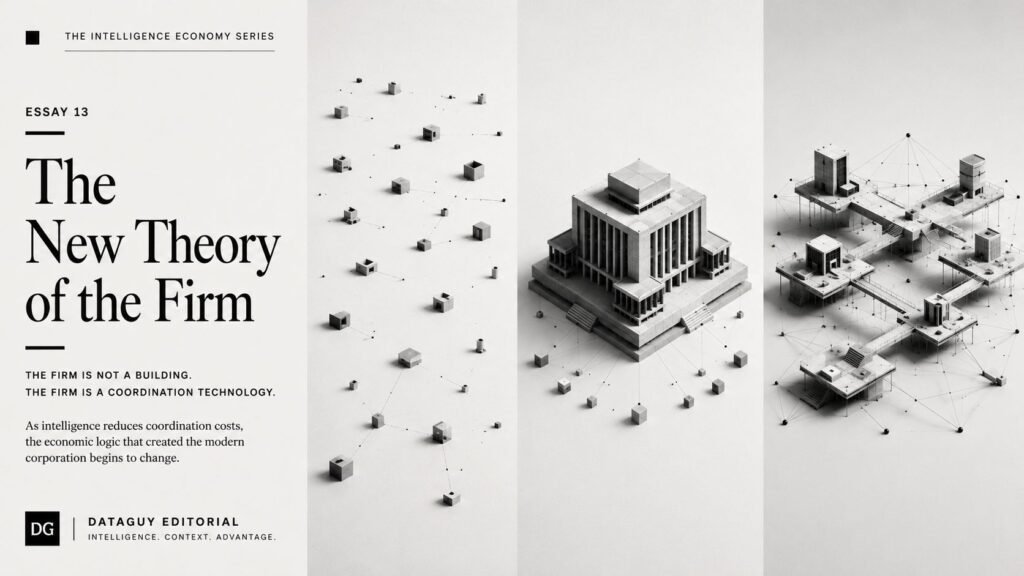
The intelligence economy is reshaping the economics of coordination. Explore why firms exist, how intelligence changes organizational boundaries, and what the future firm may look like.

As intelligence becomes abundant, competitive advantage shifts from information access to decision quality. Explore how decision infrastructure connects memory, context, reasoning, governance, and execution.

As intelligence becomes increasingly abundant and deployable, organizations face a new challenge: coordinating intelligence rather than managing information. Explore the rise of the intelligence organization and its implications for enterprise strategy, governance, and competitive advantage.
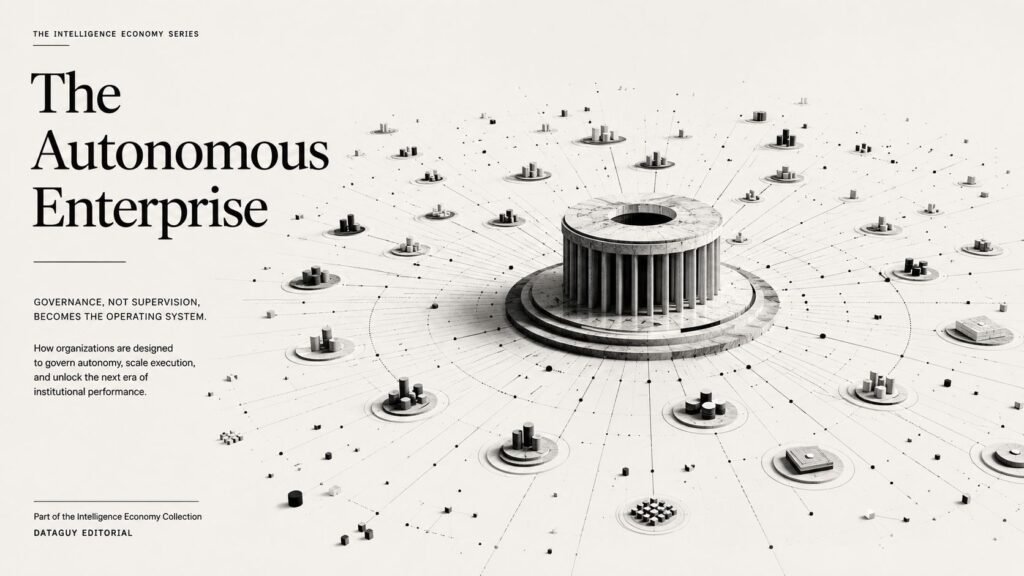
Explore how autonomous enterprises are reshaping organizational design. Learn why governance, delegation, and intelligent execution may become the foundation of the next generation of firms.
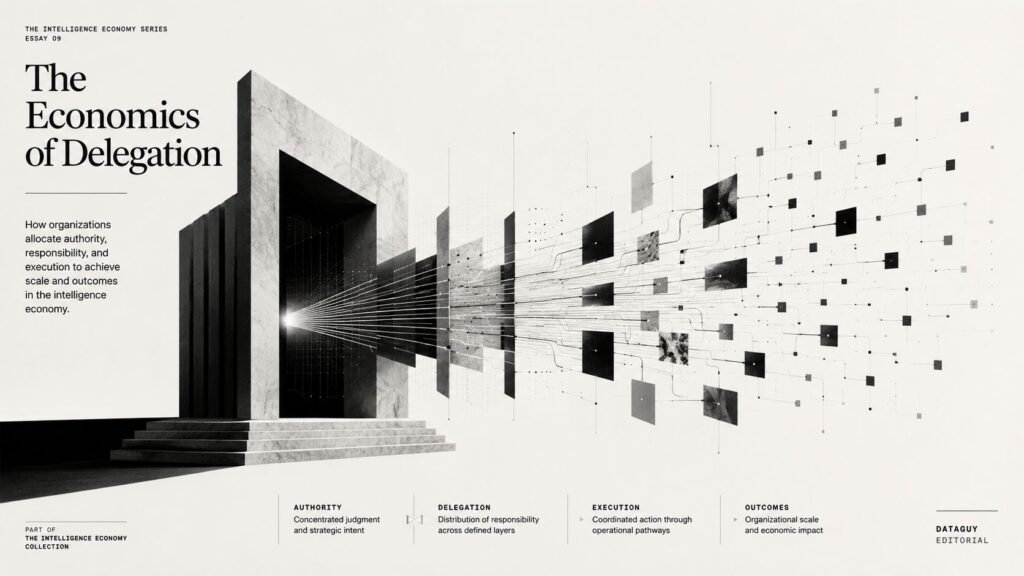
Delegation has always been the mechanism through which organizations scale. The intelligence economy introduces a new challenge: how should responsibility be allocated when productive capacity exists across both human and digital participants? This essay explores delegation as an economic system and argues that the future of organizational advantage lies in designing effective delegation architectures.
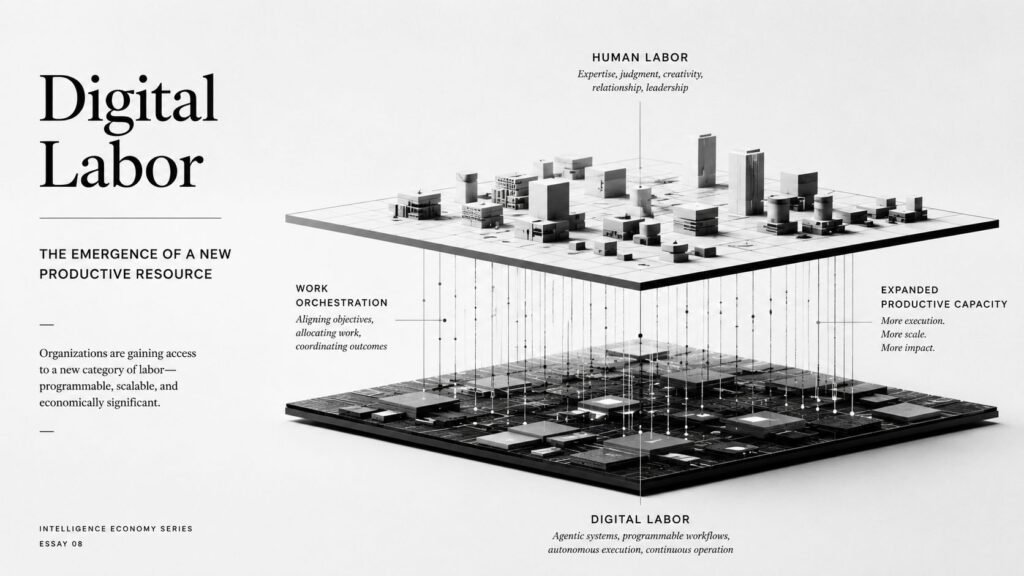
Digital labor represents a structural shift in how organizations access productive capacity. As agentic systems increasingly participate in operational work, firms gain access to a new category of labor that is programmable, scalable, and economically significant. This essay explores the organizational, economic, and institutional implications of a workforce that extends beyond human participation.