
The Intelligence Century
Agriculture enabled settlement. Industry enabled scale. Computing enabled information. Intelligence may become the next foundational infrastructure shaping economic development, institutional capacity, and human progress.
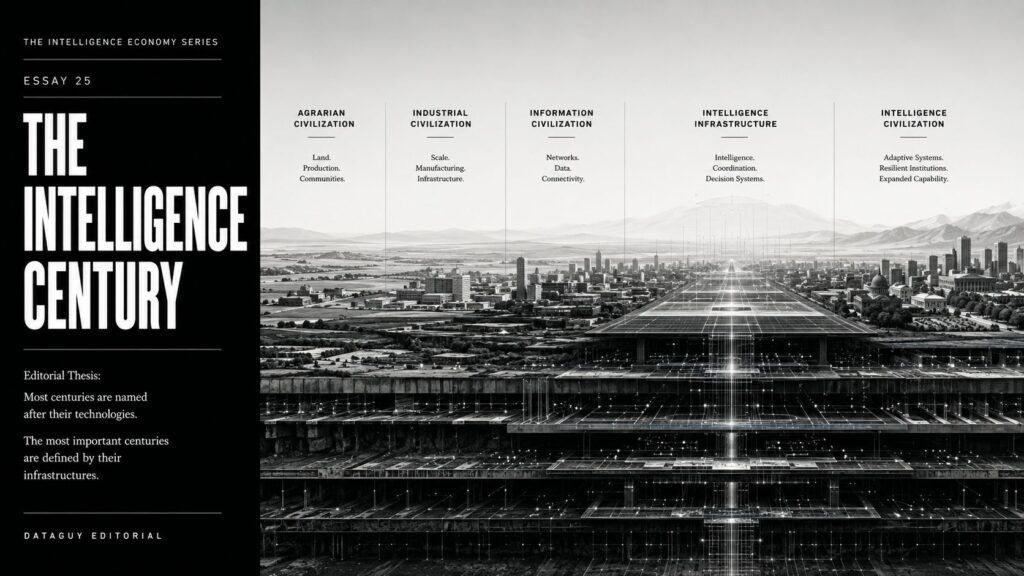
Agriculture enabled settlement. Industry enabled scale. Computing enabled information. Intelligence may become the next foundational infrastructure shaping economic development, institutional capacity, and human progress.
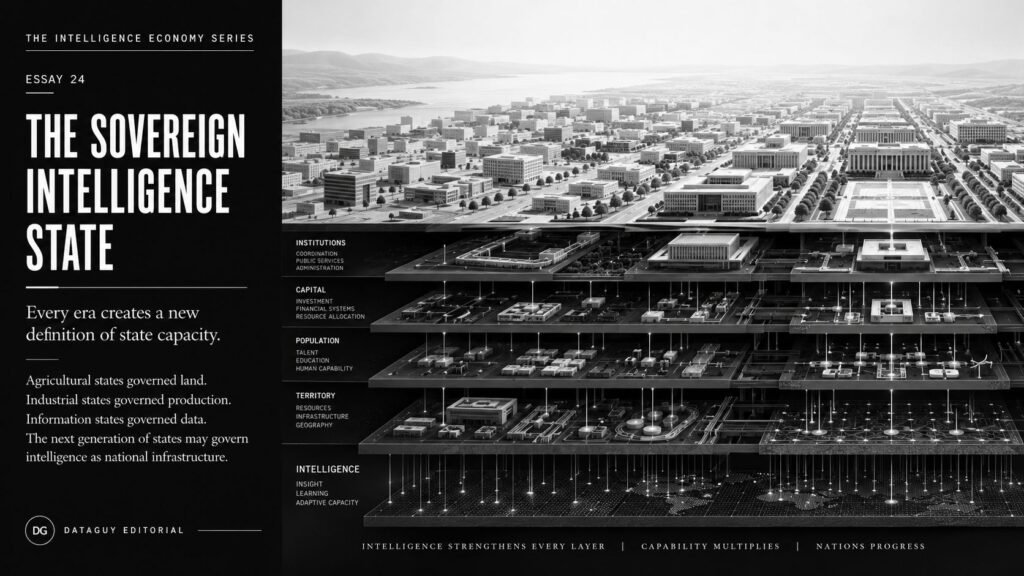
Industrial states organized around production. Information states organized around data. The next generation of states may organize around intelligence itself. As intelligence becomes a strategic national capability, governments increasingly face the challenge of integrating intelligence into the foundations of state capacity, economic competitiveness, and institutional effectiveness.
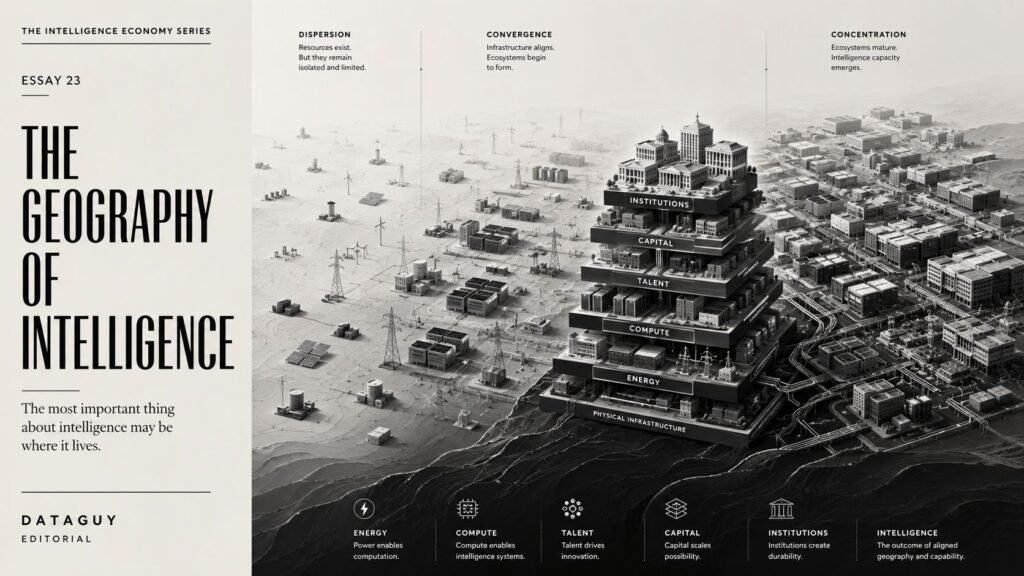
Intelligence appears weightless, digital, and globally accessible. Yet the infrastructure that creates intelligence remains rooted in geography. Energy, semiconductors, data centers, talent, capital, and institutions all exist in specific places. Understanding intelligence therefore requires understanding where intelligence is created, concentrated, and distributed.
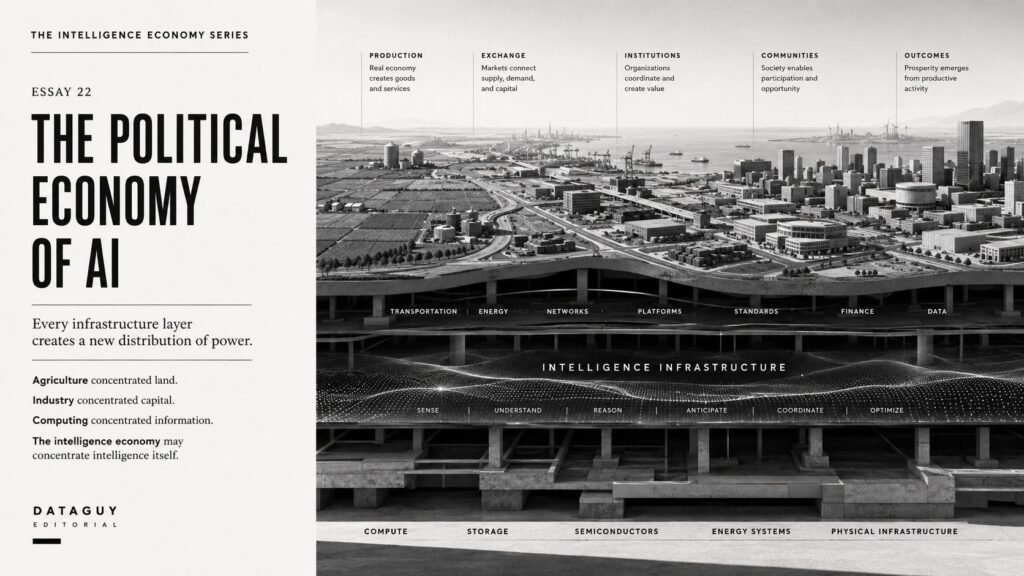
Agriculture created land economies. Industry created capital economies. Computing created information economies. The intelligence economy creates new systems for producing, distributing, and governing intelligence itself. Understanding AI therefore requires understanding the political economy emerging around intelligence infrastructure.
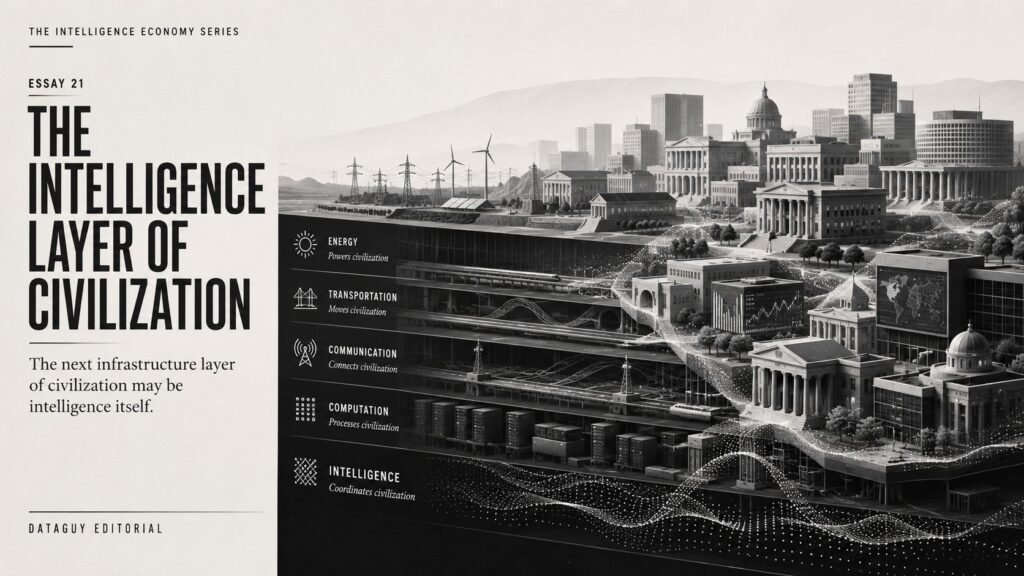
Every major civilization is built upon foundational infrastructure layers that enable coordination at scale. Agriculture created the food layer. Industry created the production layer. Computing created the information layer. The intelligence economy may be creating the next layer: intelligence itself.
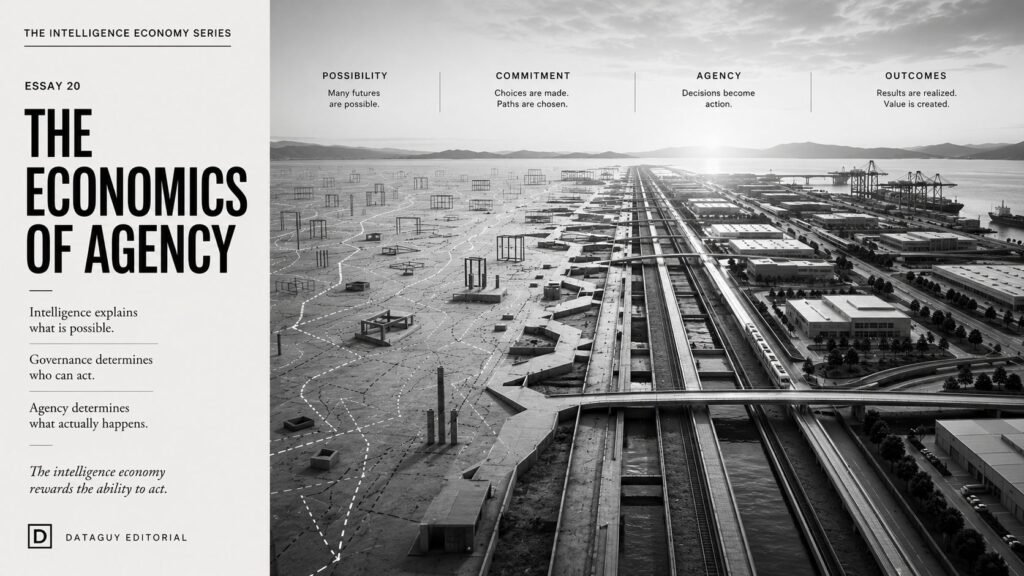
Industrial economies scaled labor. Information economies scaled knowledge. Intelligence economies increasingly scale agency. As intelligence becomes abundant and authority becomes more distributed, economic value shifts toward the capability to convert decisions into coordinated action.