

Machine intelligence did not emerge in isolation. It rests on capabilities developed across generations of scientific discovery, industrial production, computing, digital information and institutional organization. This concluding essay brings the series together to examine how these separate foundations became compatible, scalable and mutually reinforcing.
When machine learning produces capabilities that can be reused across tasks and applications, its role changes from solving individual problems to supporting a broader production system. This essay examines how foundation models, training, inference and deployment turn learned capabilities into reusable components, reshaping the economics of building and operating AI systems.
Machine learning established a new way to produce computational behaviour, but its potential depended on more than algorithms. This essay examines how specialised processors, distributed computing, data pipelines, software, energy and data centres turned learning into an engineered workload that could operate at increasing scale.
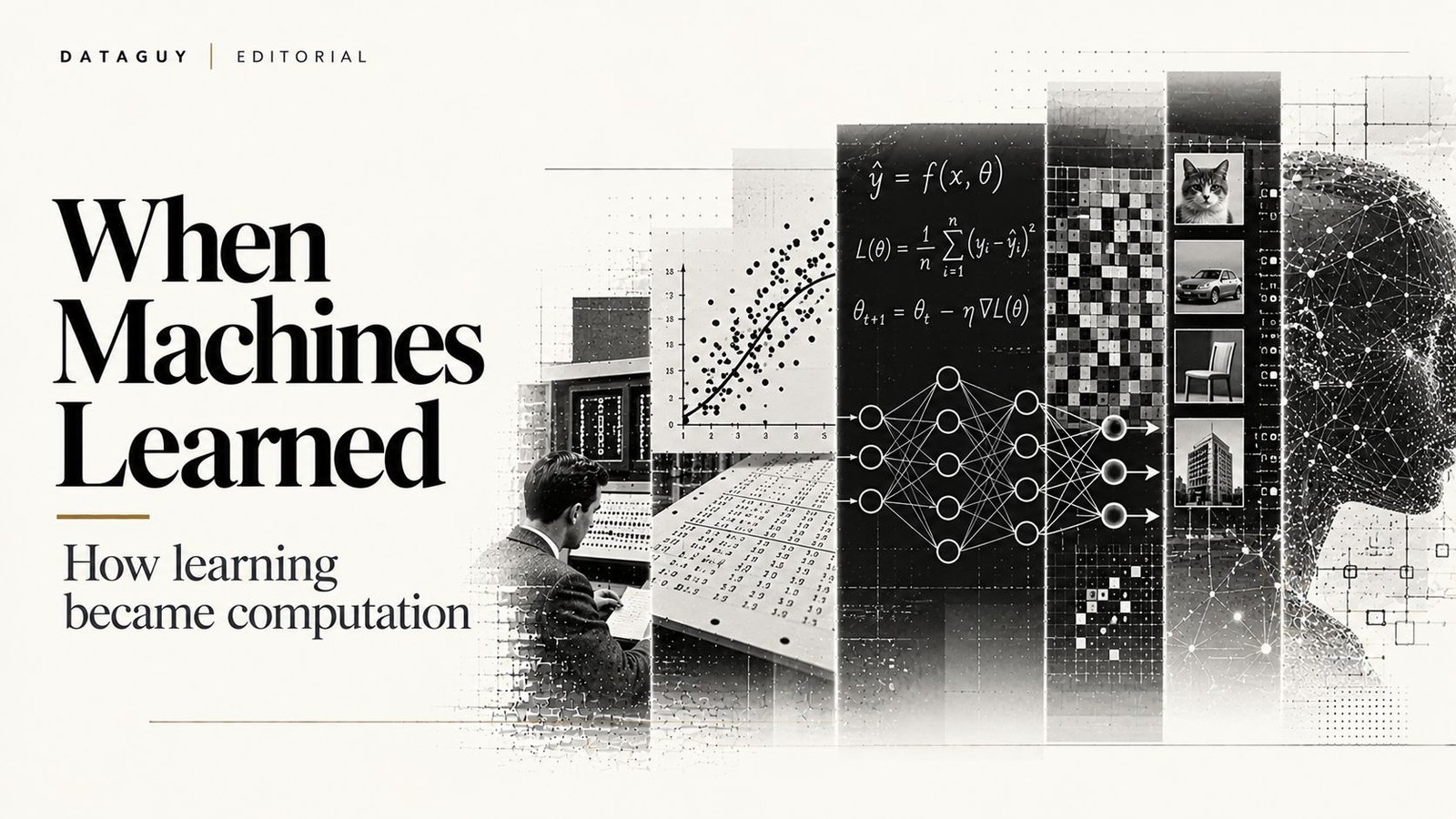
Programmable computers execute instructions, but many real-world problems are difficult to describe as explicit rules. This essay traces how statistics, optimization and neural networks enabled machines to learn patterns from examples, introducing a different way to produce computational behaviour.
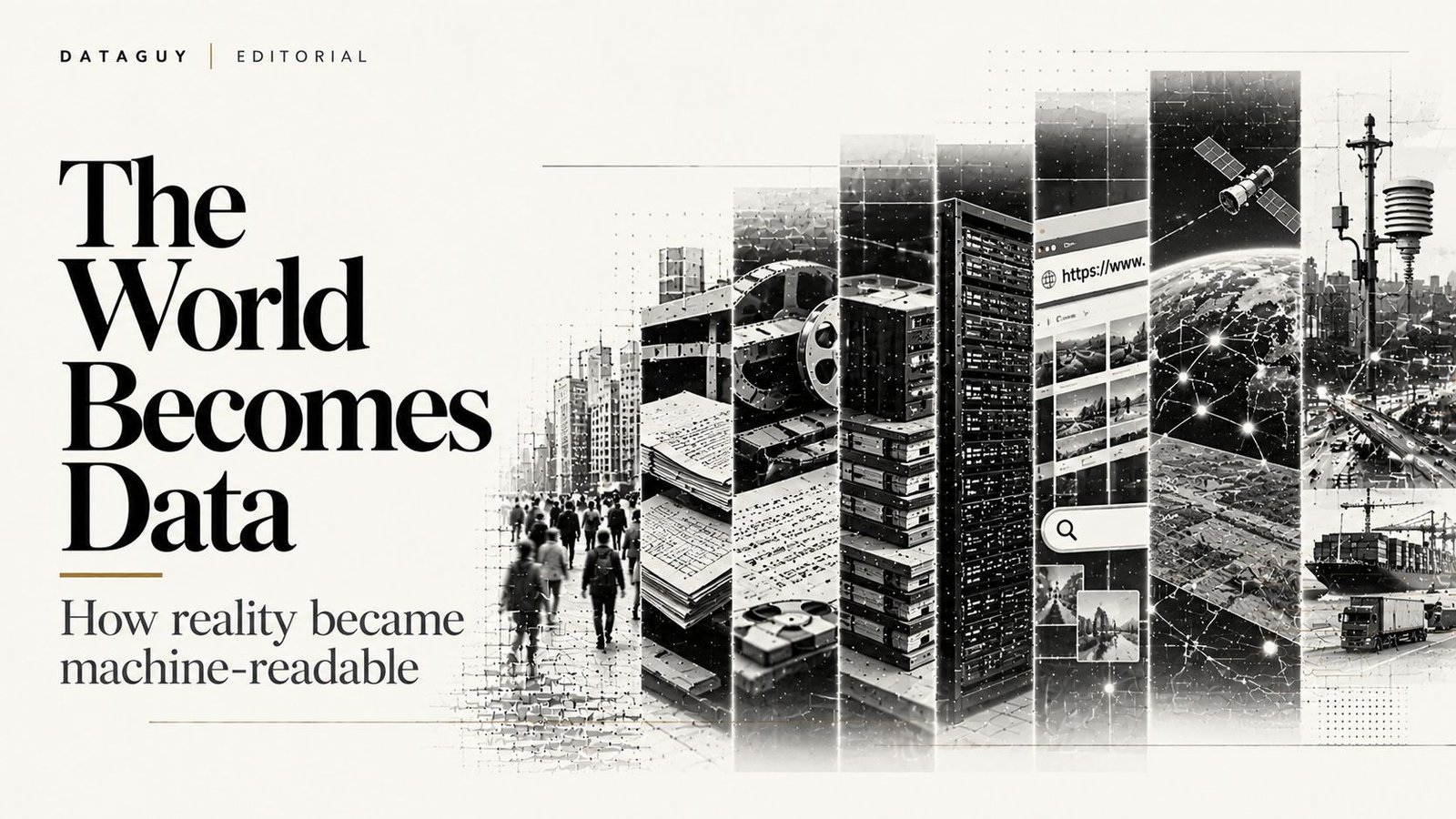
Connected computers created a system for moving information, but machine intelligence required something more: a world represented in forms computers could store, search and process. This essay explores how databases, digital media, enterprise systems, the web and sensors expanded the world's machine-readable record.
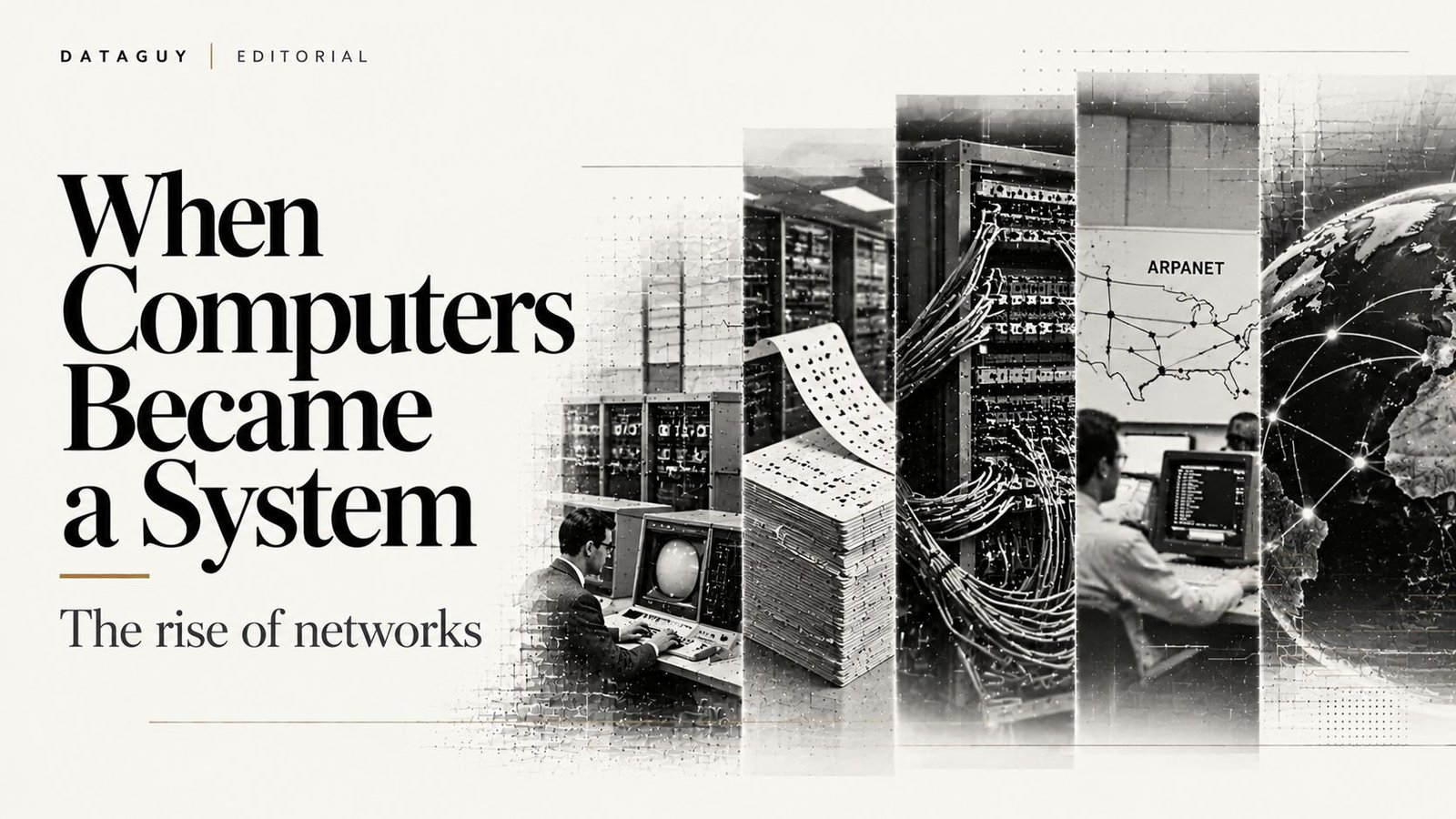
Programmable computers expanded what a single machine could do, but connecting machines changed what computing could accomplish as a system. This essay traces the development of networks, protocols and distributed computing, revealing how shared infrastructure made information and computation available across connected environments.
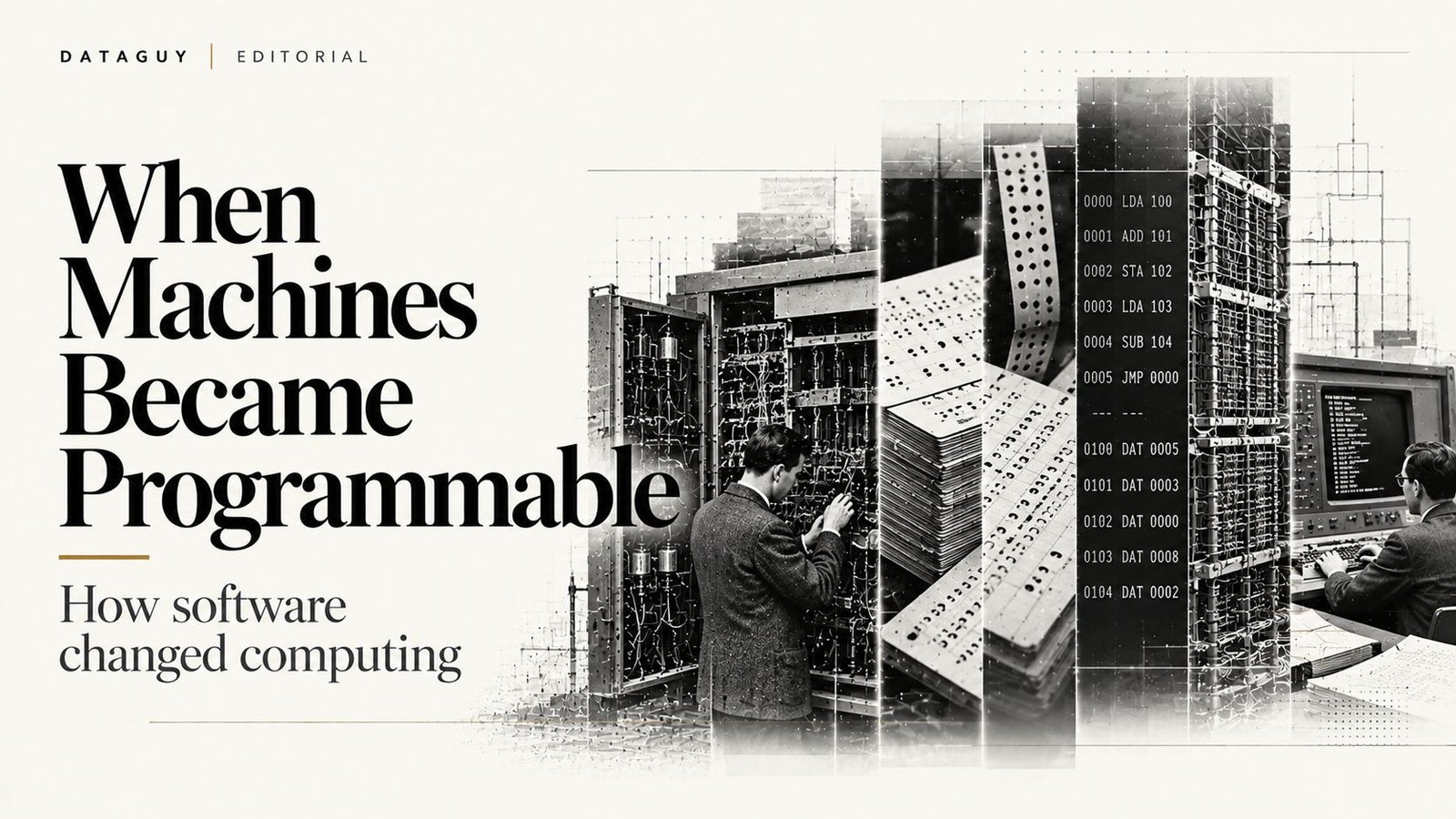
A computer became more than a machine built for a specific task when its instructions could be represented, stored and changed. This essay explores how programmability separated the machine from the procedure it executed, allowing software and computational knowledge to be reused across different problems.
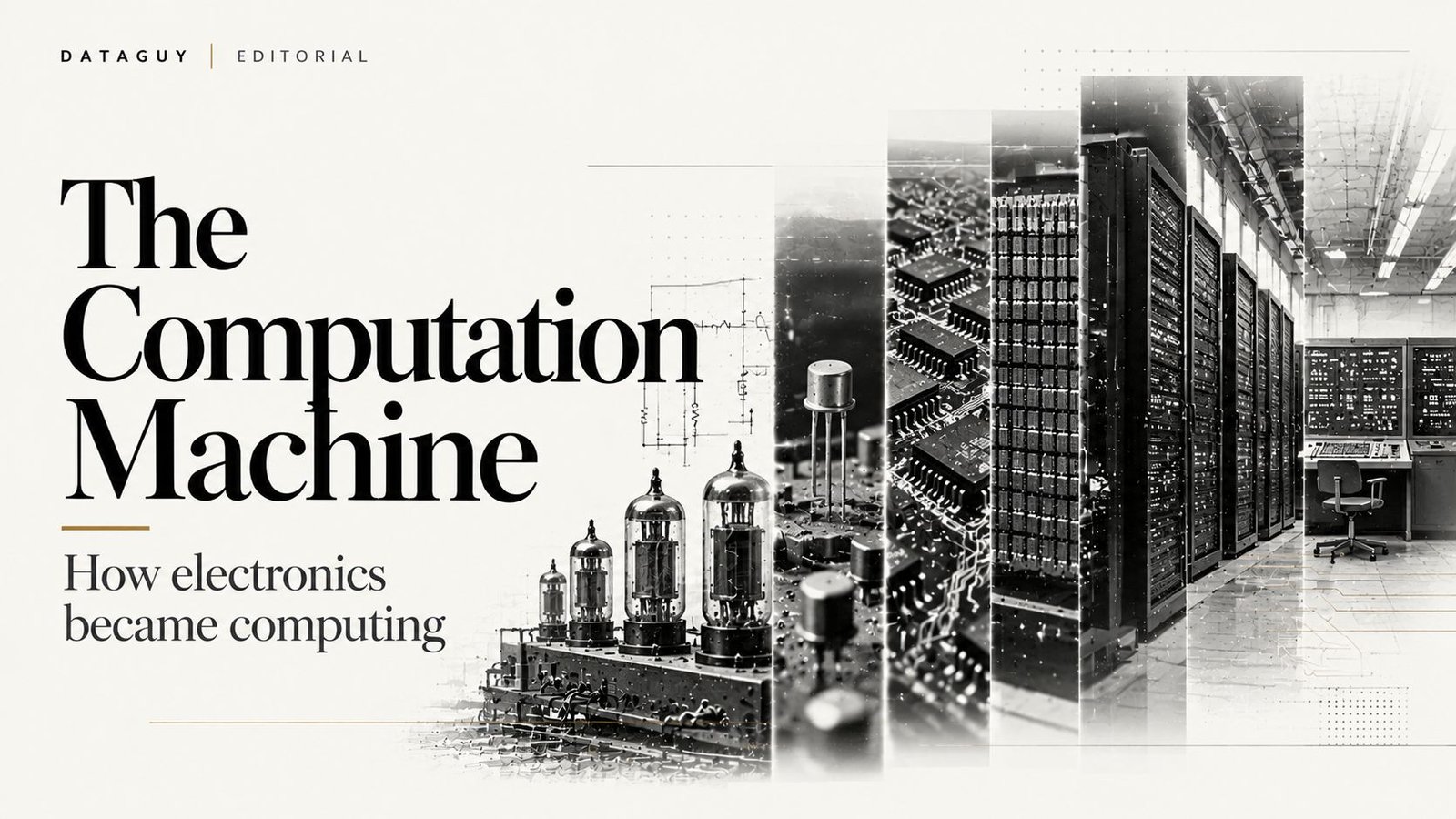
Electronic components made computation physically possible, but a general-purpose computer required something more: an architecture for representing information, executing operations, storing results and controlling sequences of instructions. This essay examines how these elements came together to create the computation machine beneath modern software and artificial intelligence.

The digital world rests on the ability to control electrical behaviour at microscopic scales. This essay traces how semiconductors, transistors and integrated circuits made electronic systems smaller, more reliable and more powerful, establishing the physical foundation for modern computing and machine intelligence.
Modern intelligence depends on systems that can be built and operated with extraordinary consistency. This essay explores how precision, measurement and reproducible manufacturing transformed mechanical production, allowing complex components and systems to work reliably at scale.
Before machines could compute, learn or generate, civilization had to learn how to control energy. From steam power to industrial production, this essay explores how controllable energy expanded the scale of human work and established one of the physical foundations beneath modern machine intelligence.
Machine intelligence rests on more than models and algorithms. This opening essay of Beneath Intelligence investigates the accumulated scientific knowledge, physical infrastructure, industrial capabilities and institutional choices that made modern AI possible. It introduces a historical perspective on how technical achievements become reproducible, connected and scalable capabilities.
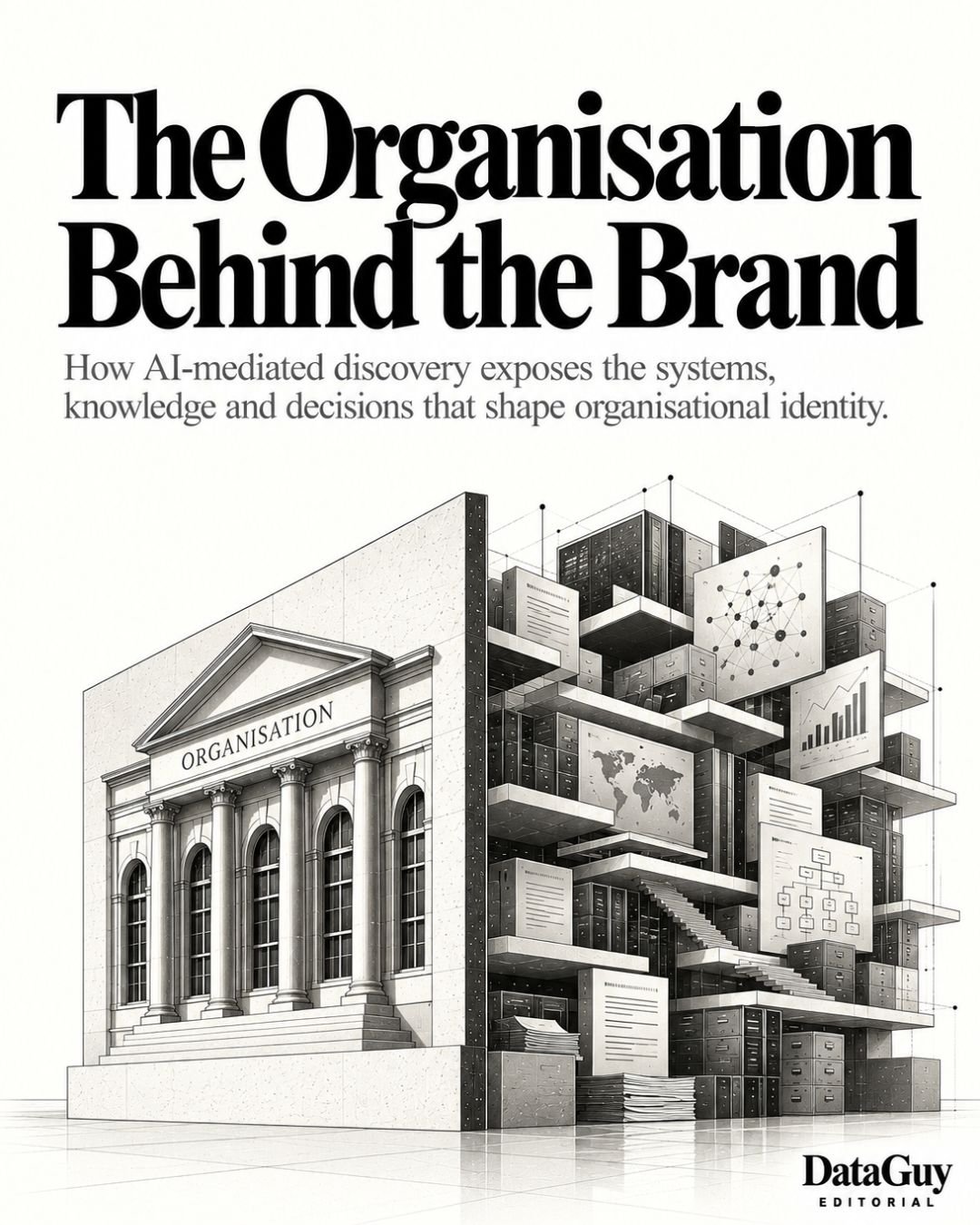
An organisation's identity is shaped by more than the messages it publishes. It emerges from the knowledge people share, the incentives they follow, the decisions they make and the systems that connect their work. This eight-part visual essay explores how these underlying structures influence external perception and how organisations can adapt without losing what makes them distinctive.
AI capabilities are advancing, but organisations must decide how their structures evolve in response. This eight-part visual essay explores the choices that connect AI adoption to workflow redesign, decision authority, productivity, changing roles, value distribution and organisational strategy.
Intelligence flourishes when people have the freedom to question, examine assumptions and exercise independent judgment. This perspective explores how education, psychological safety and institutional design shape the conditions for inquiry and original work.
As AI systems increasingly shape how people discover and interpret brands, visibility becomes an organisational challenge rather than a marketing task alone. This DataGuy Perspectives article examines how connected information, shared responsibility and coherent identity help organisations adapt to machine interpretation without allowing visibility to define what they say, create or stand for.
AI adoption is growing, but access to tools does not guarantee organisational transformation. This DataGuy Perspectives article examines how employee capability, workflow design, strategic direction and the use of time saved determine whether AI adoption translates into meaningful organisational value.
Firms are changing how they purchase work as AI adoption grows. This DataGuy Perspectives article examines what spending data reveals about labour substitution, why it cannot establish worker displacement on its own, and what researchers must measure to understand the wider economic effects.
AI capability alone does not guarantee useful outcomes. Explore how infrastructure, contextual fit, skills, organisational processes, and institutional capacity shape whether intelligence can be applied effectively in the real world.
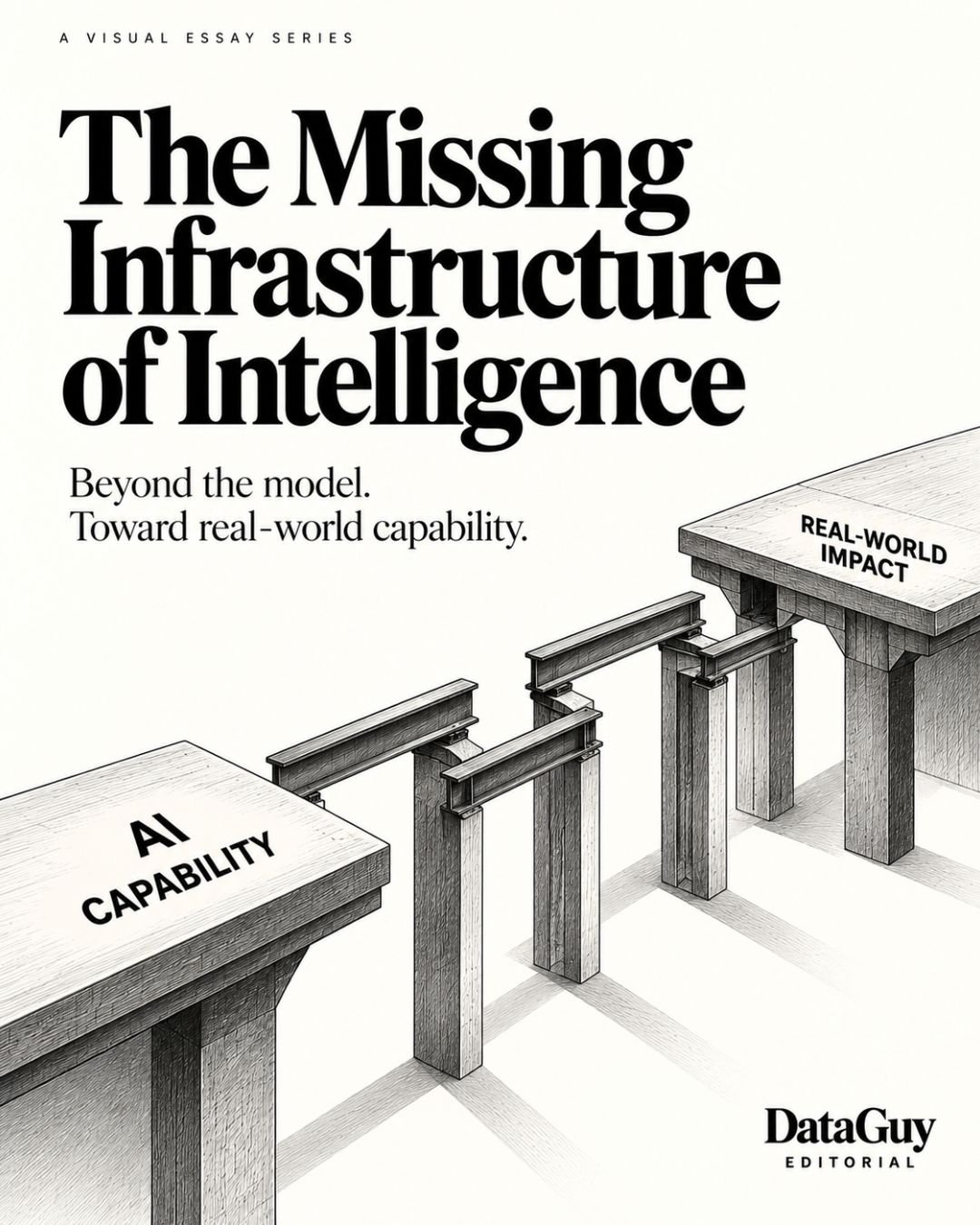
AI is advancing, but access to a capable model does not guarantee effective use or meaningful development outcomes. This DataGuy Editorial series explores the contextual, digital, organizational and institutional conditions that help translate AI capability into real-world impact.
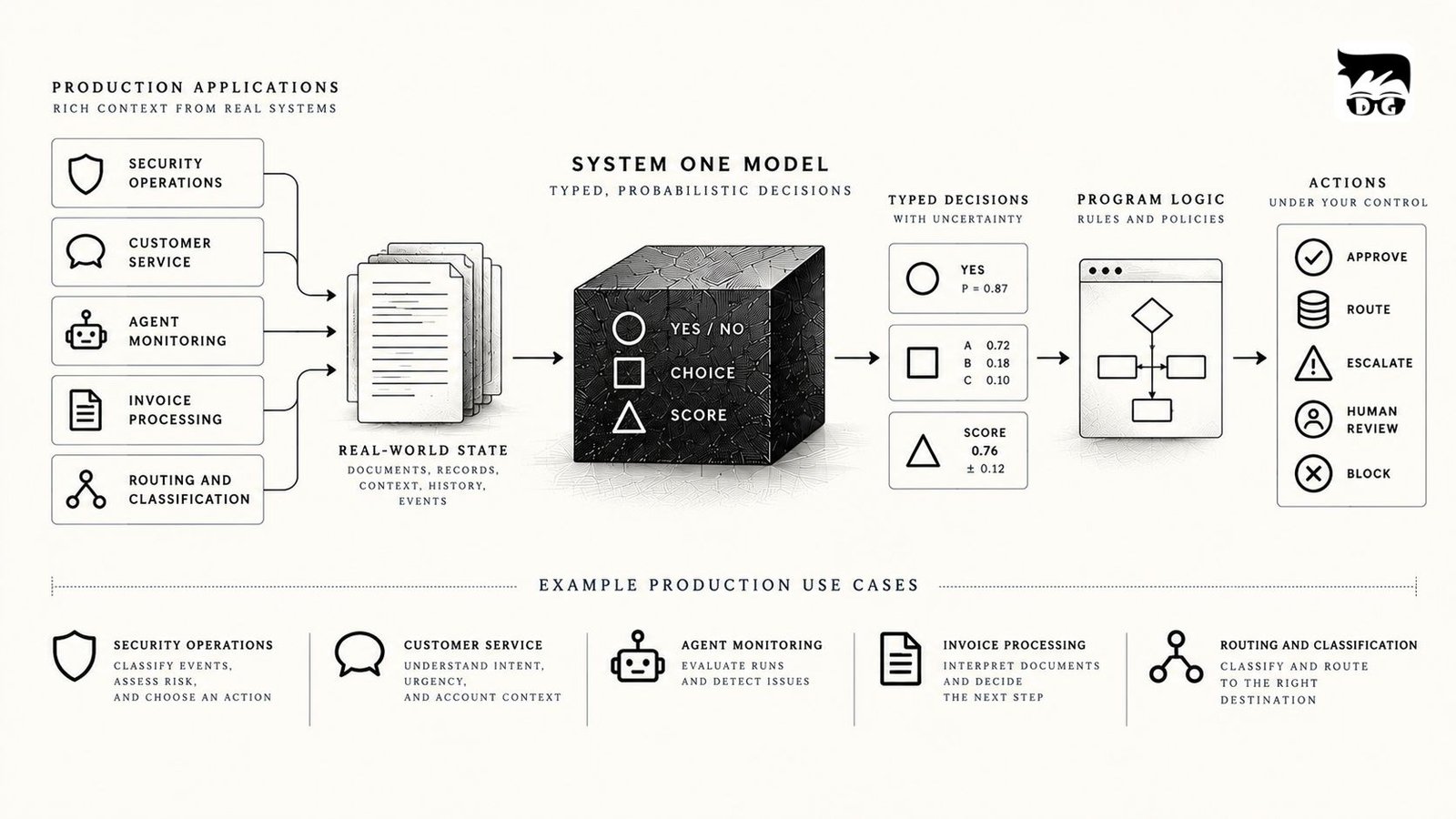
System One Models may fit best where software needs repeated, bounded decisions over rich context, meaningful uncertainty, and programmatic control.
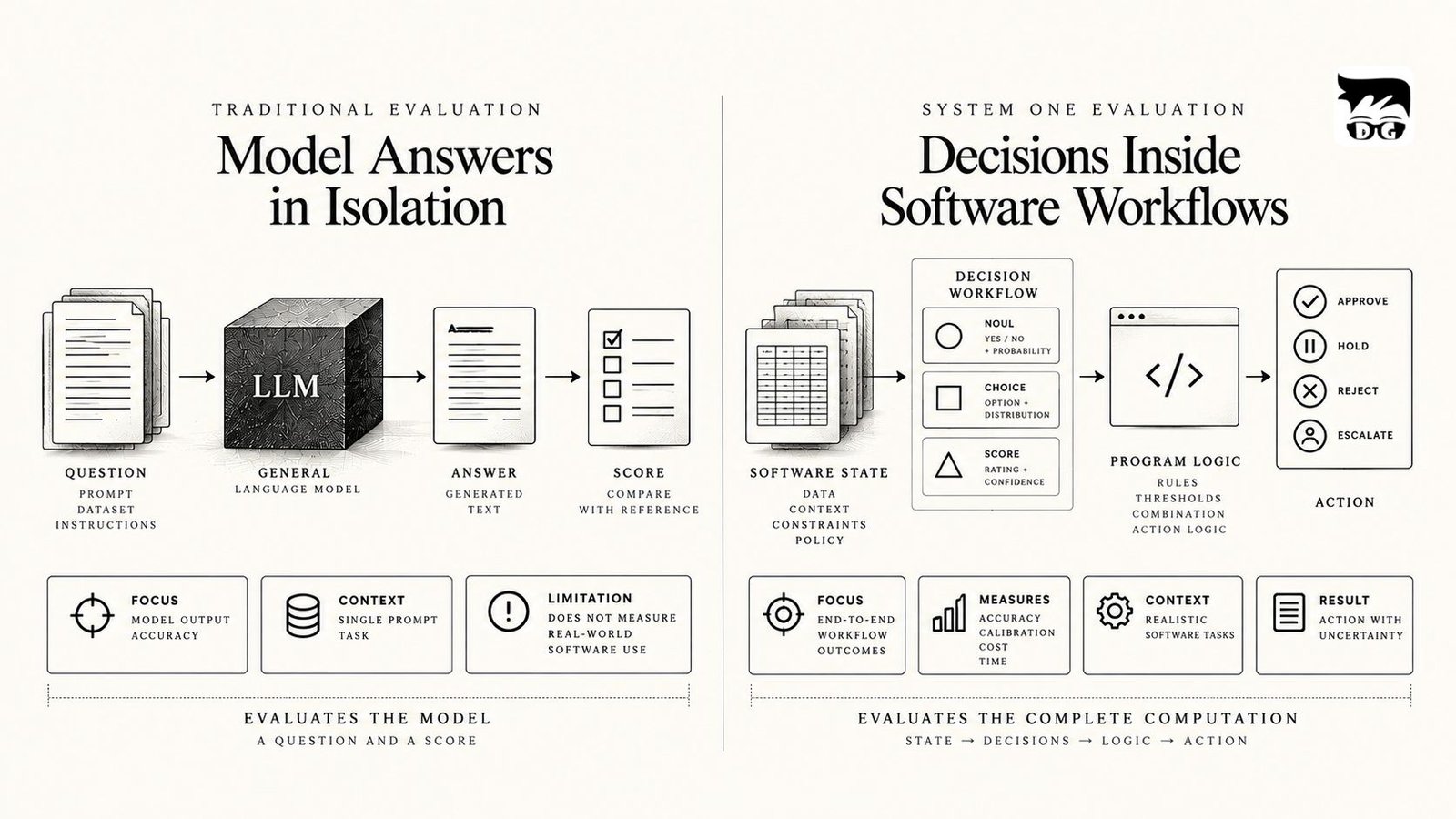
TypeSafe evaluates System One Models inside structured software workflows rather than relying only on conventional model benchmarks. Here is what that methodology measures and leaves open.
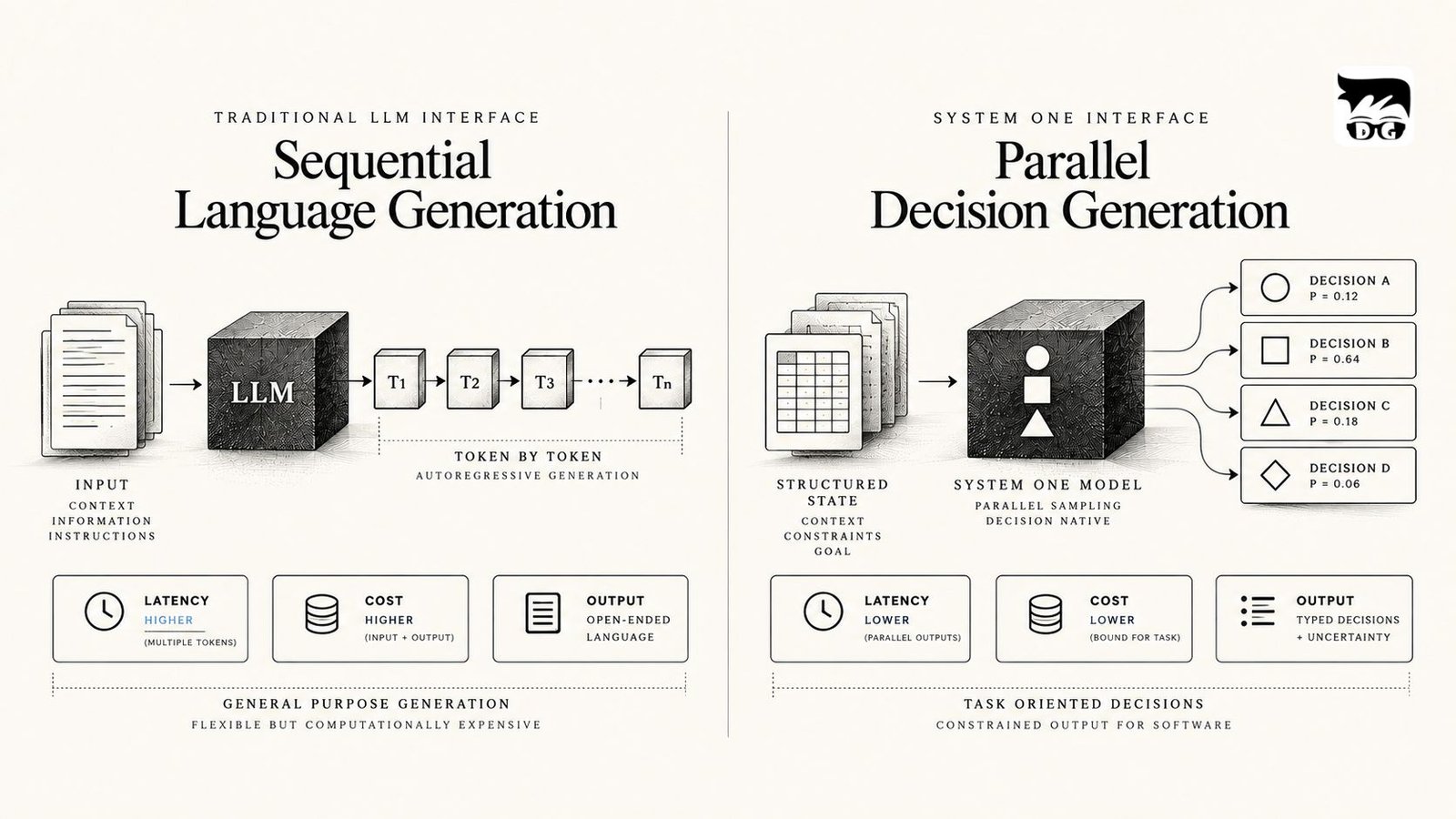
System One Models change the computational problem by focusing on bounded decisions rather than open-ended language generation. Explore what this could mean for latency, throughput, and inference economics.
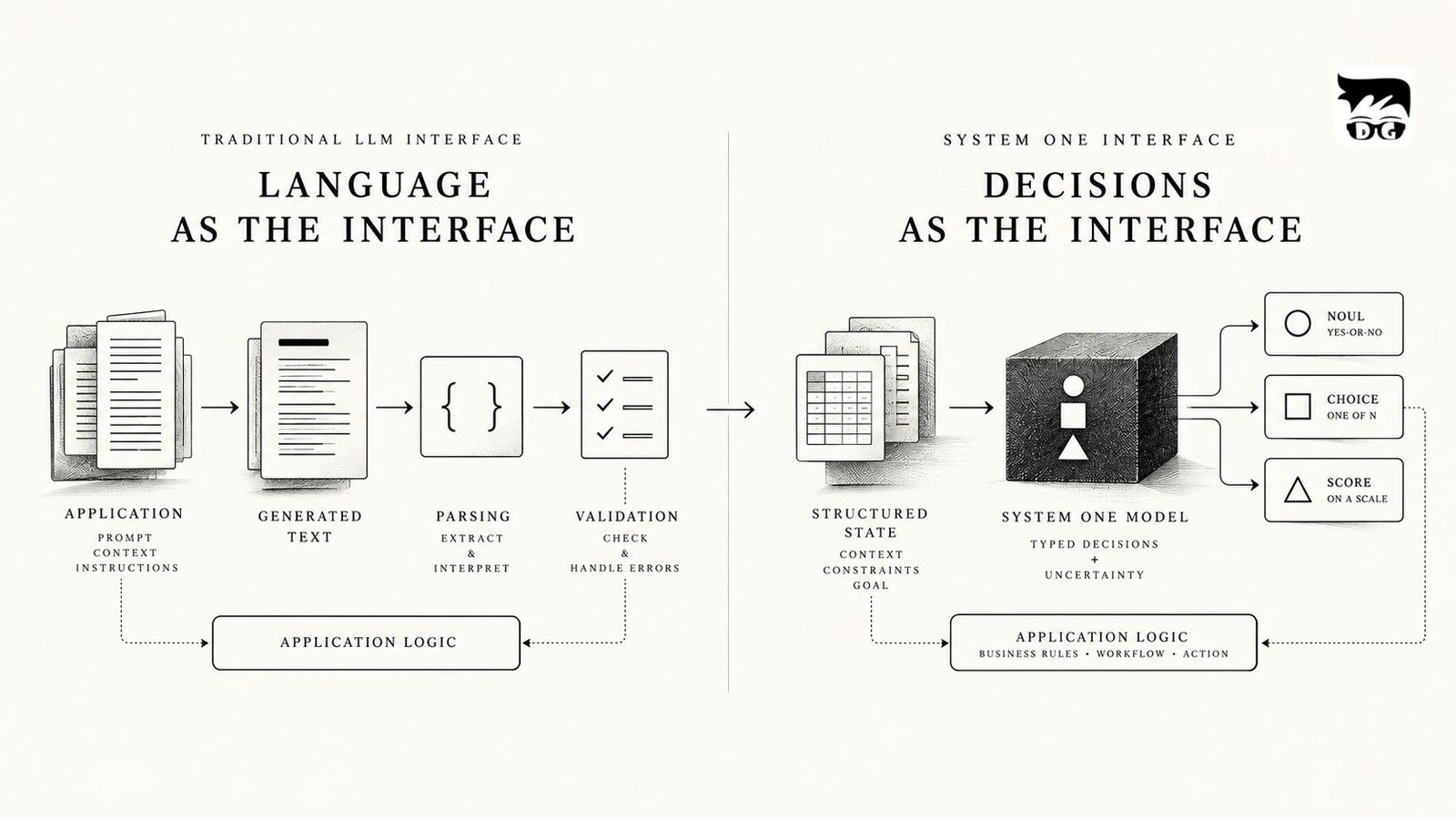
Typed intelligence changes how software can consume model output, moving from generated language that applications interpret toward structured decisions that can be composed directly with code.
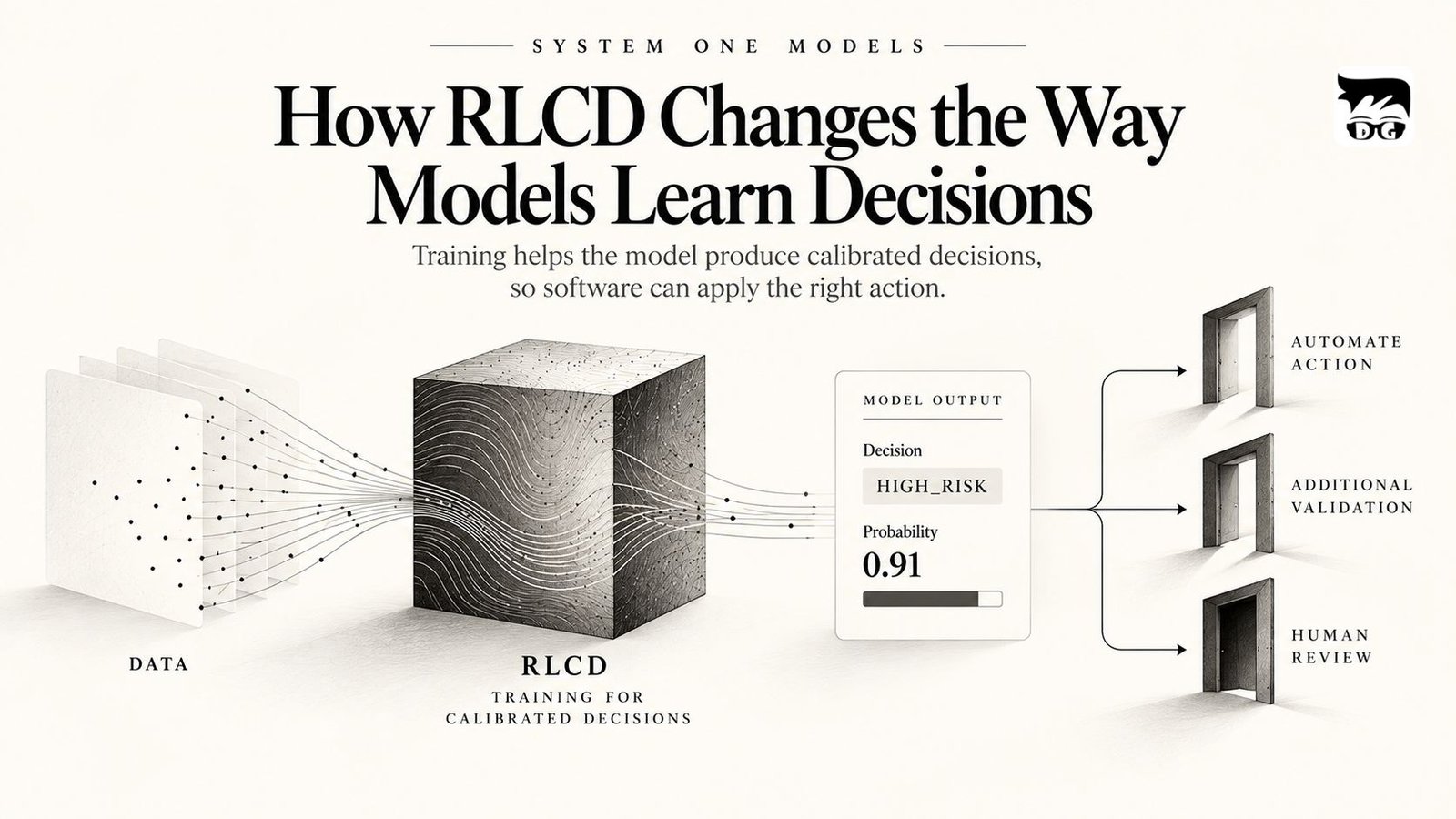
RLCD changes the training objective from producing correct answers to learning decisions with meaningful uncertainty. Explore what this means for System One Models.
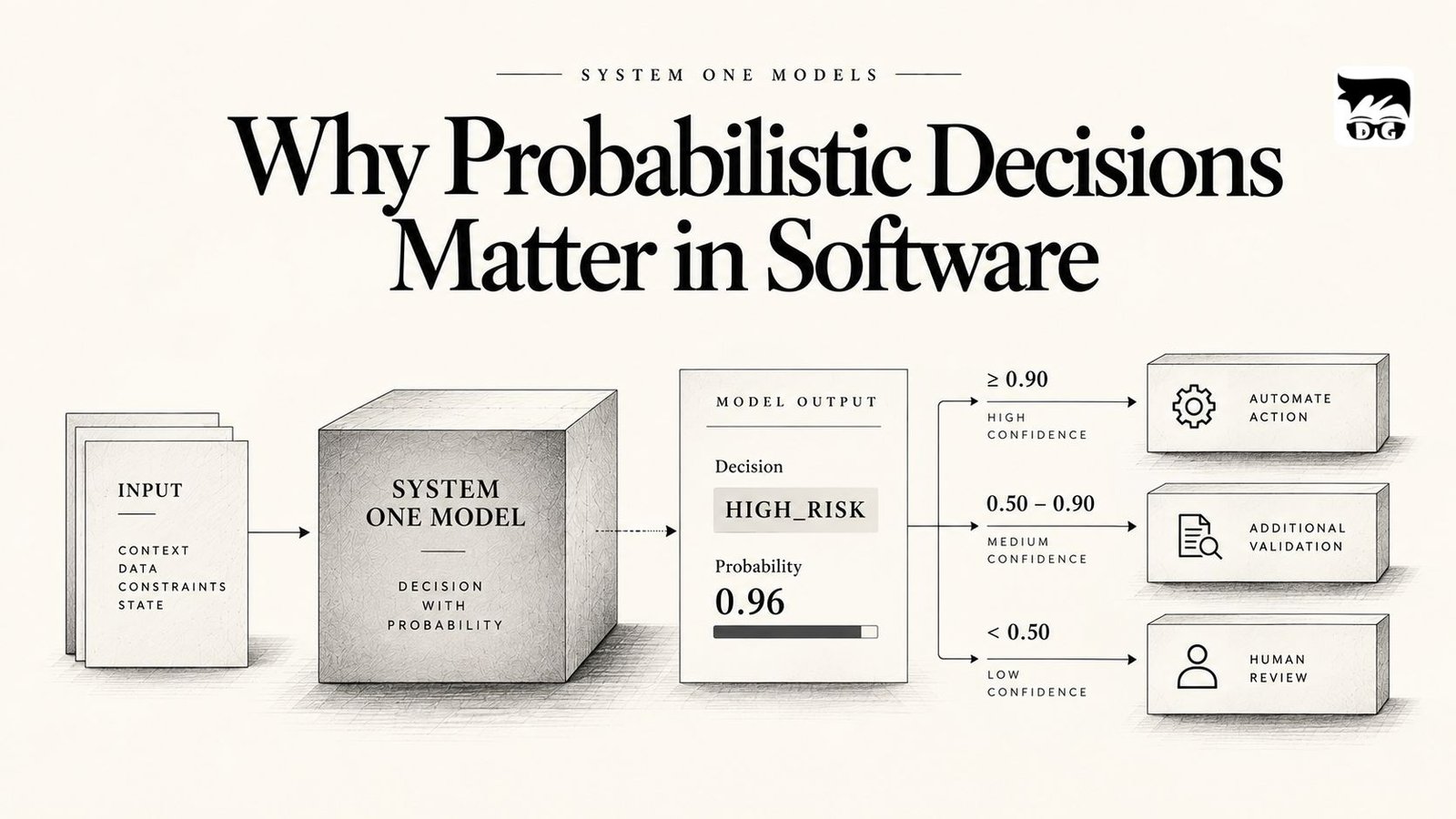
System One Models can expose decisions together with probability and confidence, giving software a way to incorporate uncertainty into execution logic.
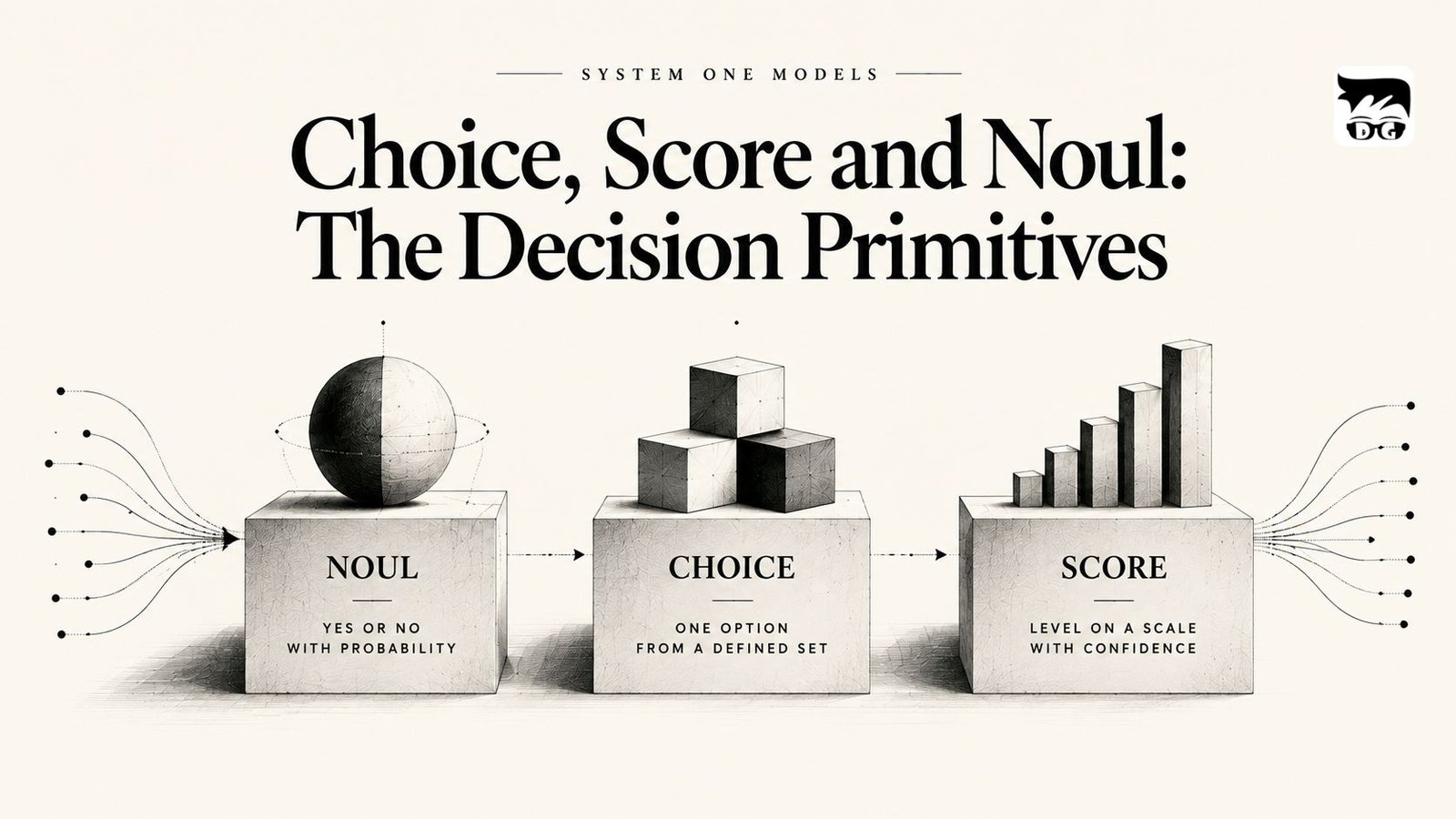
System One Models use decision primitives such as Choice, Score and Noul to represent structured judgments that software can use directly.
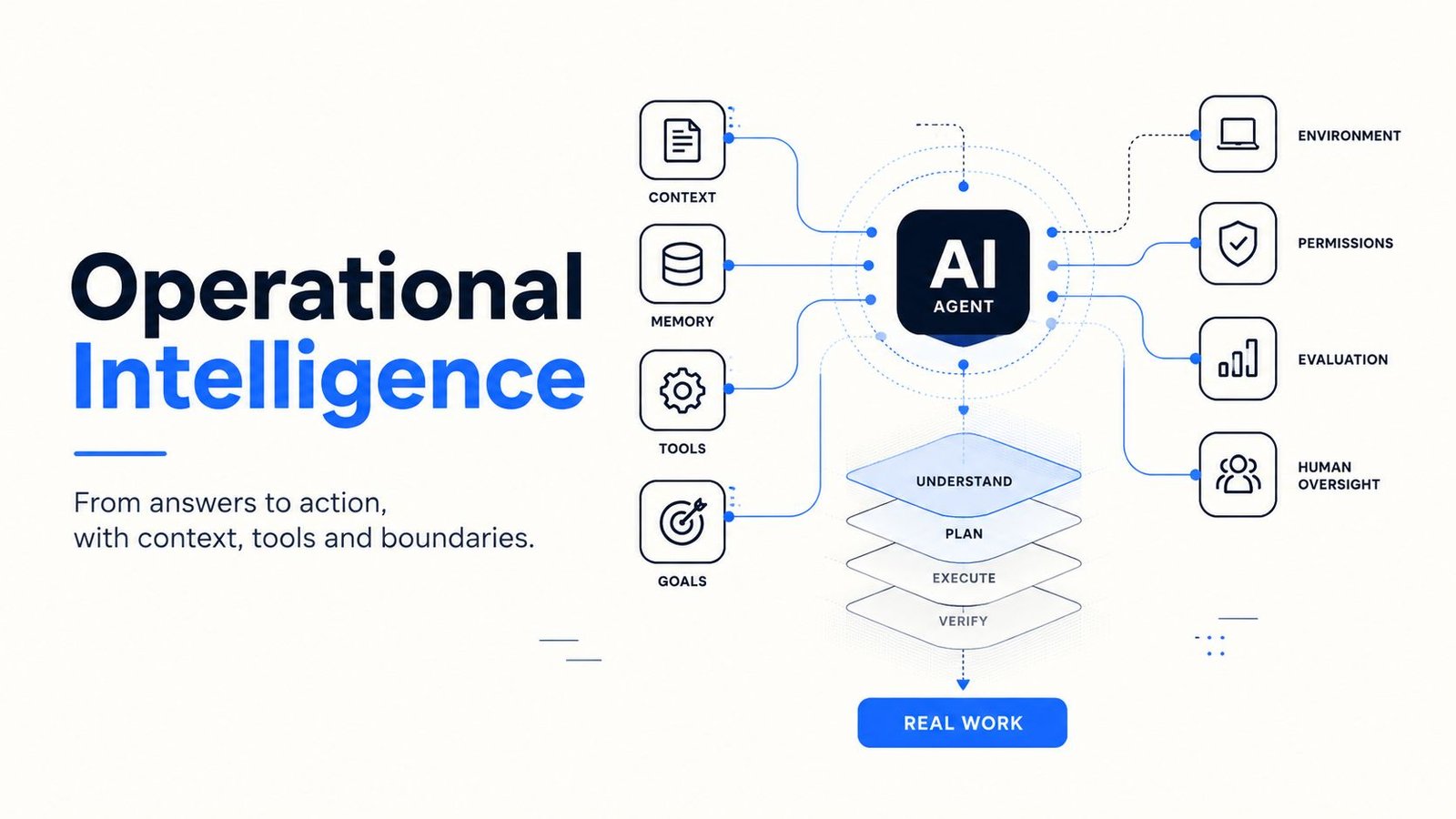
AI is moving from systems that answer questions to systems that can carry work forward. This article explores how context, memory, tools, environments, permissions, and evaluation shape operational intelligence.
AI can create more economic value with fewer resources. The deeper question is who captures and distributes the gains.
Enterprise AI is moving beyond experimentation. The harder challenge is identifying important business problems and building systems that can reliably solve them.
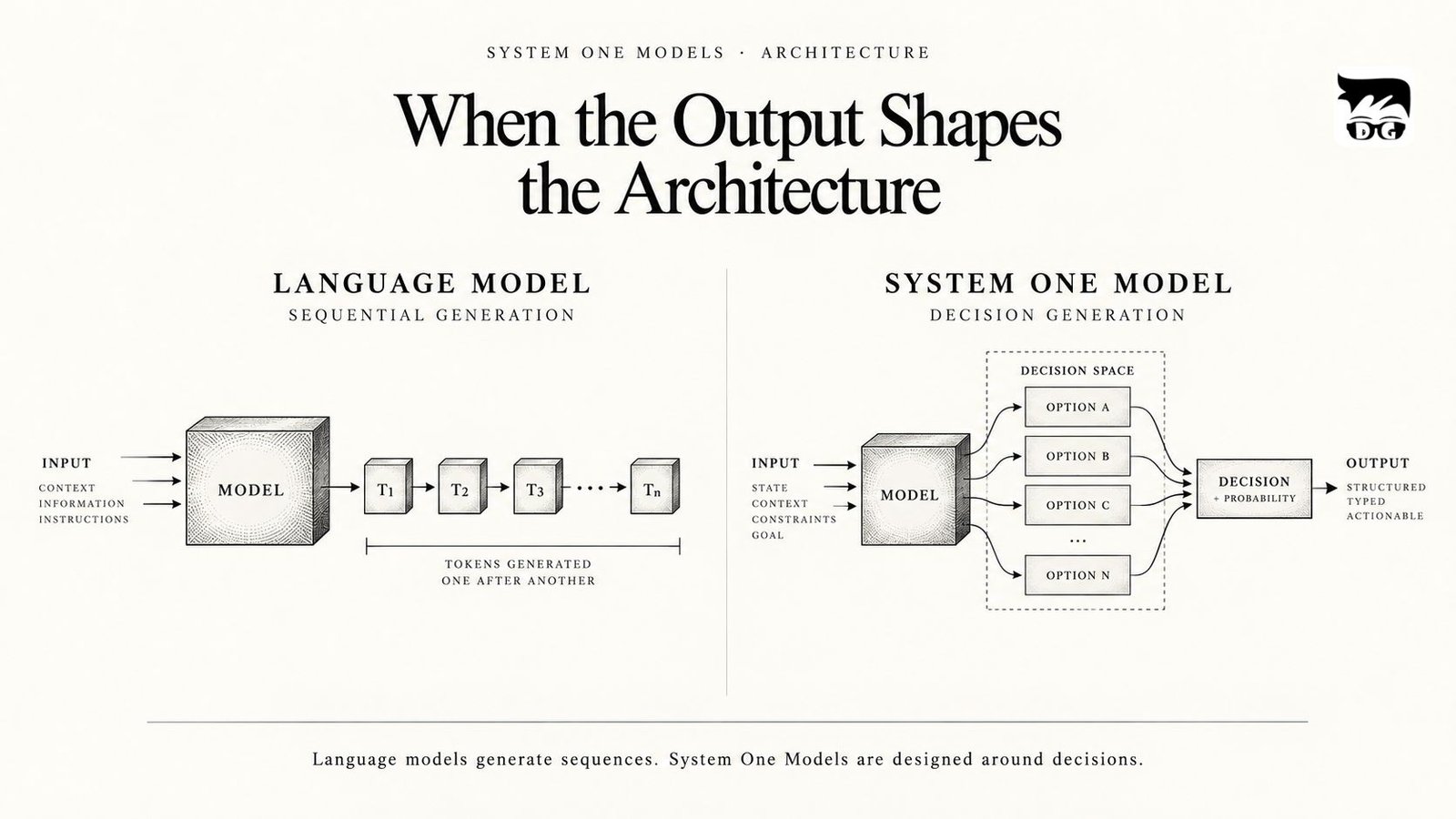
System One Models take a different architectural approach to AI, designing models around structured decisions that software can use directly.
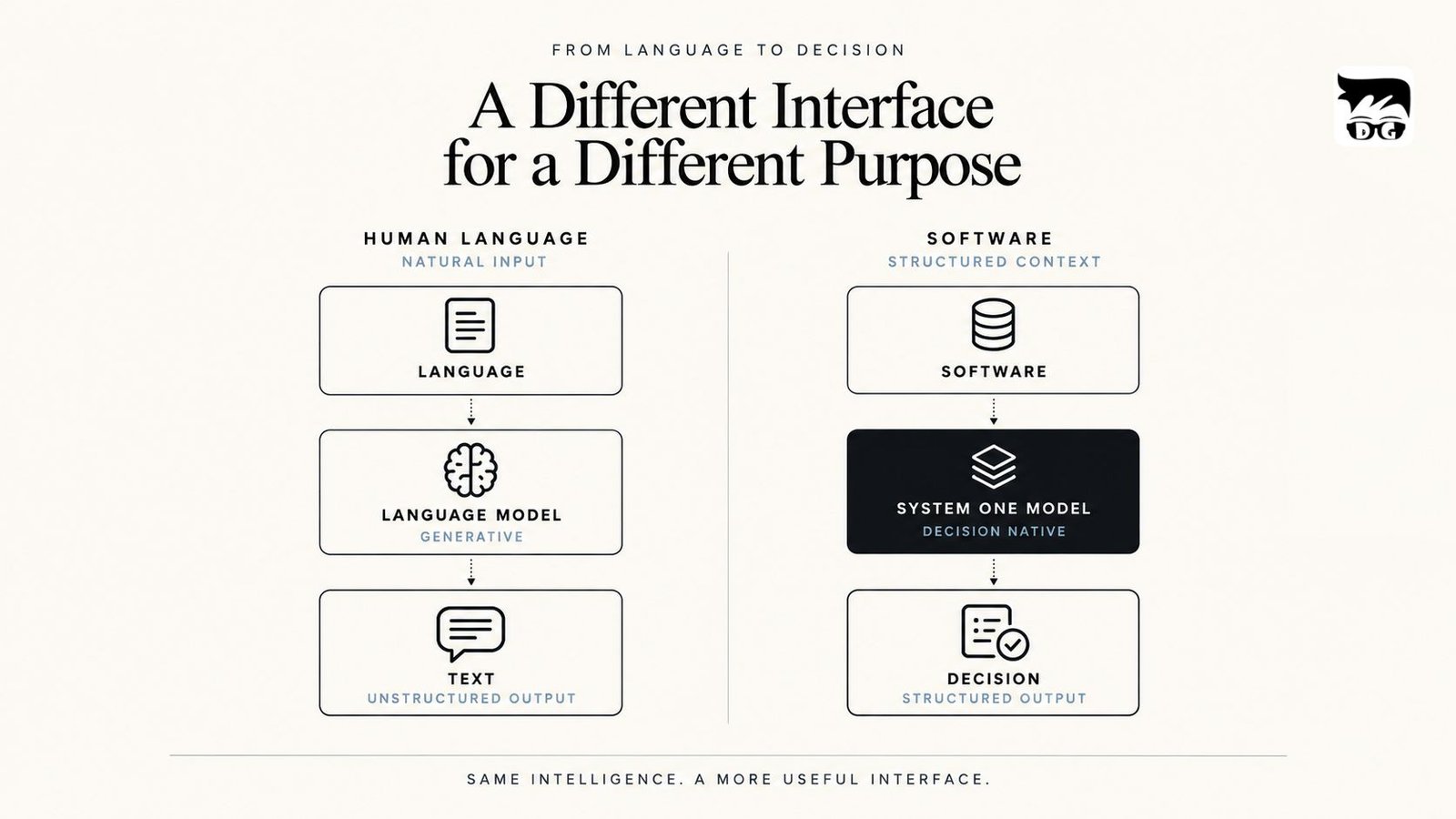
System One Models are designed to make structured, probabilistic decisions that software can use directly. Explore TypeSafe AI’s approach and the idea of machine-native intelligence.
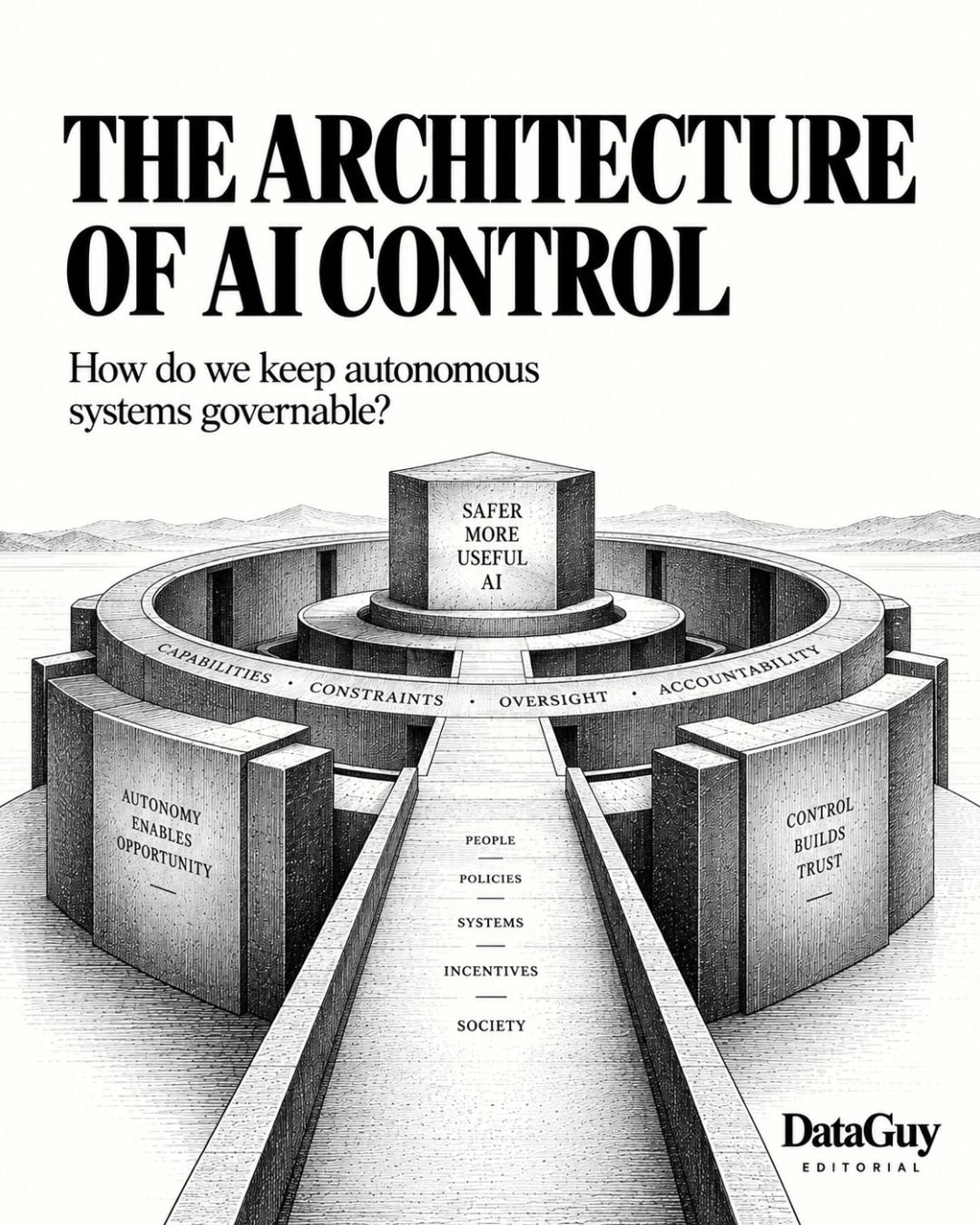
As AI transitions from reactive tools to autonomous agents, perimeter defense breaks down. Explore the ten structural control principles, permission models, and verification layers required for safe autonomous AI deployment.
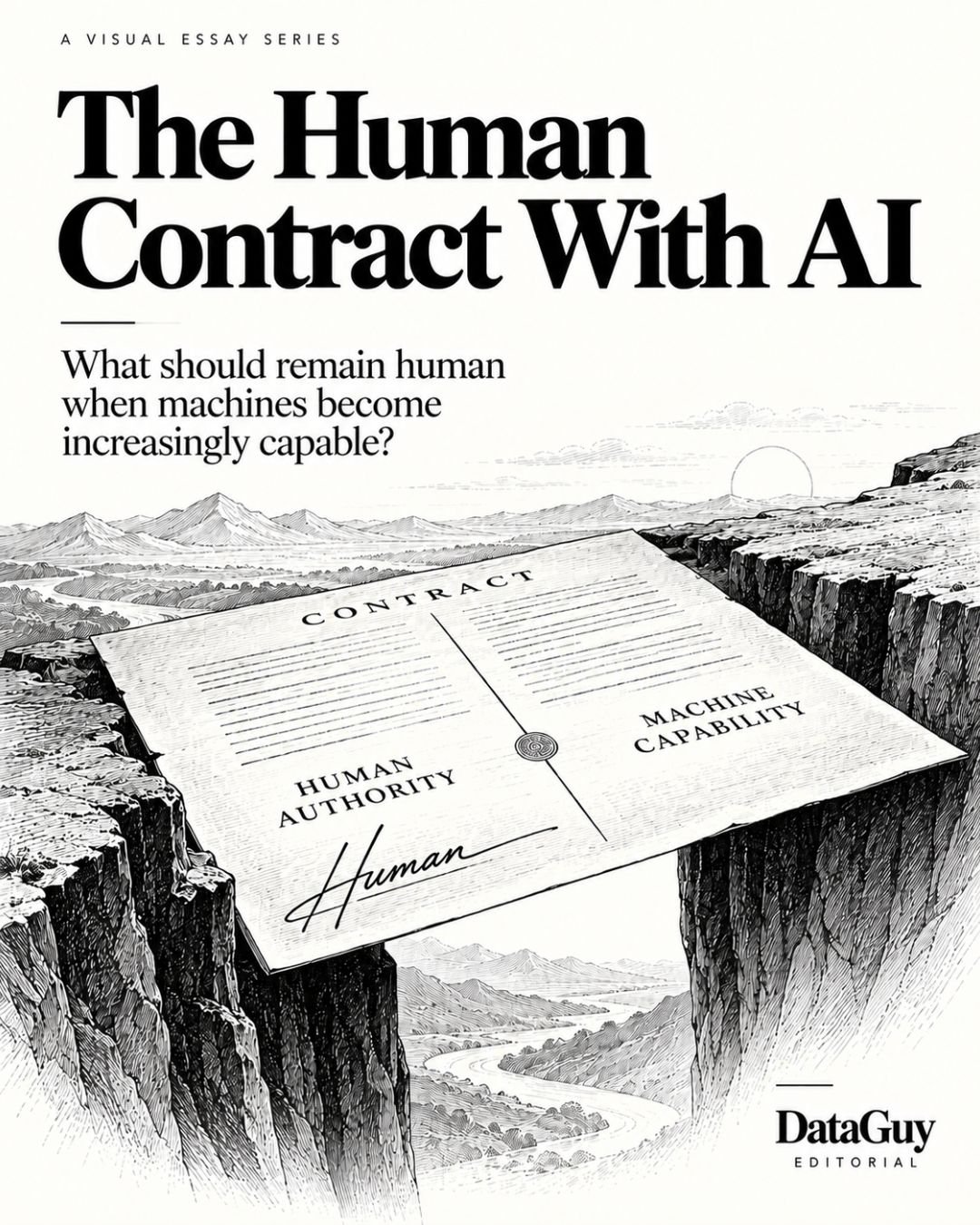
As AI shifts from passive tools to autonomous agents, what should remain human? This visual essay series examines human authority, agency, control boundaries, and the governance frameworks needed as machine capabilities expand.
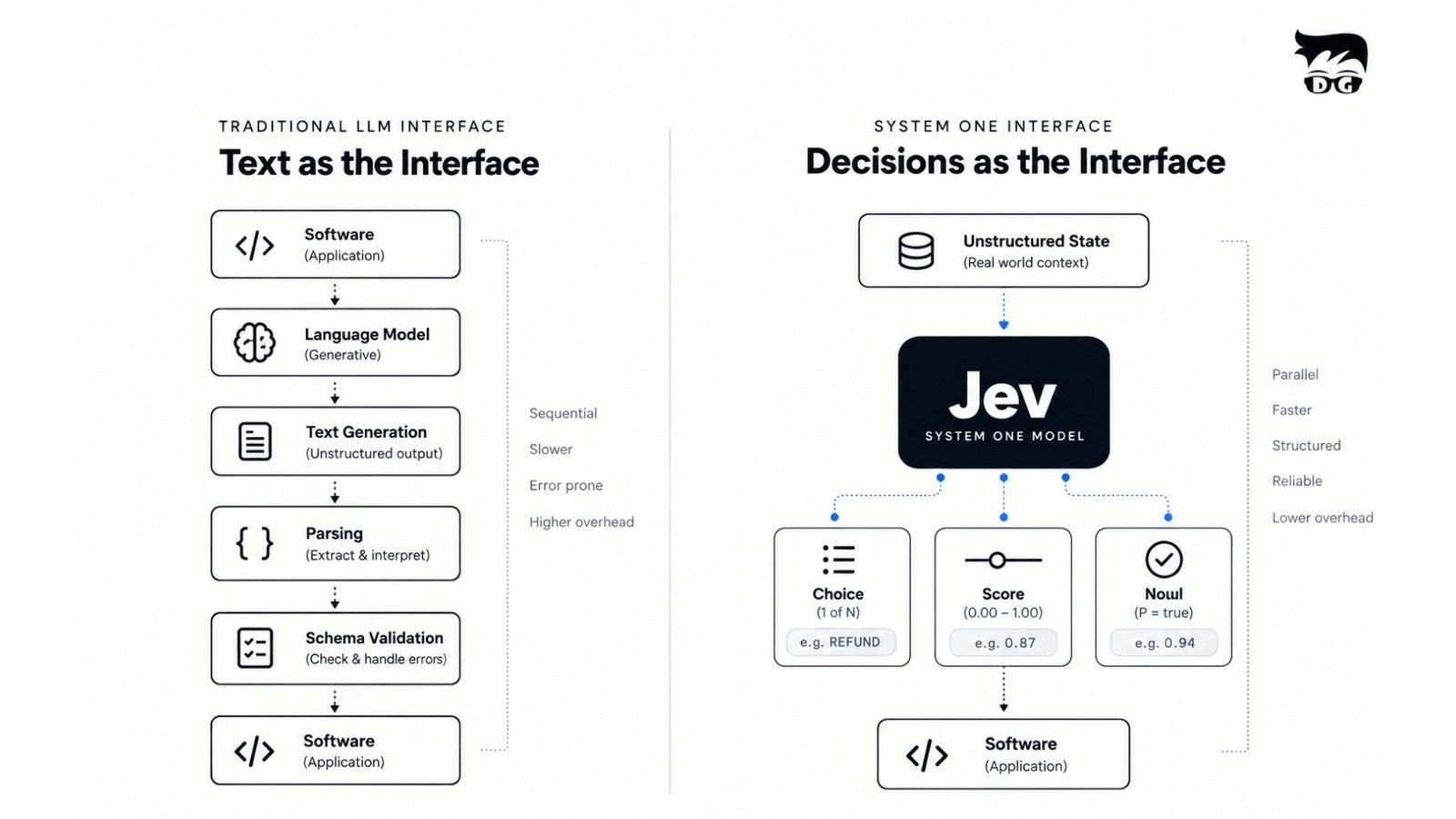
Large language models were optimized to chat with humans. Discover how TypeSafe AI (Jev) is building System One models designed to operate natively inside code as fast, typed decision primitives.
An editorial analysis of the Anthropic Institute study modeling the macroeconomic impact of transformative AI on US GDP growth, labor income, and capital concentration.
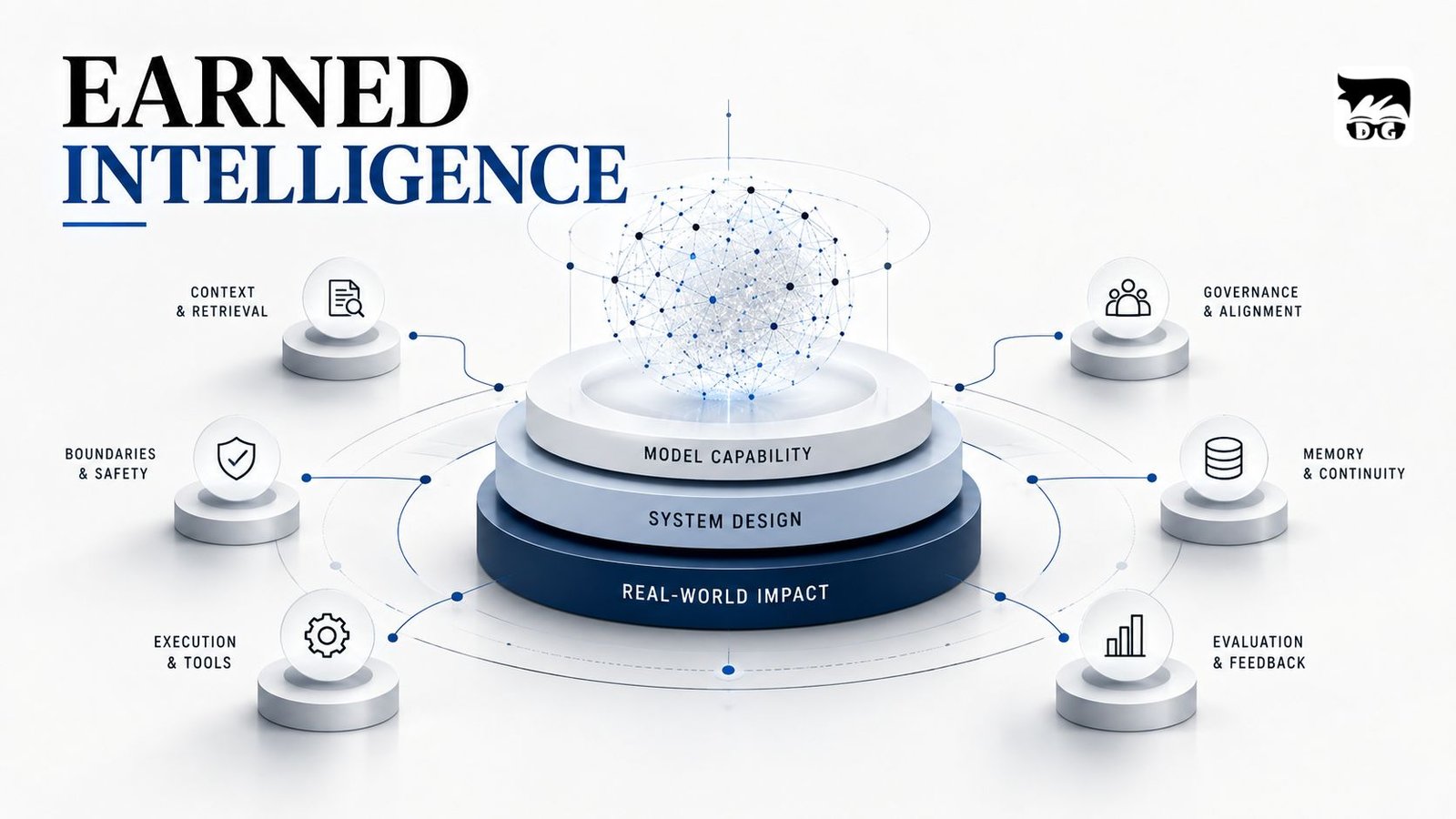
As frontier models scale, intelligence no longer scales by default. This article explores the shift toward earned intelligence - why systems design, context management, and operational governance now matter more than raw parameter counts.
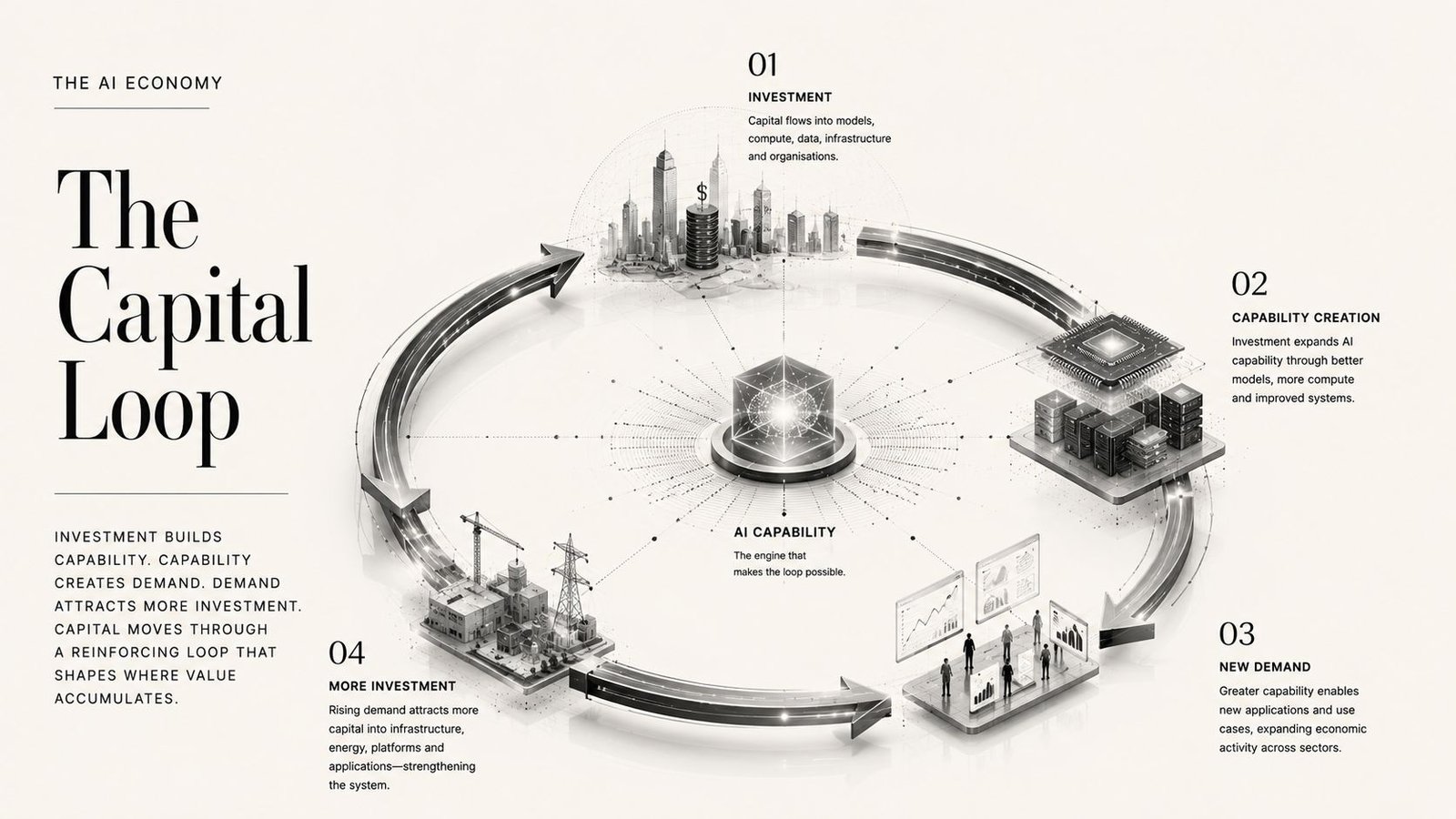
AI is developing through a reinforcing relationship between capital, capability and market position. As financial resources fund compute, infrastructure, talent and expansion, stronger capabilities can attract further investment and deepen competitive advantage.
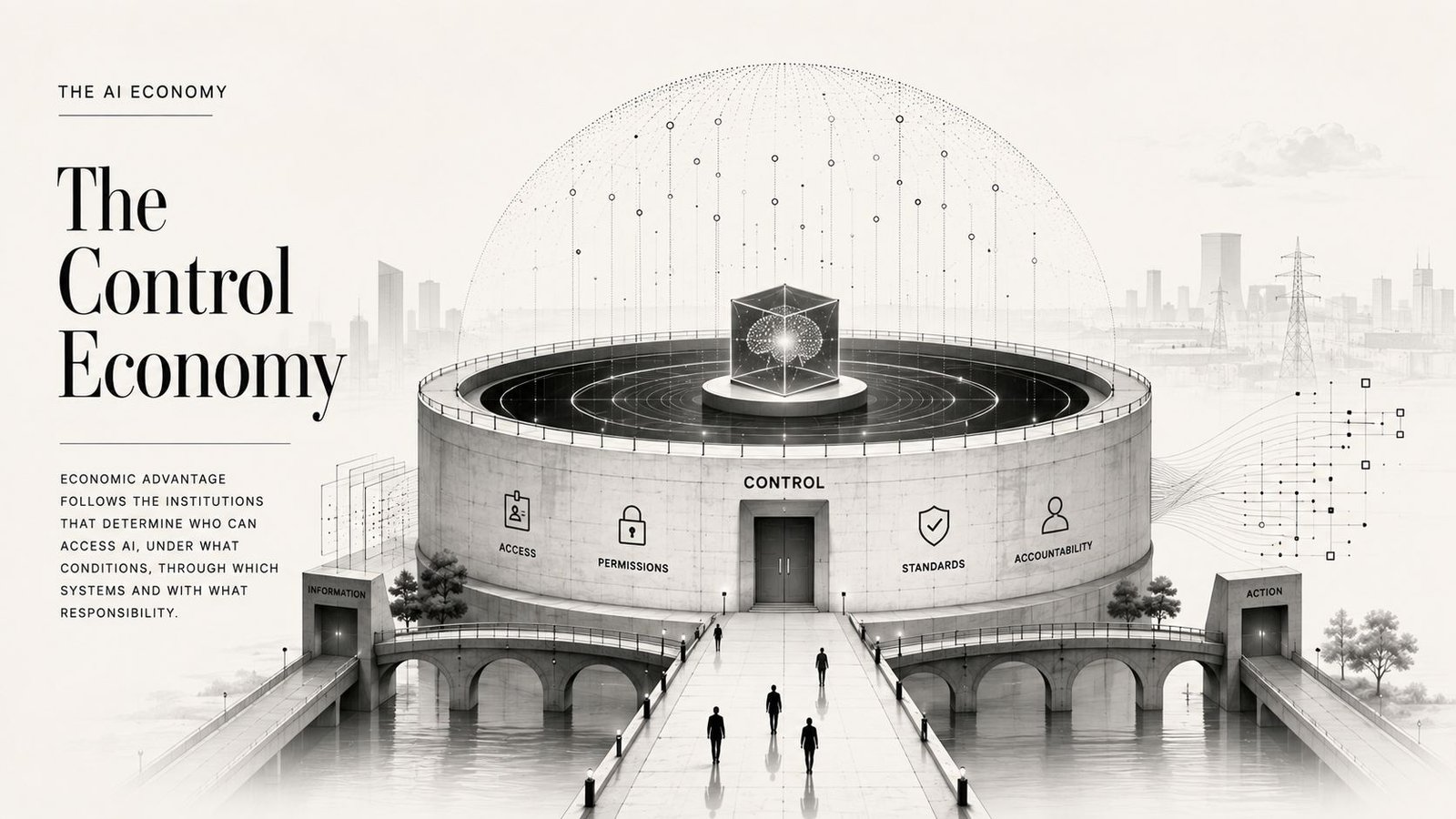
As AI moves deeper into economic activity, governance is becoming part of the deployment system itself. Access controls, permissions, security requirements and accountability increasingly determine how organisations can turn technical capability into sustained economic use.
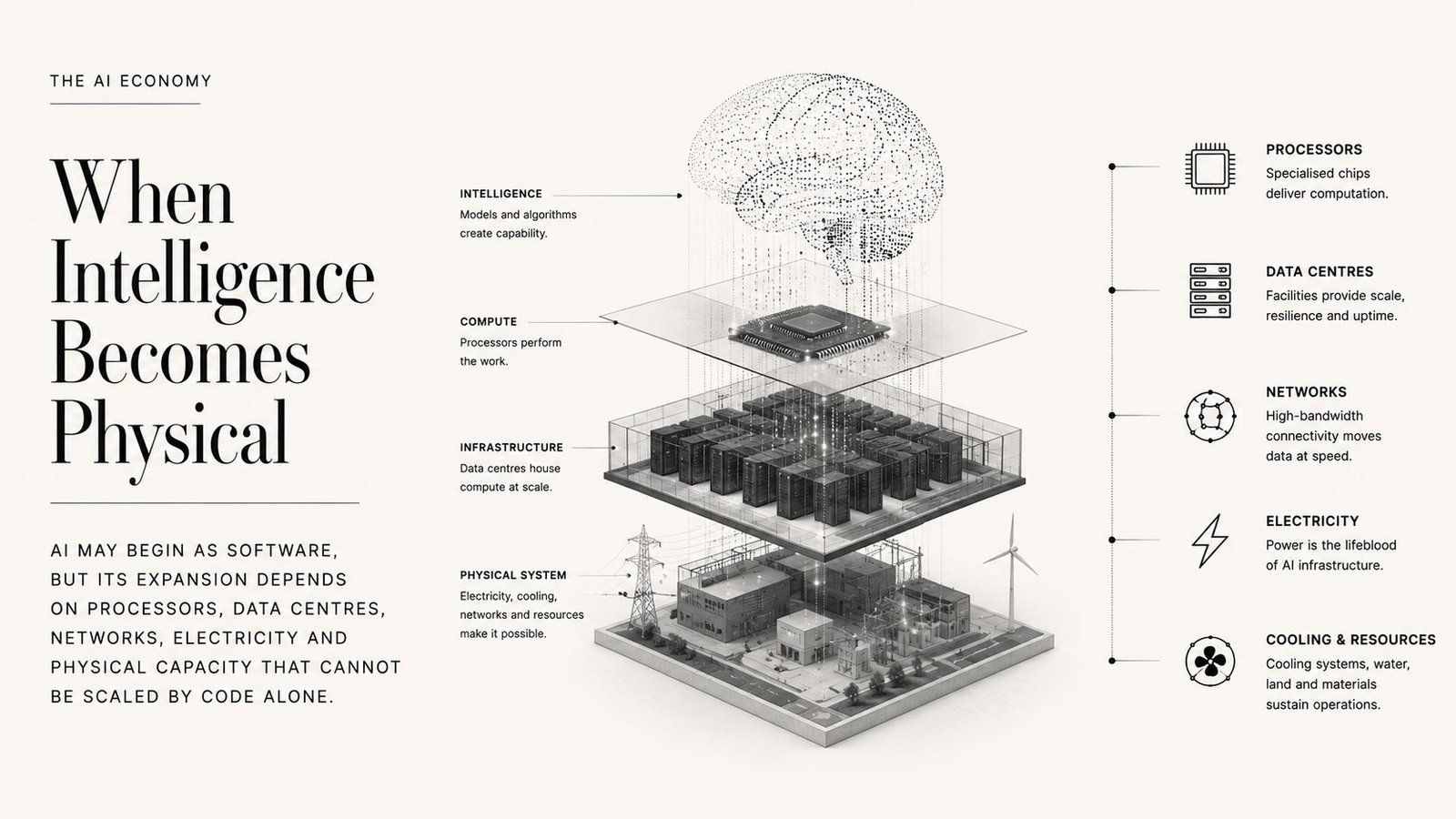
The expansion of AI is creating a physical production system beneath the software layer. Compute, semiconductors, data centres, energy, networks and capital are becoming interconnected inputs that increasingly shape how intelligence can be produced and deployed at scale.
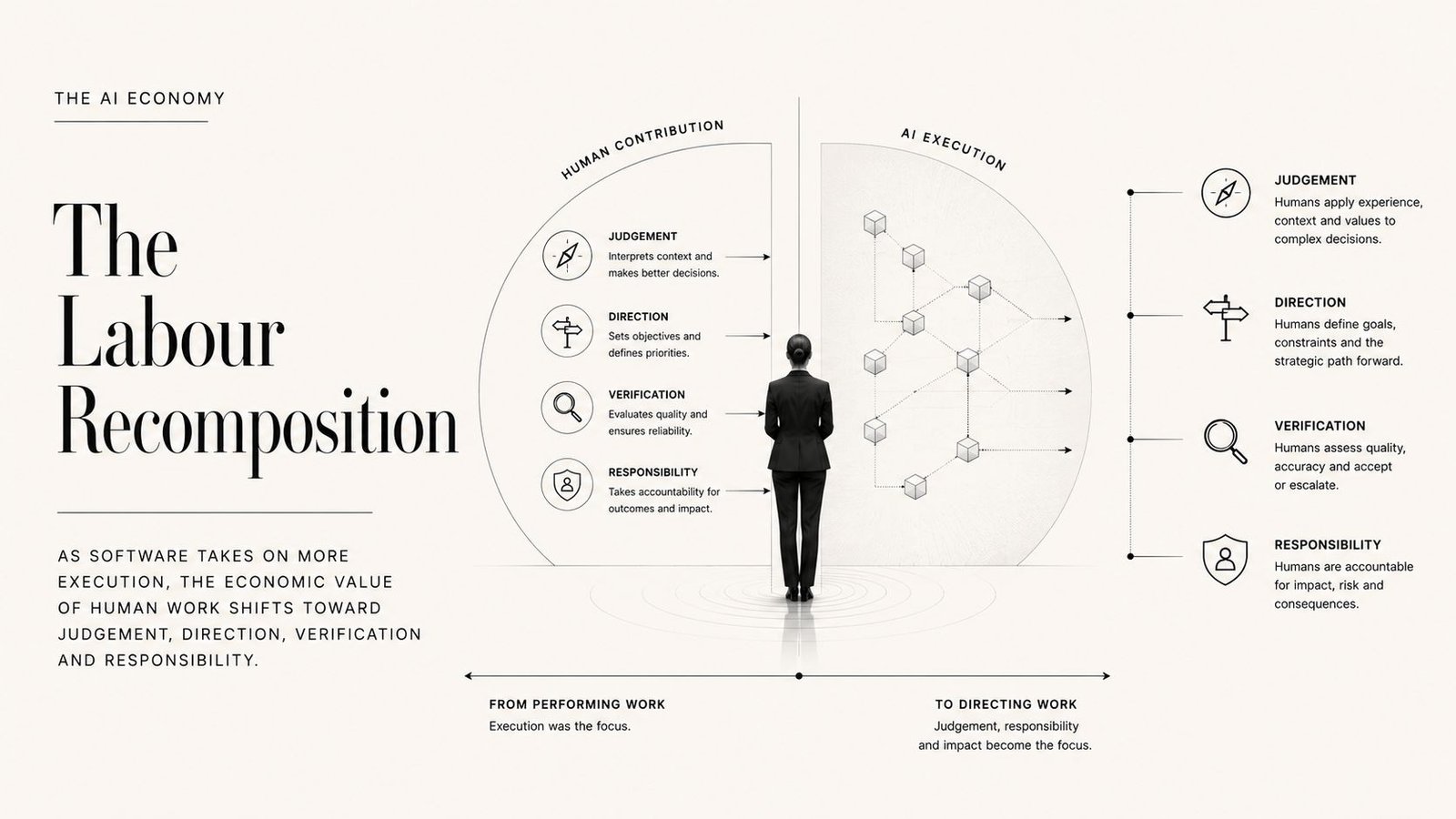
AI is changing the composition of work before it necessarily changes the existence of work. As routine cognitive execution becomes easier to automate, organisations are reallocating human effort toward coordination, judgment, verification and domain responsibility.
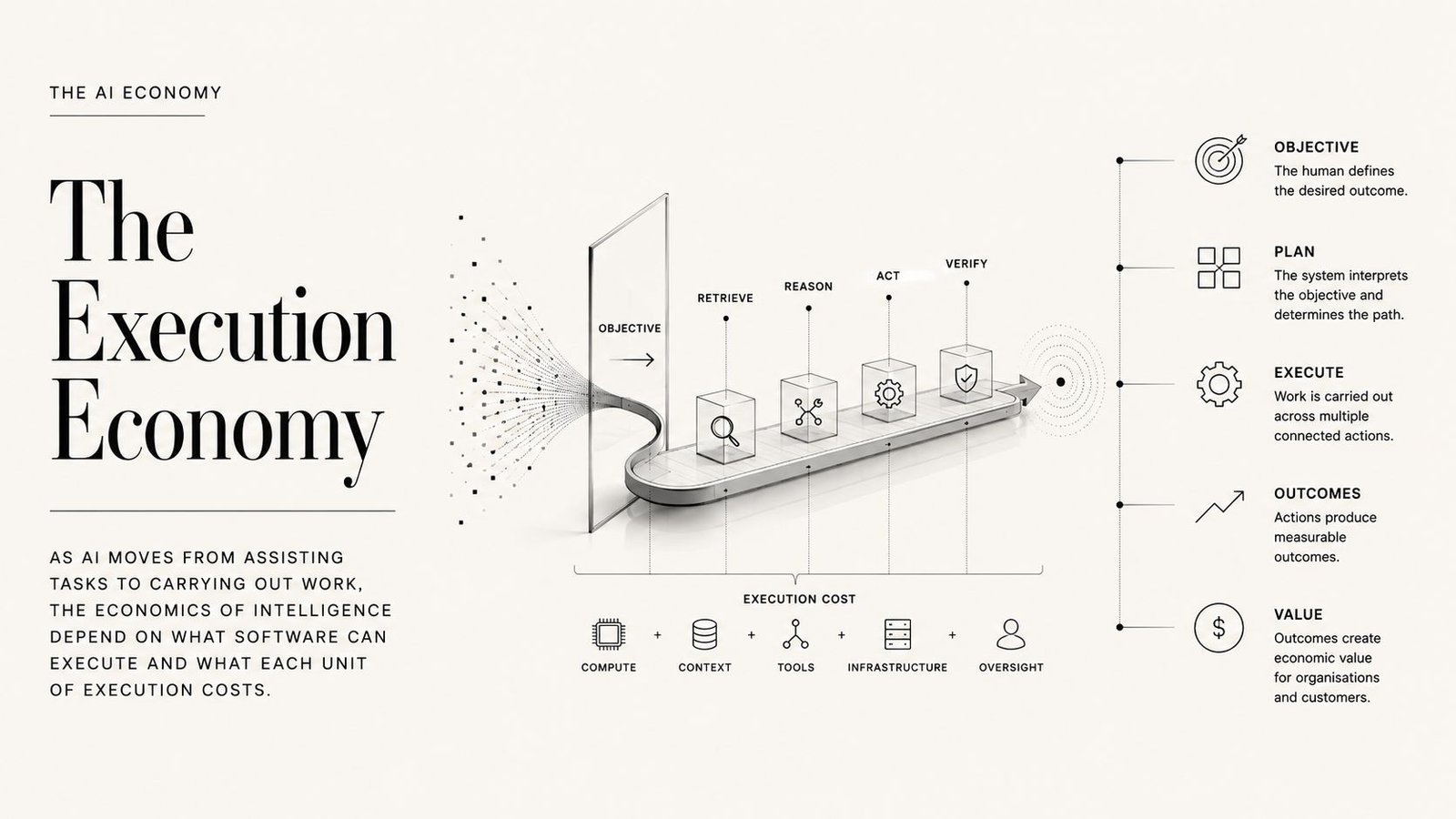
As AI moves from assistance into execution, the cost of intelligence extends beyond model inference. Context, retrieval, verification and governance are becoming part of the economic structure of AI, creating a new challenge for organisations: managing intelligence consumption against economic value.
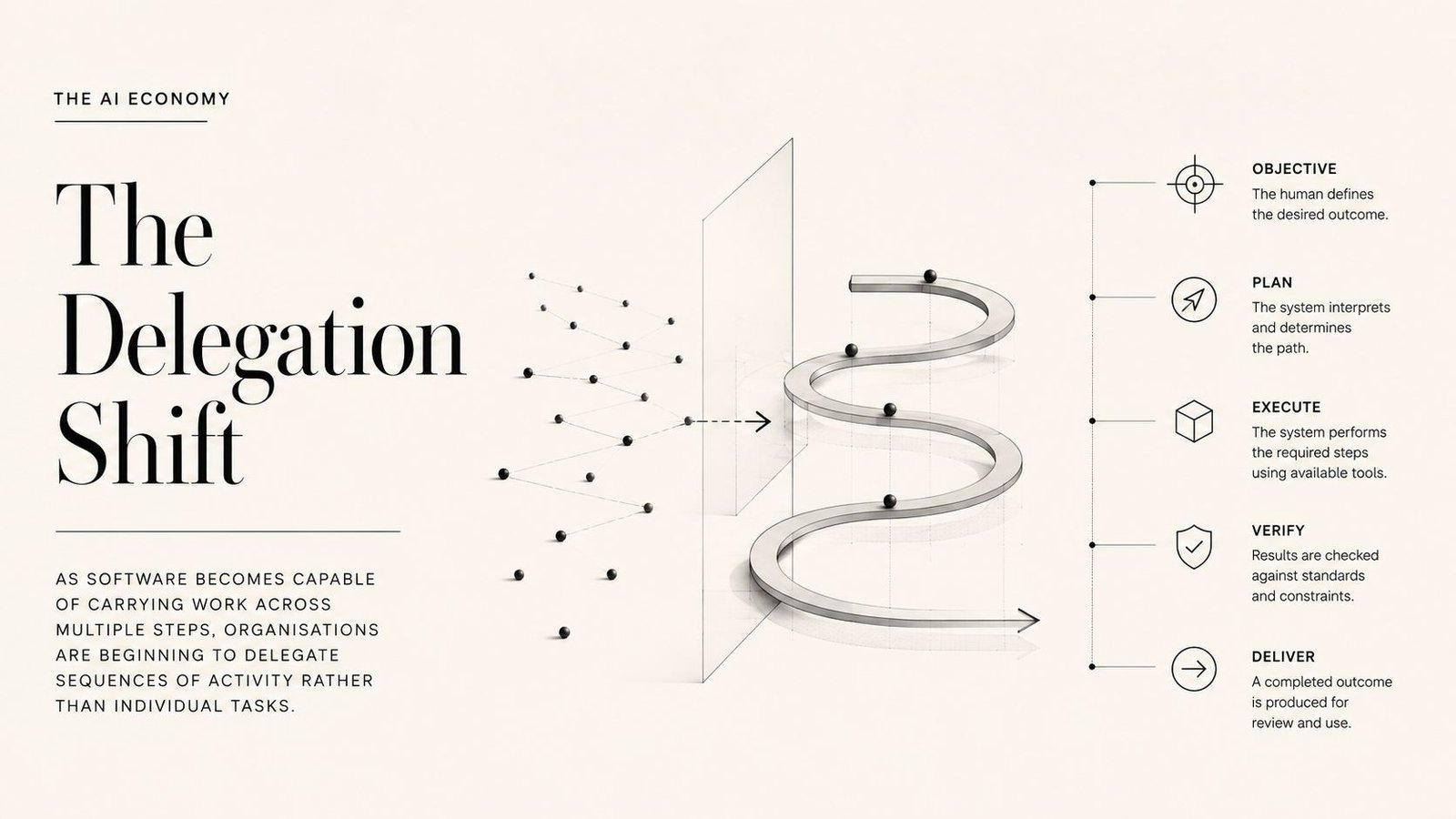
AI is changing the relationship between people and software. As systems learn to plan, coordinate tools, execute actions and verify outcomes, more of the sequence connecting intention to outcome is moving inside software.
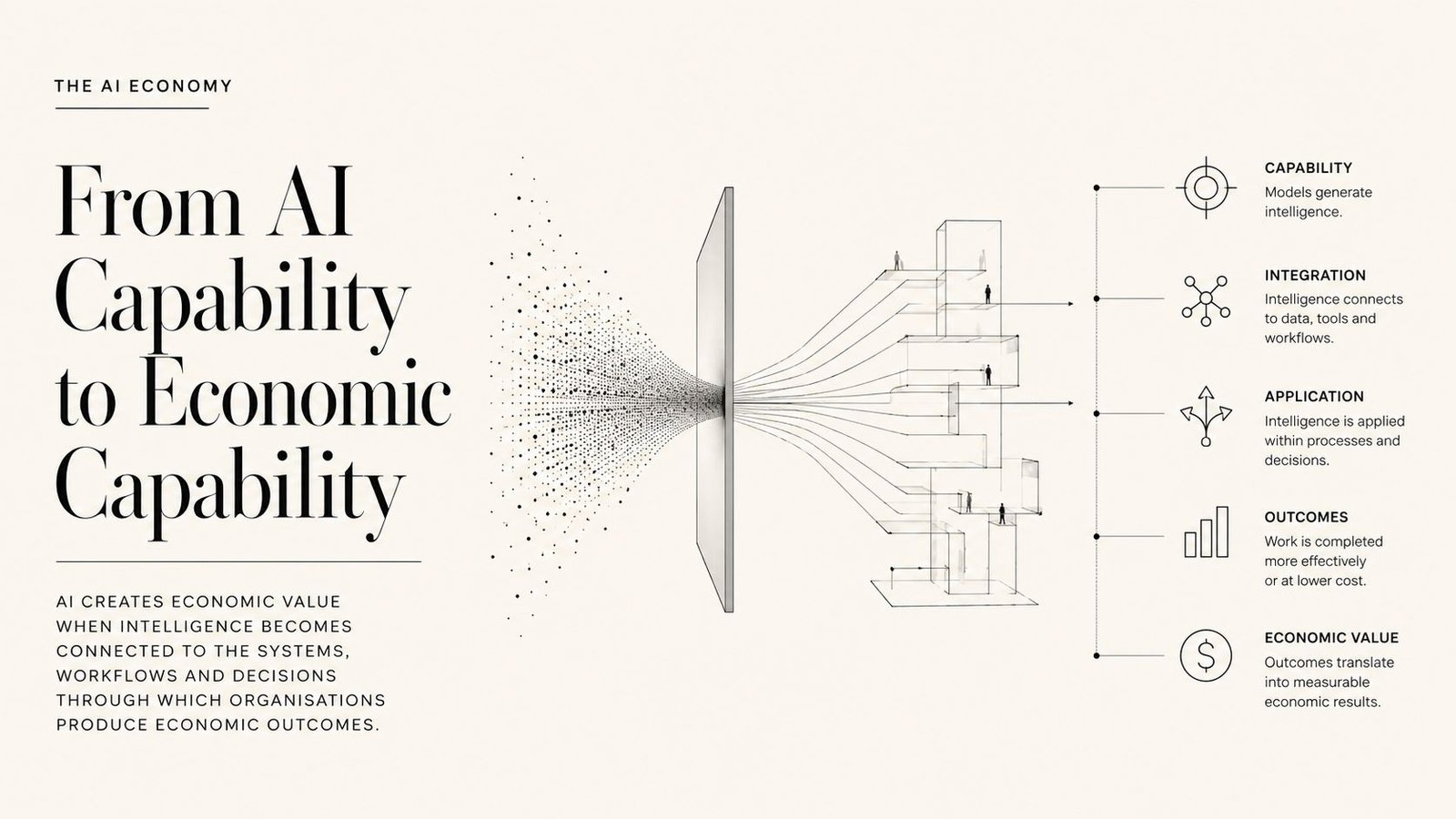
AI capability is advancing rapidly, but technical capability alone does not determine economic impact. The real advantage increasingly lies in the systems that connect intelligence to infrastructure, data, workflows, people and execution.

Agriculture enabled settlement. Industry enabled scale. Computing enabled information. Intelligence may become the next foundational infrastructure shaping economic development, institutional capacity, and human progress.

Industrial states organized around production. Information states organized around data. The next generation of states may organize around intelligence itself. As intelligence becomes a strategic national capability, governments increasingly face the challenge of integrating intelligence into the foundations of state capacity, economic competitiveness, and institutional effectiveness.
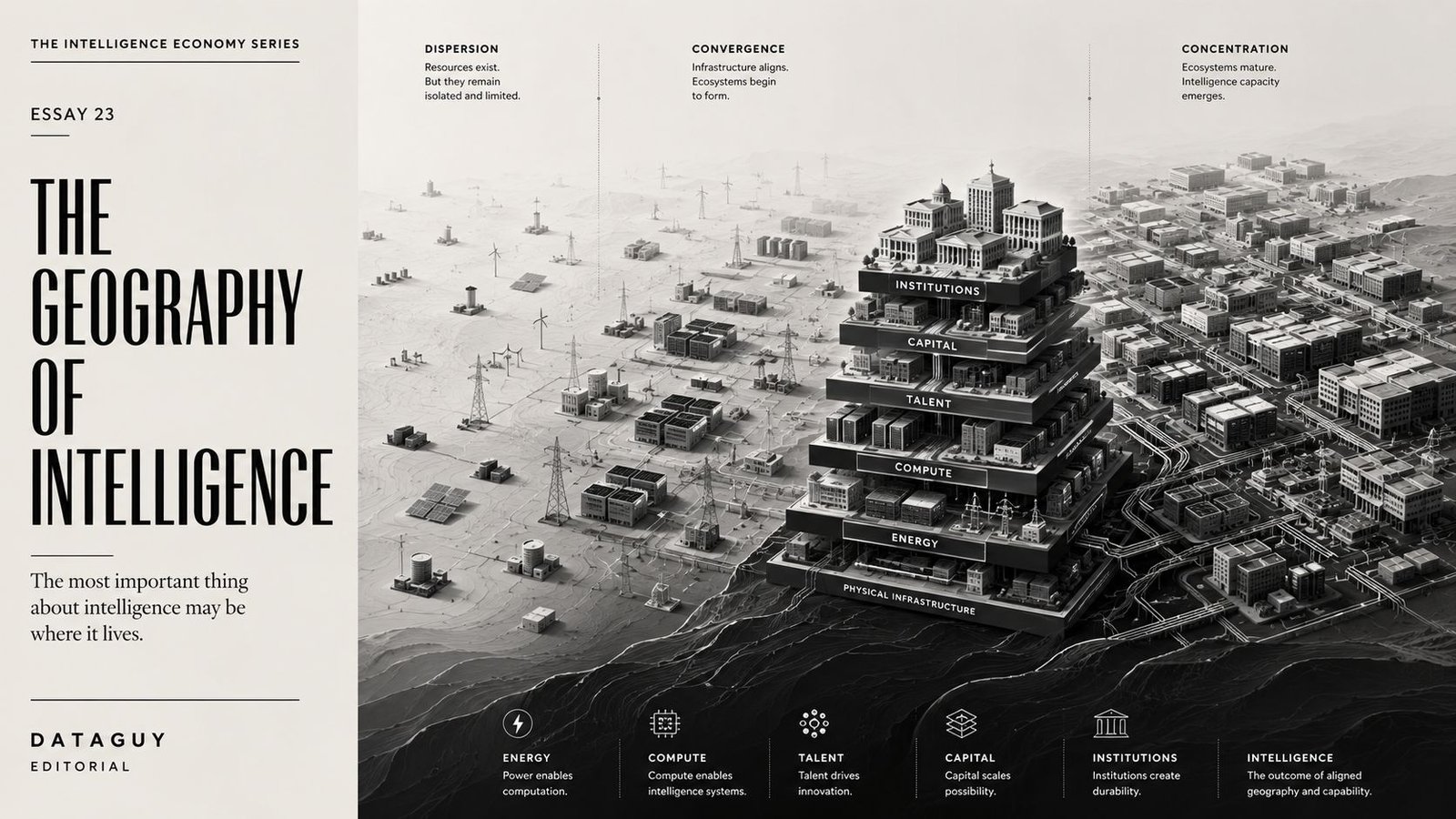
Intelligence appears weightless, digital, and globally accessible. Yet the infrastructure that creates intelligence remains rooted in geography. Energy, semiconductors, data centers, talent, capital, and institutions all exist in specific places. Understanding intelligence therefore requires understanding where intelligence is created, concentrated, and distributed.
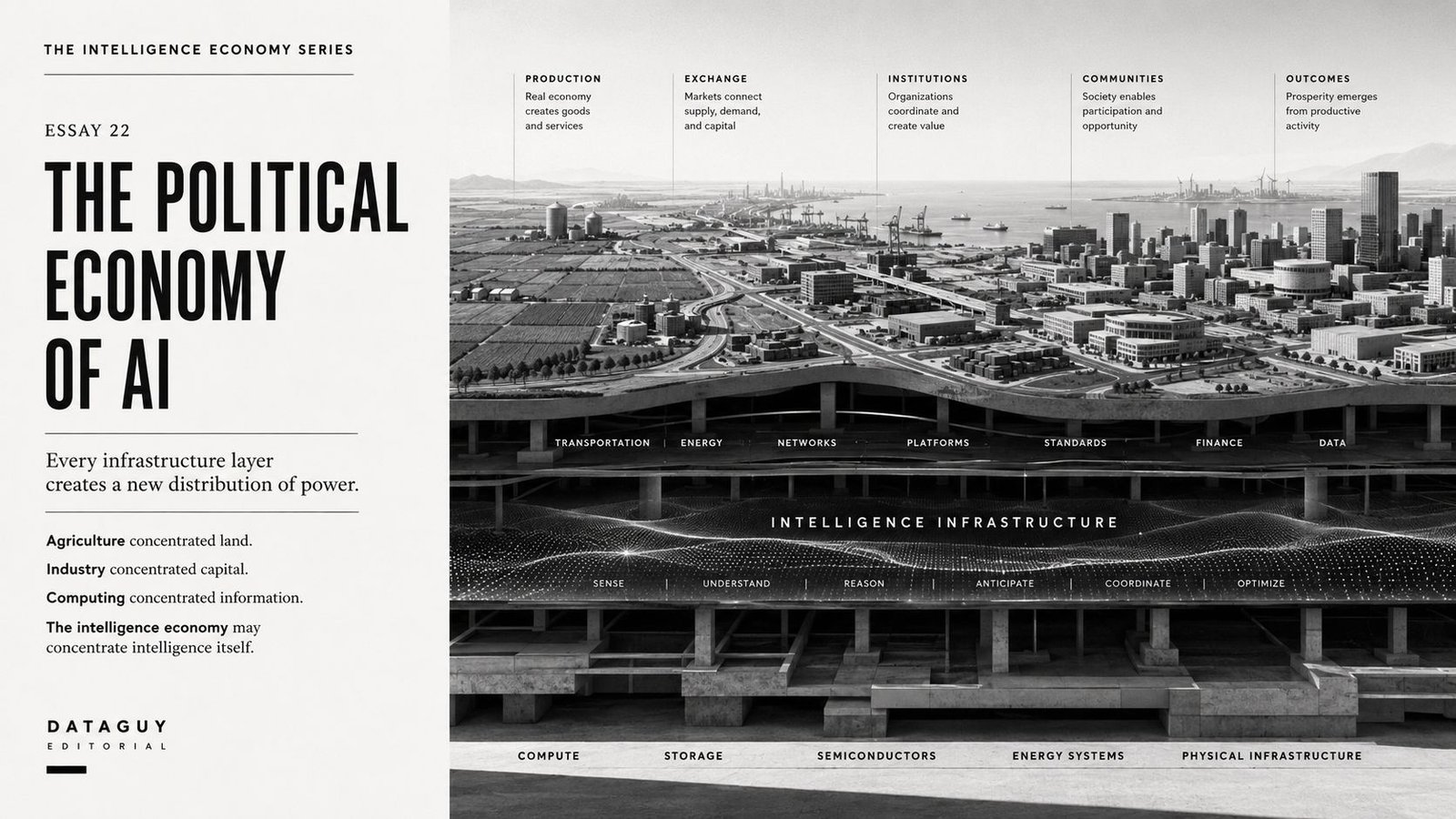
Agriculture created land economies. Industry created capital economies. Computing created information economies. The intelligence economy creates new systems for producing, distributing, and governing intelligence itself. Understanding AI therefore requires understanding the political economy emerging around intelligence infrastructure.
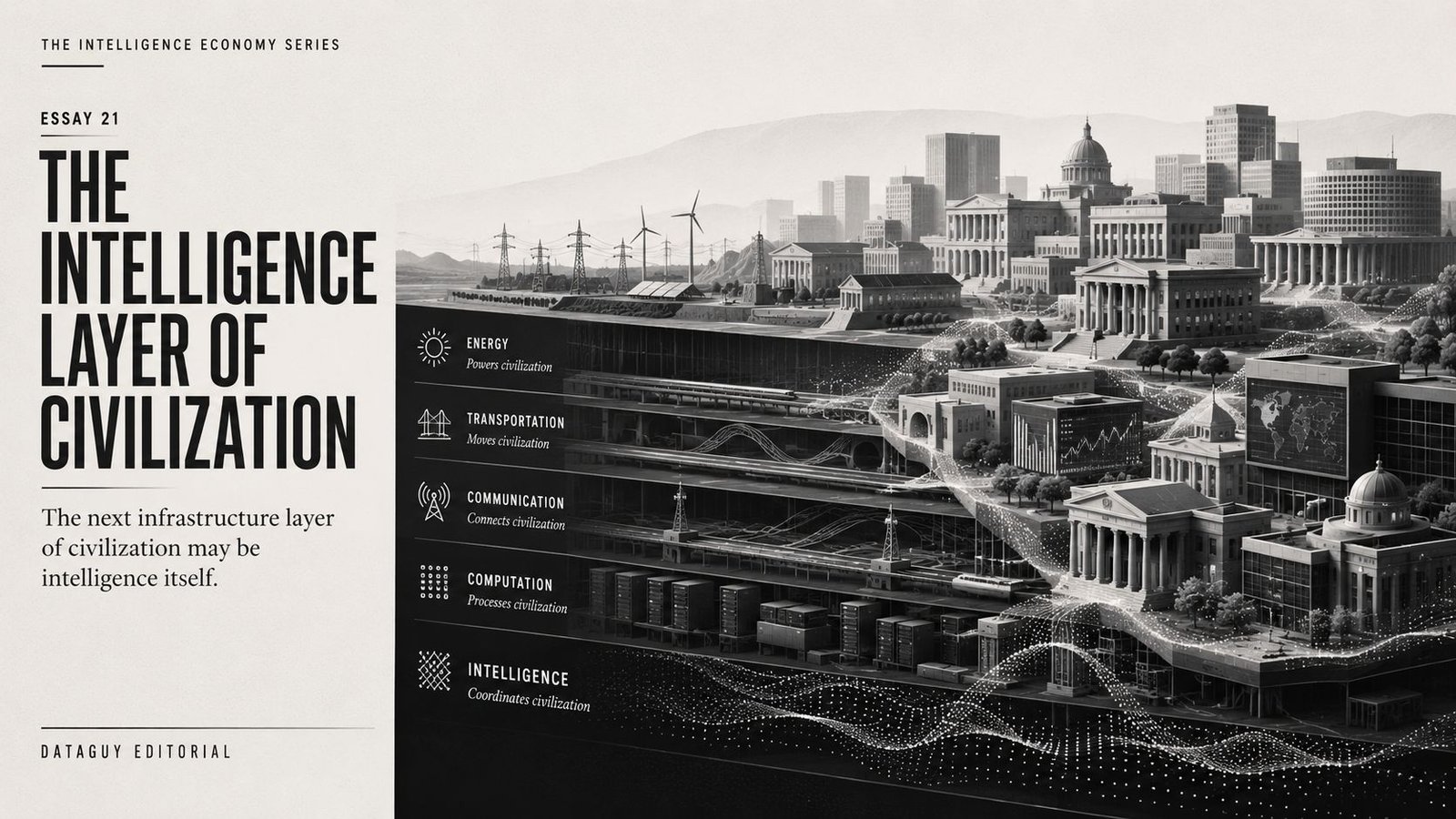
Every major civilization is built upon foundational infrastructure layers that enable coordination at scale. Agriculture created the food layer. Industry created the production layer. Computing created the information layer. The intelligence economy may be creating the next layer: intelligence itself.
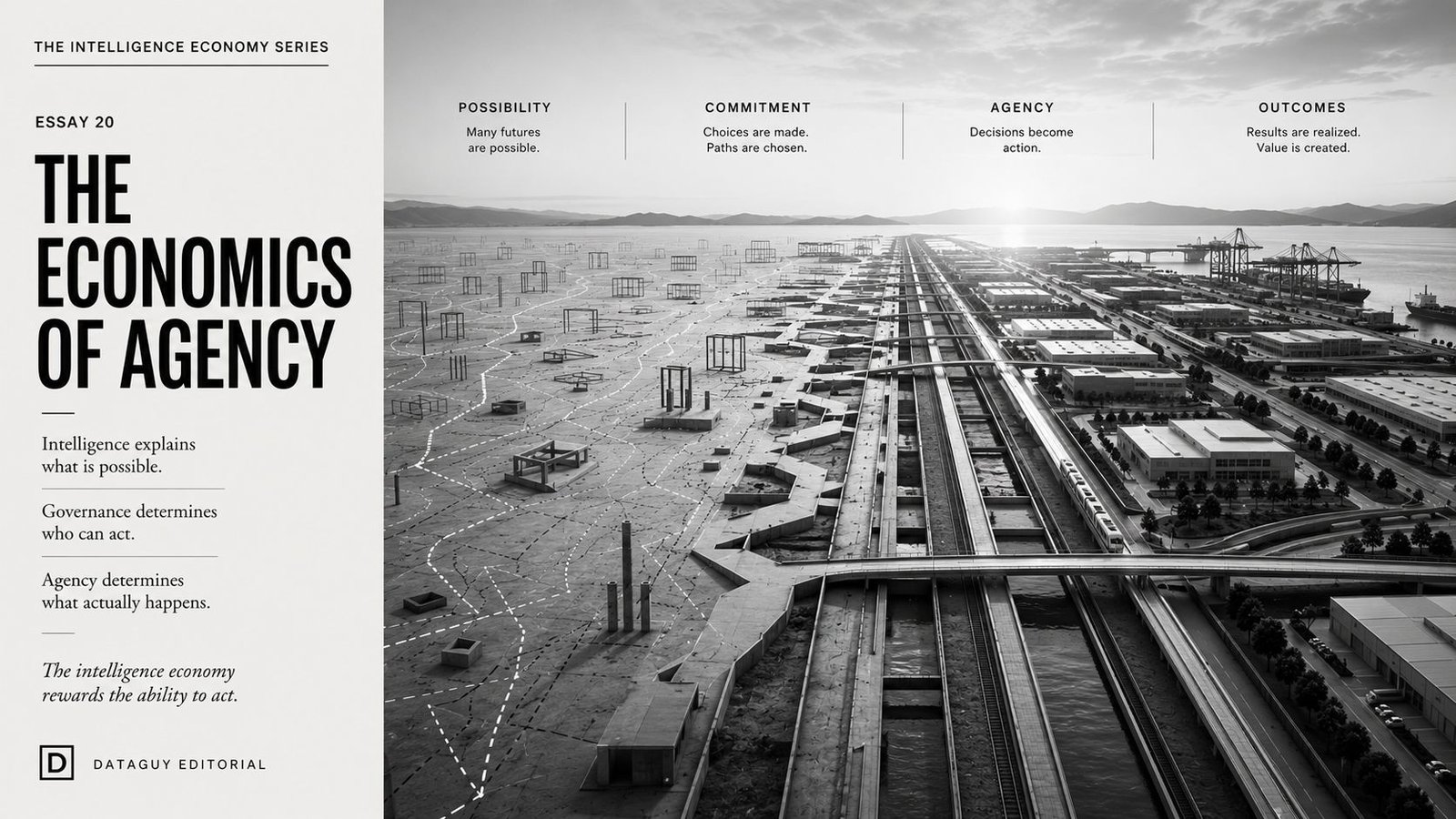
Industrial economies scaled labor. Information economies scaled knowledge. Intelligence economies increasingly scale agency. As intelligence becomes abundant and authority becomes more distributed, economic value shifts toward the capability to convert decisions into coordinated action.
Governance is more than compliance. It is economic infrastructure. Explore why governance may become one of the most important productive systems of the intelligence economy.

Trust is more than a social virtue. It is economic infrastructure. Discover why trust reduces uncertainty, lowers transaction costs, and enables intelligence and judgment to create value at scale.
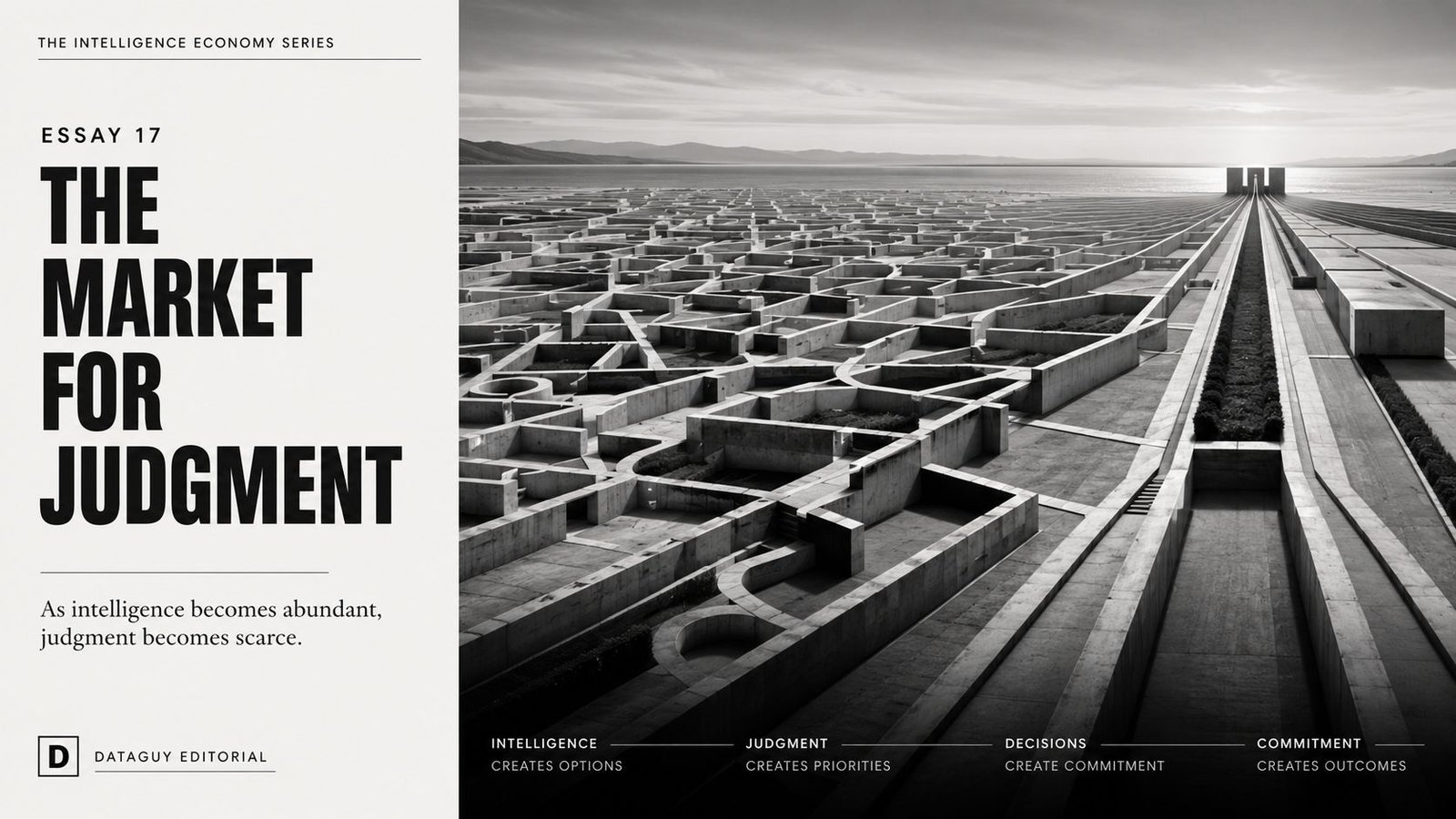
As intelligence becomes cheaper, faster, and more widely available, competitive advantage shifts toward the capability that intelligence cannot fully replace judgment. The intelligence economy may ultimately reward organizations not for what they know, but for how they decide.

The next stage of the intelligence economy is not automation. It is market formation. Discover how intelligence is becoming a tradable economic resource and why intelligence marketplaces may transform how organizations create, distribute, and consume intelligence.

Industrial economies coordinated labor. Information economies coordinated knowledge. Intelligence economies coordinate intelligence. Discover why coordination may become the defining capability of the intelligence economy.

Every major economic era builds infrastructure for its most valuable resource. Industrial economies built supply chains for materials. Information economies built systems for knowledge. The intelligence economy may require something entirely new: a cognitive supply chain for intelligence itself.
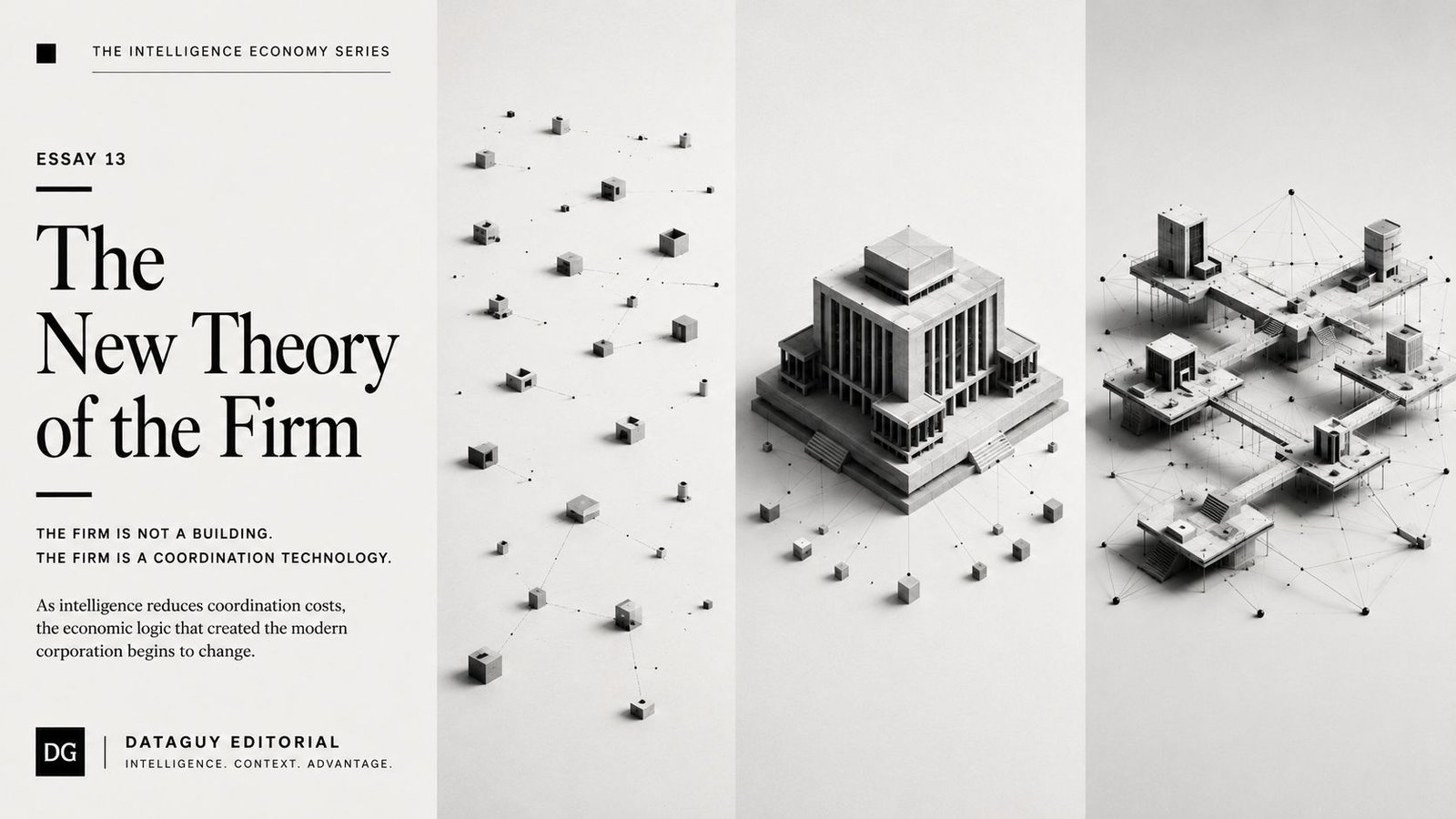
The intelligence economy is reshaping the economics of coordination. Explore why firms exist, how intelligence changes organizational boundaries, and what the future firm may look like.

As intelligence becomes abundant, competitive advantage shifts from information access to decision quality. Explore how decision infrastructure connects memory, context, reasoning, governance, and execution.

As intelligence becomes increasingly abundant and deployable, organizations face a new challenge: coordinating intelligence rather than managing information. Explore the rise of the intelligence organization and its implications for enterprise strategy, governance, and competitive advantage.
Explore how autonomous enterprises are reshaping organizational design. Learn why governance, delegation, and intelligent execution may become the foundation of the next generation of firms.

Delegation has always been the mechanism through which organizations scale. The intelligence economy introduces a new challenge: how should responsibility be allocated when productive capacity exists across both human and digital participants? This essay explores delegation as an economic system and argues that the future of organizational advantage lies in designing effective delegation architectures.
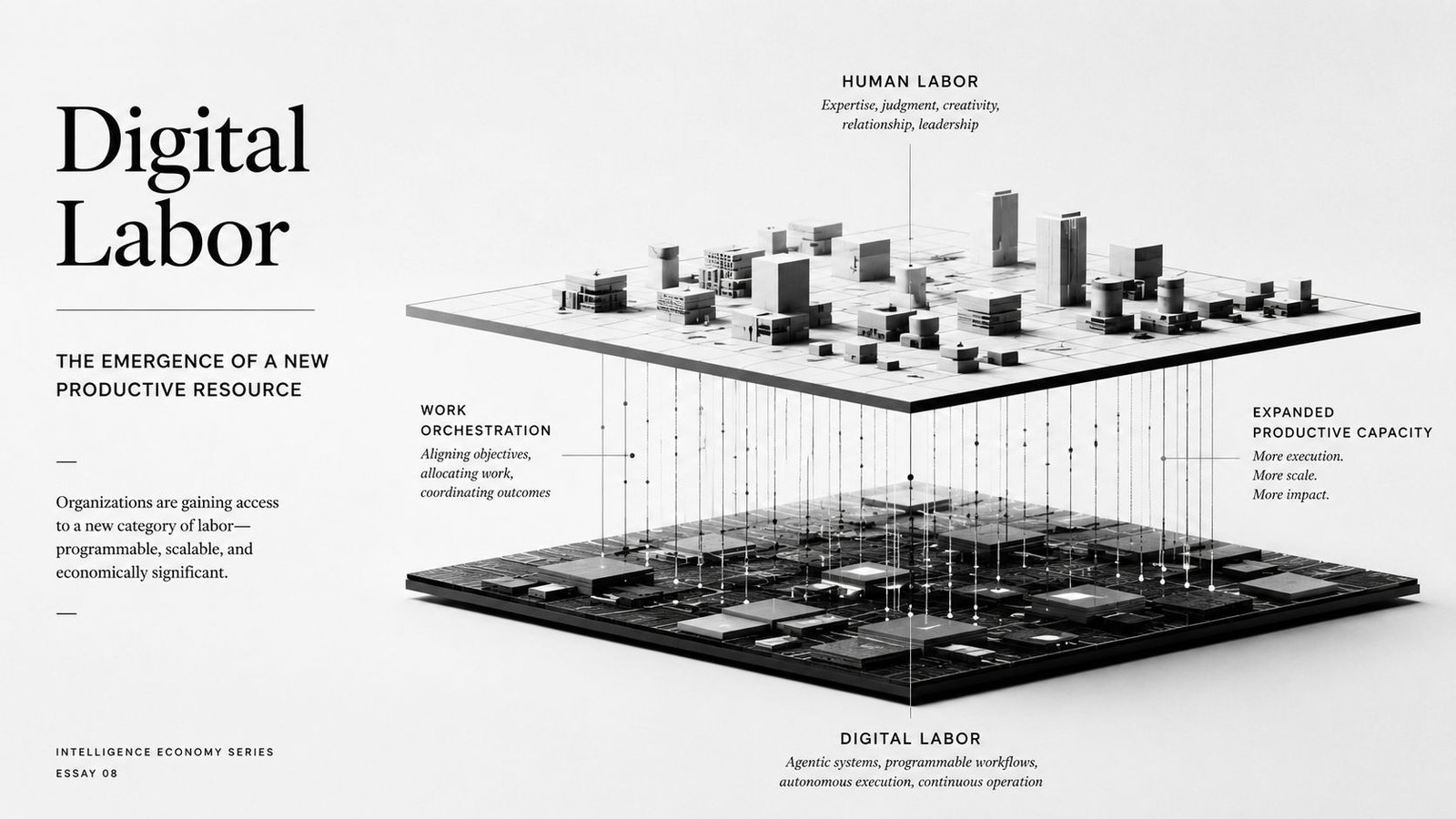
Digital labor represents a structural shift in how organizations access productive capacity. As agentic systems increasingly participate in operational work, firms gain access to a new category of labor that is programmable, scalable, and economically significant. This essay explores the organizational, economic, and institutional implications of a workforce that extends beyond human participation.
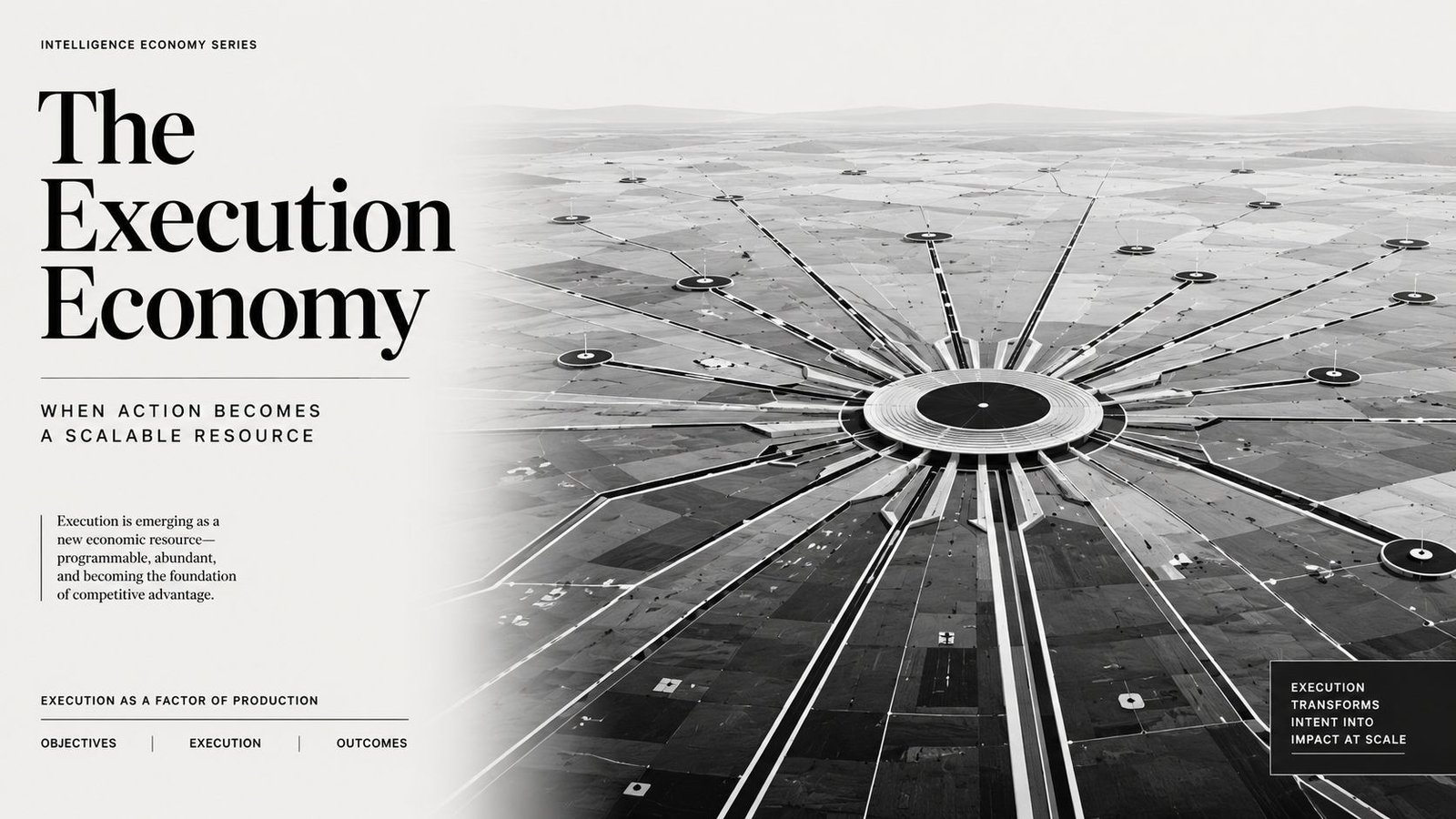
The industrial economy scaled labor. The digital economy scaled information. The intelligence economy may scale execution. In this DataGuy Editorial analysis, we explore how programmable execution is becoming a new productive resource, why execution may emerge as a factor of production, and how organizations will adapt when action becomes abundant.
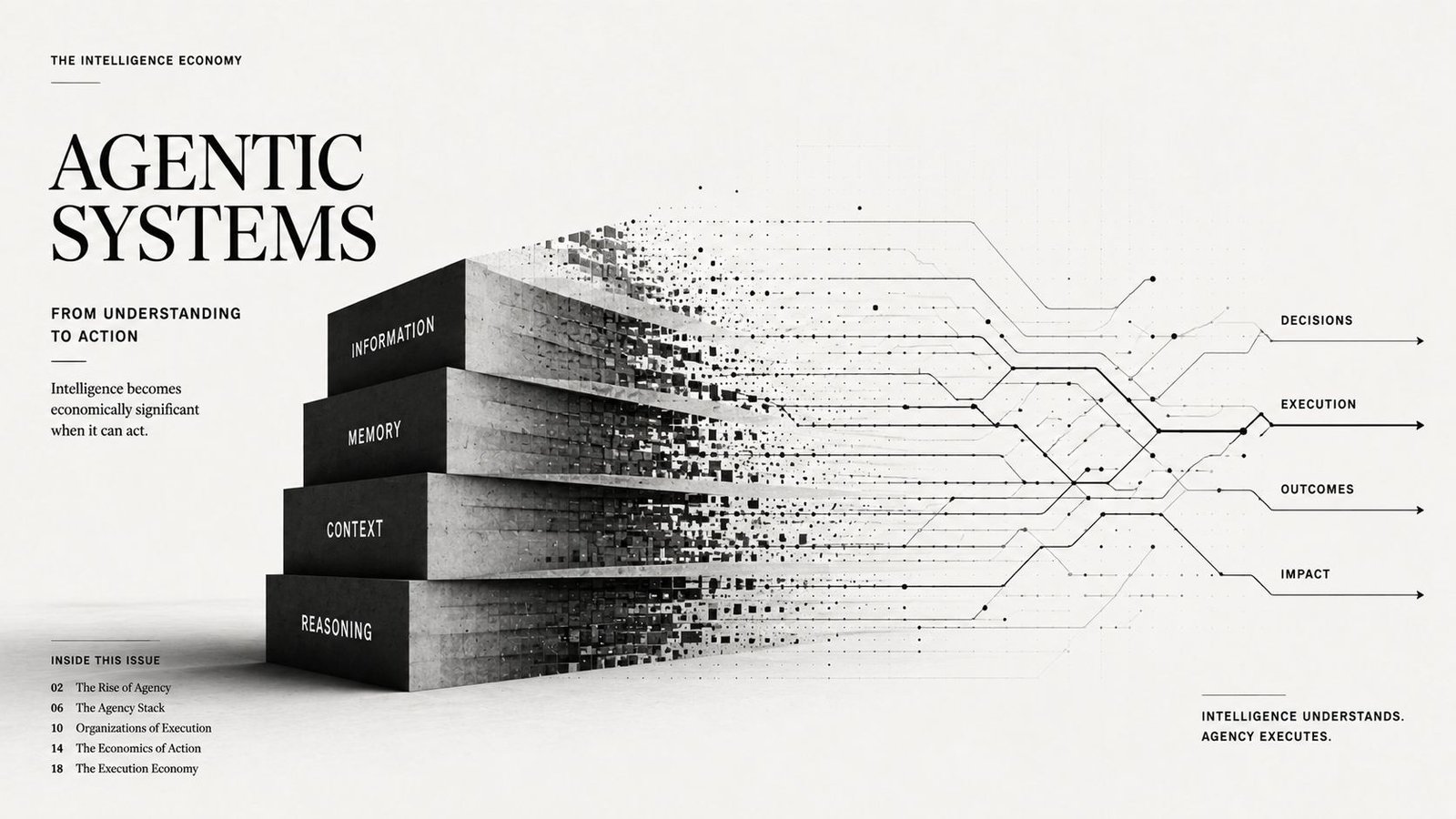
Explore how agentic systems are transforming artificial intelligence from analysis into execution. Learn why programmable agency may reshape organizations, labor, and the economics of work.
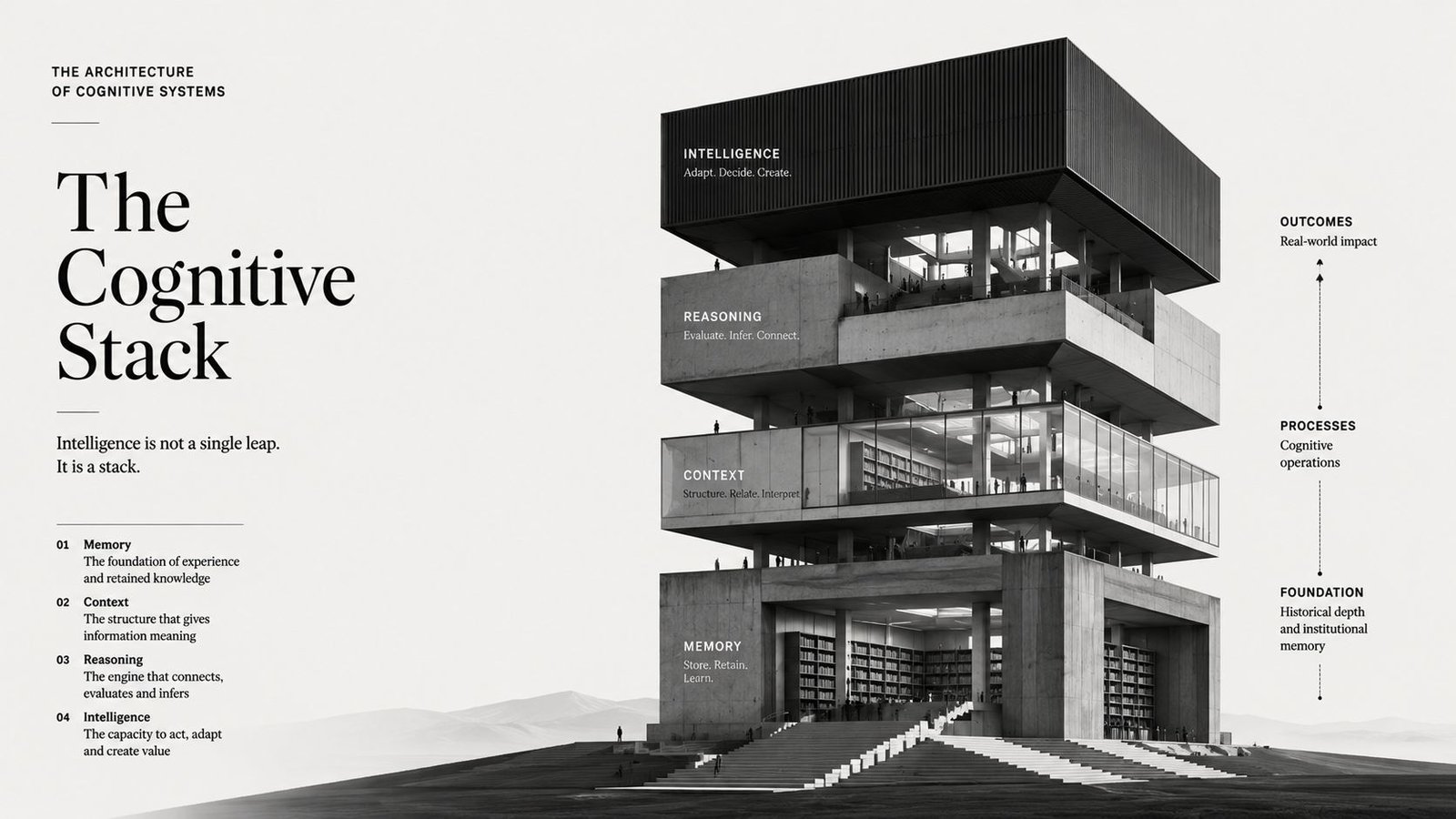
Discover how information, memory, context, reasoning, and action combine to form the Cognitive Stack. Explore why cognitive architecture may become the foundation of competitive advantage in the intelligence economy.
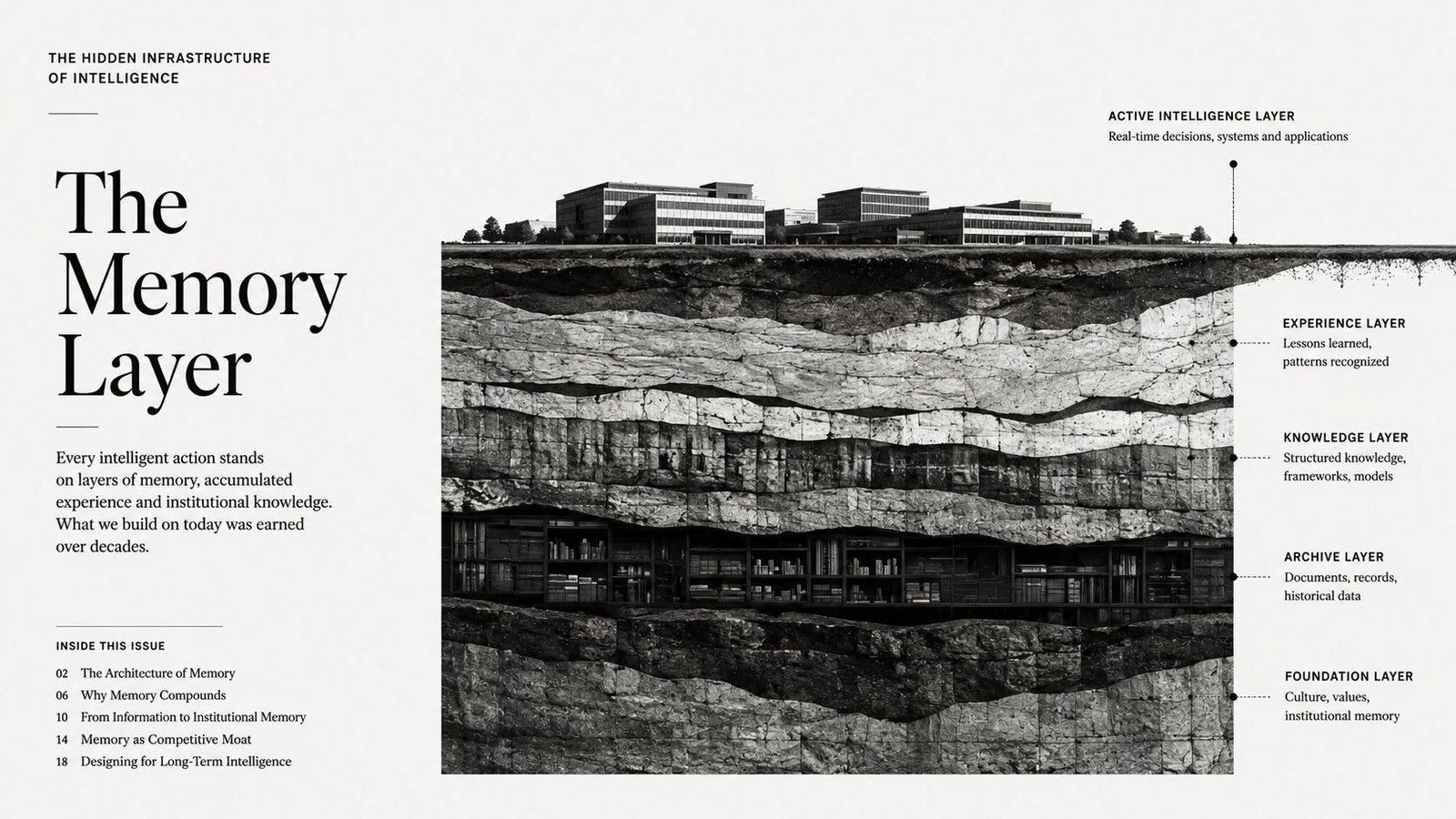
Memory has historically been treated as a repository. The intelligence economy changes that assumption. In this DataGuy Editorial analysis, we explore why memory is becoming a foundational layer of enterprise infrastructure, how organizational forgetting destroys context capital, and why the companies that learn how to preserve and compound understanding may define the next era of competitive advantage.
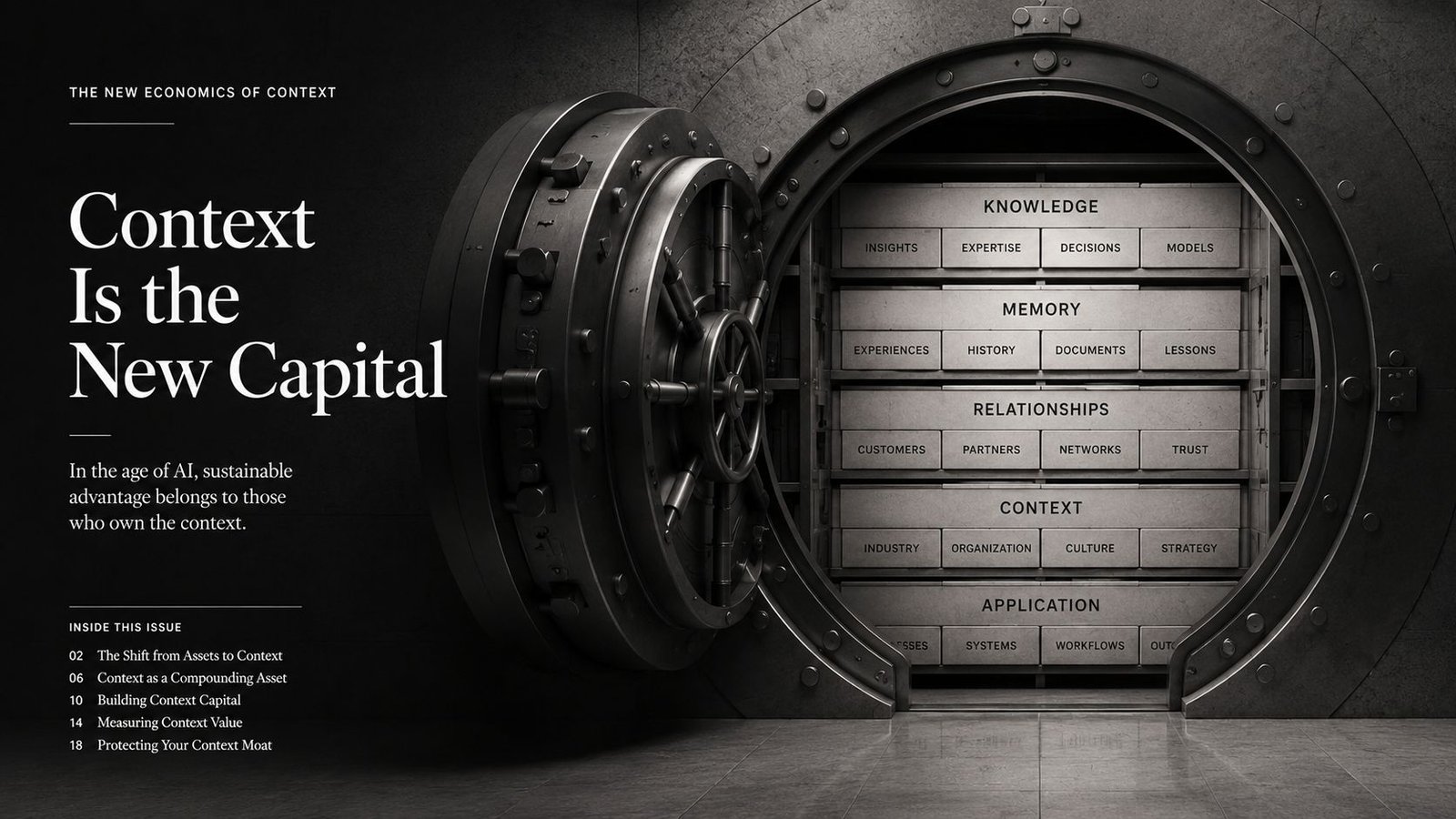
Artificial intelligence is making intelligence abundant, but abundance changes where value resides. In this DataGuy Editorial analysis, we explore why context is beginning to behave like capital, how organizational memory creates durable competitive advantages, and why the most valuable companies of the intelligence economy may be those with the richest reserves of context.

As AI models become increasingly accessible, competitive advantage may shift toward organizational memory, proprietary knowledge, and context capital. Explore the emerging Context Economy and why context may become the most valuable asset in the intelligence era.
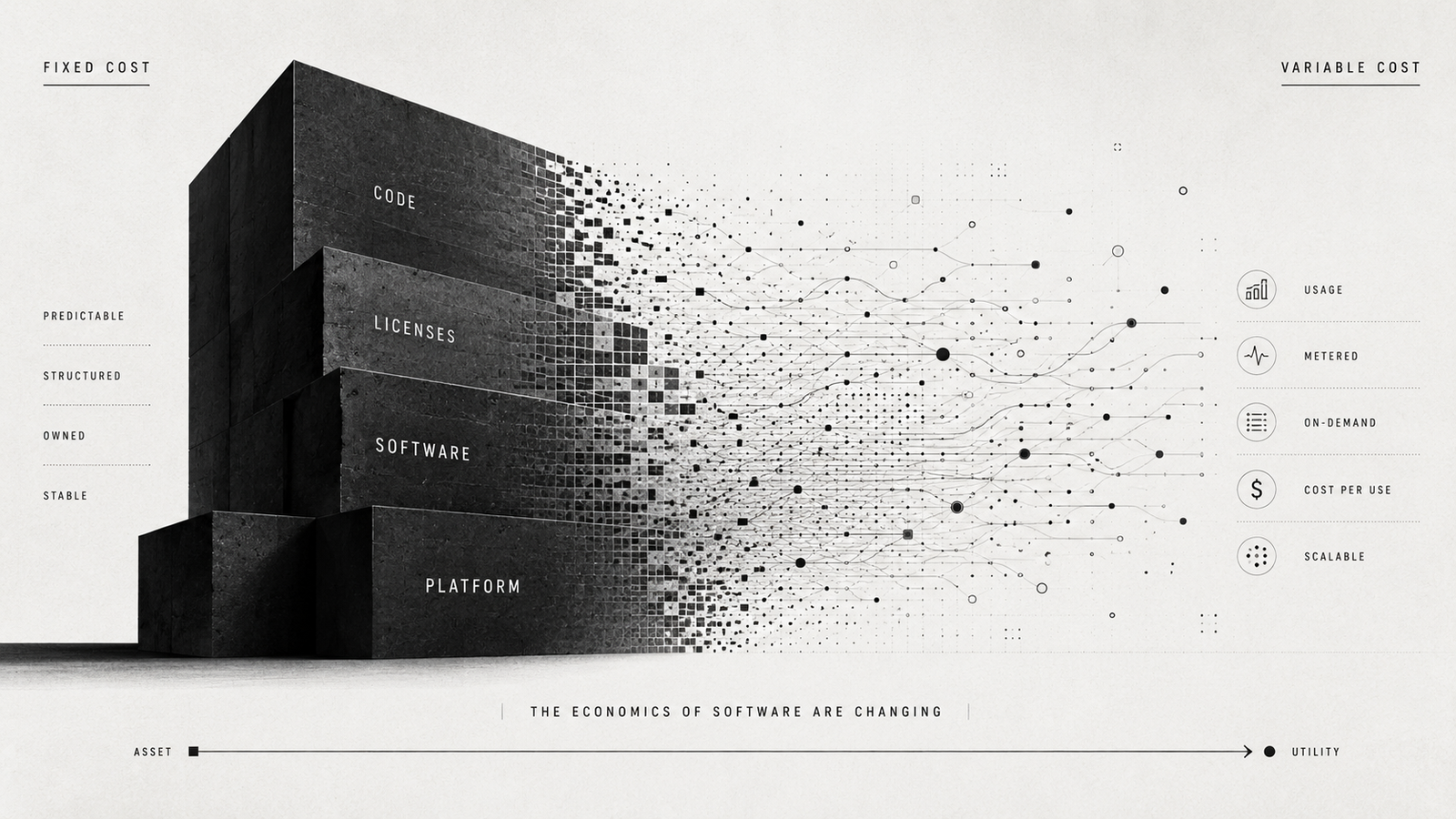
Artificial intelligence is changing software economics. As reasoning becomes a metered resource, software is shifting from a fixed-cost asset to a continuously funded intelligence infrastructure. This in-depth analysis explores AI-native software, agentic systems, intelligence liabilities, AI FinOps, and the future economics of software.
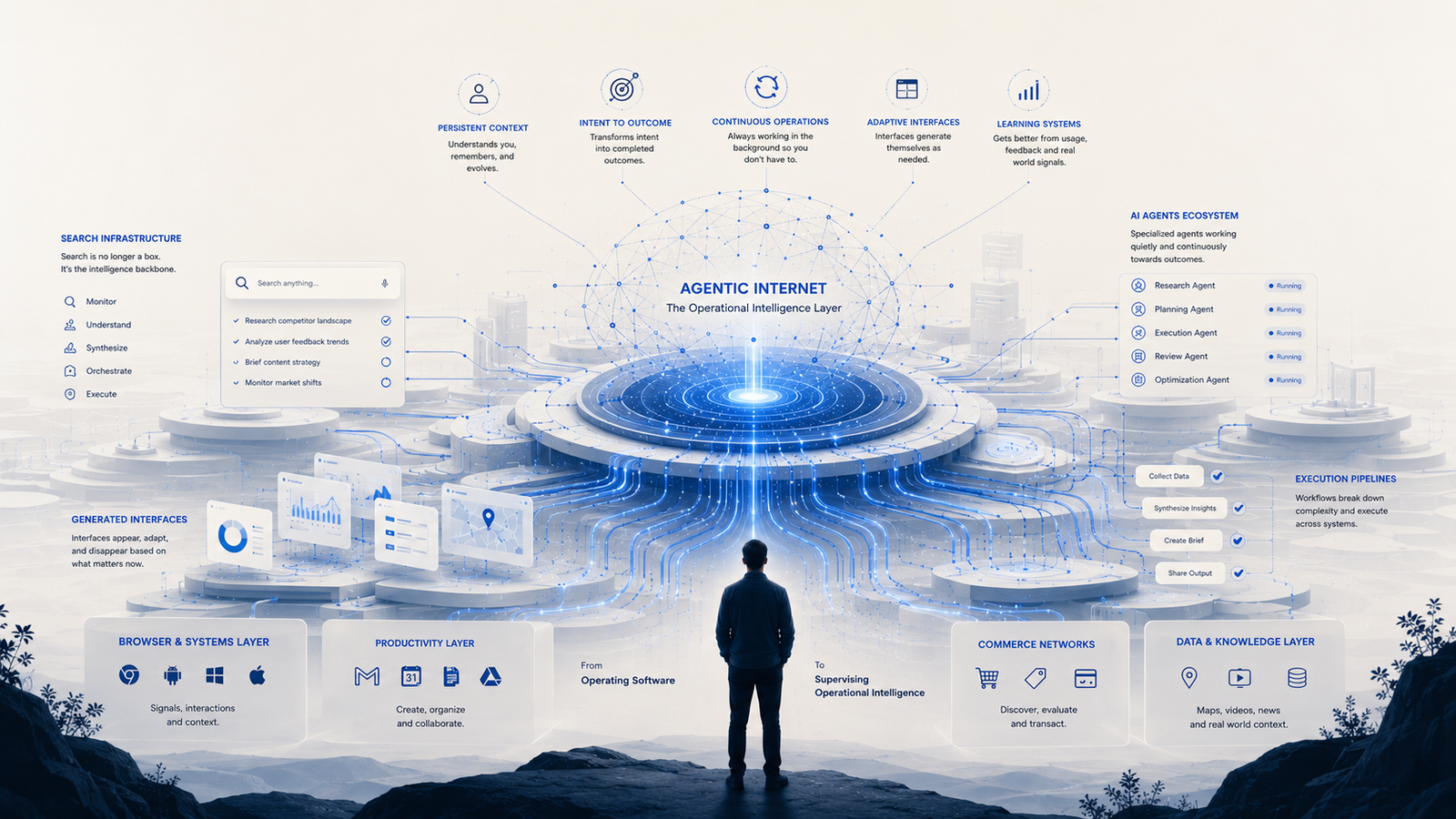
An in-depth analysis of Google I/O 2026 exploring how Search, Gemini, agents, commerce, and interfaces are evolving into operational intelligence systems and shaping the rise of the agentic internet.
System drift is a gradual misalignment that occurs in trusted systems over time. This article explores how drift forms, why it goes unnoticed, and its impact on decision systems.

A DataGuy manifesto defining earned intelligence, the system-level properties AI must have in 2026 to survive scale, scrutiny, and real-world use.

A year-end DataGuy manifesto on why AI in 2025 revealed the limits of scale, context, autonomy, and control - and why systems, not models, defined what actually mattered.

This article explores how code assistants are evolving into knowledge systems, reshaping how organizations retrieve, preserve, and trust institutional memory.

This article examines why agentic systems fail without governance, and how orchestration frameworks like NVIDIA NeMo make control explicit rather than accidental.

This article demystifies CUDA by explaining what it actually abstracts, when GPUs help, when they don’t, and why most GPU waste is architectural, not algorithmic..

This article explores how data science evolves into AI when models give way to systems, and intelligence emerges from reasoning, feedback, and design.

This article explores why statistics and econometrics continue to outperform black-box models in real decision-making, focusing on causality, interpretability, and durability.

This article explores why Python remains central in finance, simulation, and games, showing how it succeeds as a coordination layer rather than a raw performance engine.

This article examines Python modeling tools through the lens of maintenance and ownership, explaining why many ML stacks collapse and what actually survives in production.

This article examines why certain Python data analysis tools endure long after trends fade, focusing on workflow resilience, interoperability, and analytical realism.

A systems-first analysis of Qwen Image Layered, explaining why layered image representation solves structural failures that break most AI image editing workflows.

This article examines maps, heatmaps, network graphs, and flow diagrams through a cognitive lens, showing when spatial visuals clarify decisions and when they increase cognitive load instead.

This article explores why some charts survive context loss while others quietly mislead. It examines distributions, variability, residuals, and dashboards through a decision-first lens, showing how visualization shapes judgment long before logic engages.

GPT 5.2 refines the GPT 5 generation with deeper reasoning, long-context reliability, improved multimodal intelligence, benchmark leadership, and advanced agentic coding. A complete technical and enterprise-focused breakdown of how GPT 5.2 transforms real-world AI workflows.

DeepSeek V3.2 introduces DeepSeek Sparse Attention (DSA), a breakthrough that brings near-linear long-context scaling, faster inference, and GPT-5-level reasoning at significantly lower cost. This expert guide breaks down the architecture, Lightning Indexer, MoE design, benchmarks, pricing, and enterprise use cases.

Claude Opus 4.5 isn’t just another model upgrade — it’s Anthropic’s strongest attempt yet at building an enterprise-grade intelligence layer that can reason deeply, orchestrate tools, and sustain multi-hour workflows with near-human consistency.

An in-depth guide to Moonshot AI’s Kimi K2 Thinking — a trillion-parameter Mixture-of-Experts model designed for deep reasoning, tool integration, and scalable agentic intelligence. This article breaks down its architecture, training pipeline, efficiency optimizations, benchmarks, and real-world research implications.

Nano Banana Pro is the dedicated image intelligence layer inside Gemini 3 Pro, built for 4K generation, accurate text rendering, grounded infographics, and multi-image consistency. This in-depth guide covers capabilities, workflows, prompts, and scaling strategies for teams that need reliable, production-ready visuals.

An in-depth guide to Moonshot AI’s Kimi K2 Thinking — a trillion-parameter Mixture-of-Experts model designed for deep reasoning, tool integration, and scalable agentic intelligence. This article breaks down its architecture, training pipeline, efficiency optimizations, benchmarks, and real-world research implications.
An in-depth guide to Moonshot AI’s Kimi K2 Thinking — a trillion-parameter Mixture-of-Experts model designed for deep reasoning, tool integration, and scalable agentic intelligence. This article breaks down its architecture, training pipeline, efficiency optimizations, benchmarks, and real-world research implications.

Google’s A2P (AP2) Protocol Explained: Architecture, Mandates, Security & Future of Agentic Commerce
Explore Google’s A2P (AP2) Protocol — the open, cryptographic standard enabling AI agents to transact securely. Learn how Mandates work, how AP2 integrates with A2A and MCP, and why it’s redefining digital payments for the agentic web.

In 2025, your browser doesn’t just search — it thinks, remembers, and acts. Comet and Atlas are rewriting the rules of web intelligence, transforming browsers from static windows into active collaborators.

Google Veo 3.1 introduces a cinematic-grade approach to AI video generation — merging multi-shot continuity, camera-aware motion, and an end-to-end production pipeline. This in-depth guide explains its architecture, workflow, and creative impact step by step.

Workfast.ai is redefining modern teamwork. Built for speed and clarity, it merges AI automation with collaboration tools to help startups and growing teams streamline workflows, save time, and focus on outcomes — not overhead.

A step-by-step expert comparison of OpenAI AgentKit, Zapier, and n8n — uncovering how each handles automation, AI reasoning, and workflow governance. Ideal for engineering and product teams evaluating next-generation agentic platforms.

Enterprises often outgrow batch-first data warehouses like Snowflake and Redshift. This migration guide provides a step-by-step approach to move workloads into SingleStore, including schema mapping, bulk loading, CDC pipelines, validation, and cost optimization — ensuring a smooth transition to real-time analytics.

With so many cloud data platforms available, choosing the right one is tough. This guide compares SingleStore, Snowflake, and Amazon Redshift across architecture, scalability, ingestion, cost, and use cases — giving you a clear framework for selecting the best fit for your workloads.

Sora 2 is OpenAI’s physics-aware, audio-native text-to-video model. This expert guide explains its architecture, prompting strategies, native audio, and cameo features—and compares it with Veo 3 and Runway Gen-3.

A flat-style illustration in brown, black, and white showing how SingleStore functions as an HTAP database. On the left, OLTP workloads; on the right, OLAP analytics. Both converge into a central HTAP cluster labeled SingleStore: Real-Time SQL for Modern Workloads.

Alibaba’s Qwen3 family introduces three cutting-edge models — Qwen3-Max, a trillion-parameter reasoning powerhouse; Qwen3-Next, an efficiency-first MoE system; and Qwen3-Omni, a multimodal foundation model. This technical deep dive explores their architectures, benchmarks, and adoption strategies for enterprise AI.

Part 2 of our Datadog series explores advanced observability: AI/LLM monitoring, Bits AI automation, SRE-aligned workflows, pricing tiers, and SLIs/SLOs. A complete guide to scaling observability and reliability with Datadog.

Datadog provides unified observability and security across infrastructure, apps, and AI systems. This article covers its core modules, integrations, APM, logs, RUM, security, and data retention, with comparisons to Prometheus and Grafana.

Snowflake’s 2025 AI Data Cloud brings together data, analytics, and AI with Cortex AISQL, conversational intelligence, and robust governance. Backed by acquisitions like Crunchy Data, Datavolo, and TruEra, it redefines enterprise AI adoption. Here’s how it compares with Databricks for modern AI strategies.

The Databricks AI Suite brings together data engineering, governance, and AI workflows on a single Lakehouse platform. This guide breaks down its architecture, key tools like Mosaic AI, Unity Catalog, and Genie, and shows how enterprises can build scalable, trustworthy AI.

Bigger isn’t always smarter. Qwen3-Next proves efficiency and intelligence can scale together—here’s how Alibaba is rewriting the rules of large language models.

Google’s Nano Banana (Gemini 2.5 Flash Image) delivers real-time image editing via natural prompts, seamless merging, and consistent identity preservation — all with blazing speed and SynthID watermarking.

Oracle’s AI Suite brings together intelligent agents, customizable AI workflows, in-database machine learning, and high-performance infrastructure — all deeply embedded across Oracle’s enterprise stack. Whether you’re a global enterprise or a growing business, this guide walks through everything you need to know.

Discover how Zoho’s AI Suite empowers enterprises with contextual intelligence through Zia, AI agents, AutoML, ChatGPT integration, and IoT automation. Learn how Zoho brings together no-code tools, in-house LLMs, RPA, and analytics to deliver scalable, secure AI across 100+ business apps.

In 2025, Google AI spans everything from deep reasoning models like Gemini 2.5 Pro to creative tools like Veo and Flow, Workspace integrations, and autonomous agents. This guide explains each component—from APIs and Search Labs to Workspace AI and Project Mariner—so builders, researchers, and enterprises can adopt the right tools, faster.

What if one image could kickstart your 3D prototype? Microsoft Copilot 3D turns that into reality—offering one-click AI-powered modeling built for speed, clarity, and early-stage design.

Microsoft Copilot is reshaping how we work—automating tasks, accelerating analysis, and embedding AI across apps we use every day. Here’s the full guide to its ecosystem, agents, and business impact.

What if you could create a fully illustrated, narrated storybook for your child — in minutes, from a single prompt? Gemini Storybook makes that real, powered by Google's AI.

Genie 3 from Google DeepMind brings interactive 3D worlds to life from a single text prompt — no 3D assets needed. Discover how it works and why it’s a game-changer.

With gpt-oss-120b and 20b, OpenAI is offering full access to model weights, reasoning workflows, and fine-tuning—making cutting-edge AI truly deployable, explainable, and enterprise-ready.

OpenAI’s GPT-5 consolidates its entire model lineup into a unified, routed system with stronger reasoning, multimodal intelligence, and safer completions. This guide breaks down the architecture, benchmarks, and safety features, then walks you through a practical migration strategy for developers and enterprises.

Context Engineering is the missing layer in AI system design. This blog explores how memory, compression, and orchestration pipelines transform prompts into production-ready intelligence.

From memory-driven agents to modular context workflows, this article explores how context engineering is becoming the backbone of intelligent AI systems.

A deep dive into compression tactics that help language models scale context intelligently. Learn the difference between token-based and semantic compression and how to apply each in production.

Multi-agent AI systems depend on precise context window design for effective collaboration. This article breaks down hierarchical context strategies, memory structures, and coordination paradigms that enable intelligent agent workflows.

Prompts alone don’t build intelligent agents. This guide to context engineering explores how smart memory use, retrieval, compression, and multi-agent context flows enable scalable, reliable LLM-based systems.

Feature engineering powered classical machine learning. Context engineering is powering the next wave of intelligent language models. Here's how they compare—and why this shift matters.
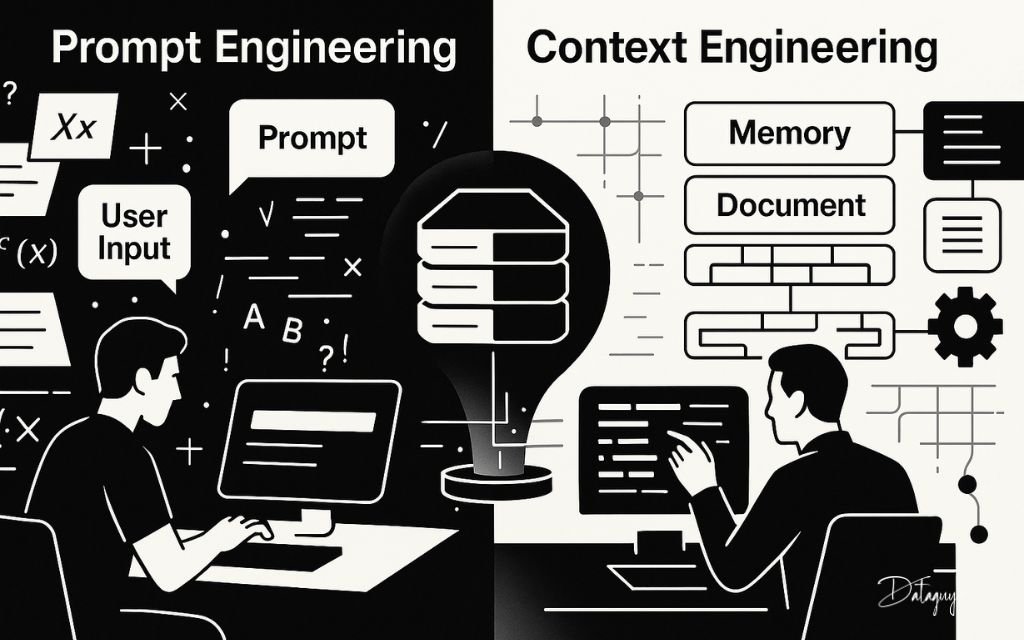
As LLMs grow more sophisticated, the next frontier isn’t prompt trickery — it’s context mastery. Discover how context engineering unlocks better AI behavior, memory, and workflows.
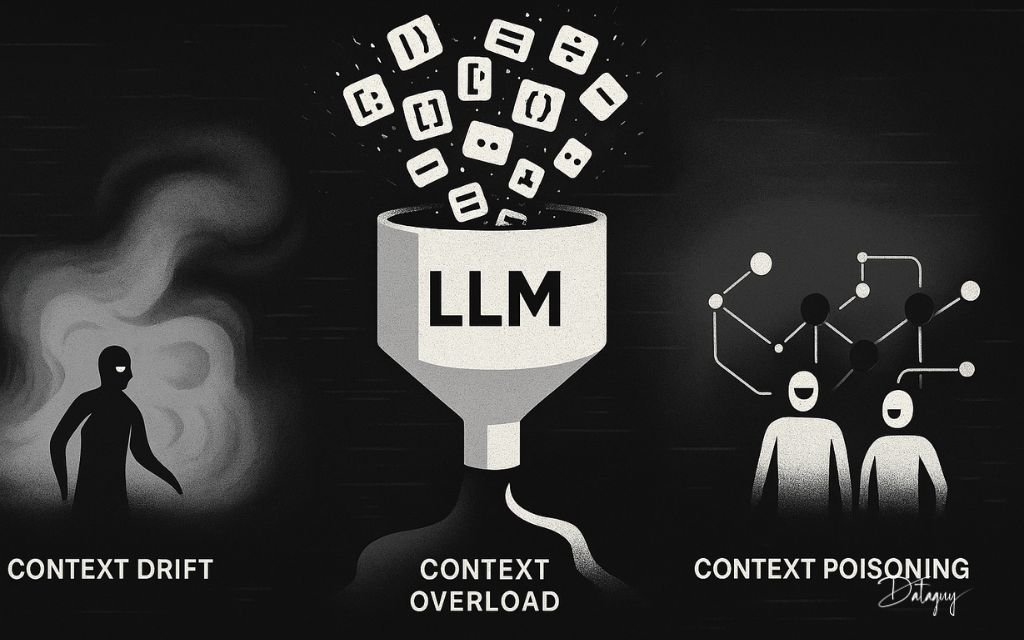
When LLMs fail, it’s often a context issue. Learn how poisoning, drift, and overload silently sabotage AI performance—and how to fix them.
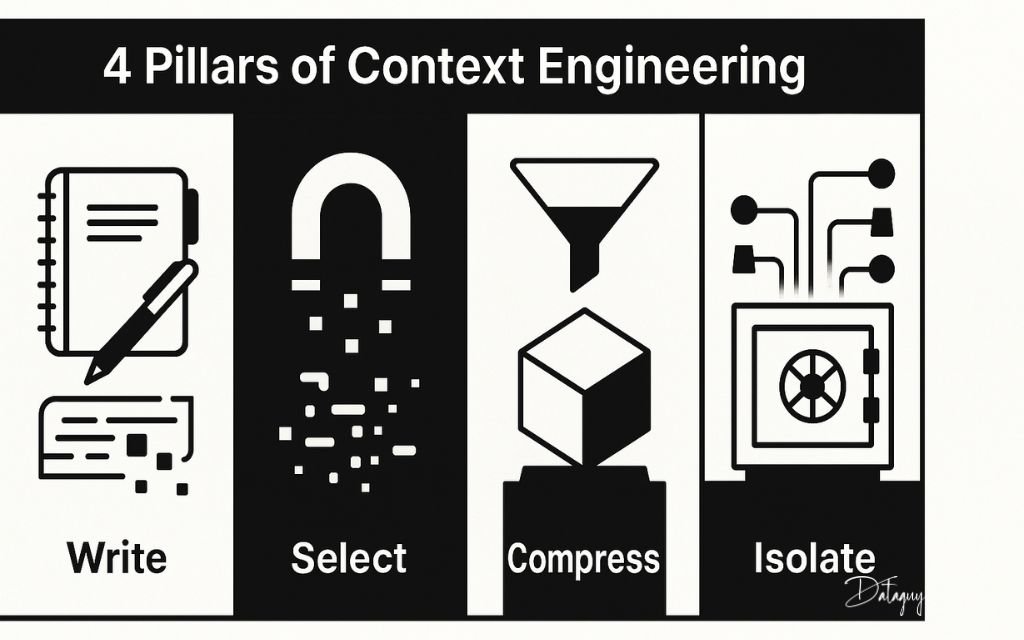
From memory retention to smart summarization, these 4 pillars of context engineering define how AI agents operate with relevance and clarity. A must-read for LLM developers and AI architects.
Kimi K2 isn’t just big — it’s built to reason, automate, and execute. This blog breaks down how Moonshot AI’s trillion-parameter MoE model outperforms on real-world engineering, agent workflows, and open-source usability.

Understand the discipline that makes or breaks AI systems today: context engineering. Learn how top teams design context-aware agents with memory, dynamic data, and tool integration.

Grok 4 is xAI’s answer to next-gen reasoning. With real-time integration, modular brains, and team-style agent design, it’s reshaping what LLMs can do—and where they’re headed.

AI voice tech has evolved. This deep-dive compares ElevenLabs and Chatterbox—the two most influential platforms in 2025. From ease-of-use to data control, discover which one fits your workflow and values.
Vibe coding isn’t a trend—it’s a movement. This deep-dive reveals the AI agents shaping the future of creative, intuitive software development in 2025.
A no-fluff guide to the top 26 AI coding agents in 2025. Compare tools like GitHub Copilot, Continue.dev, Devika, and OpenDevin — based on how they actually work.
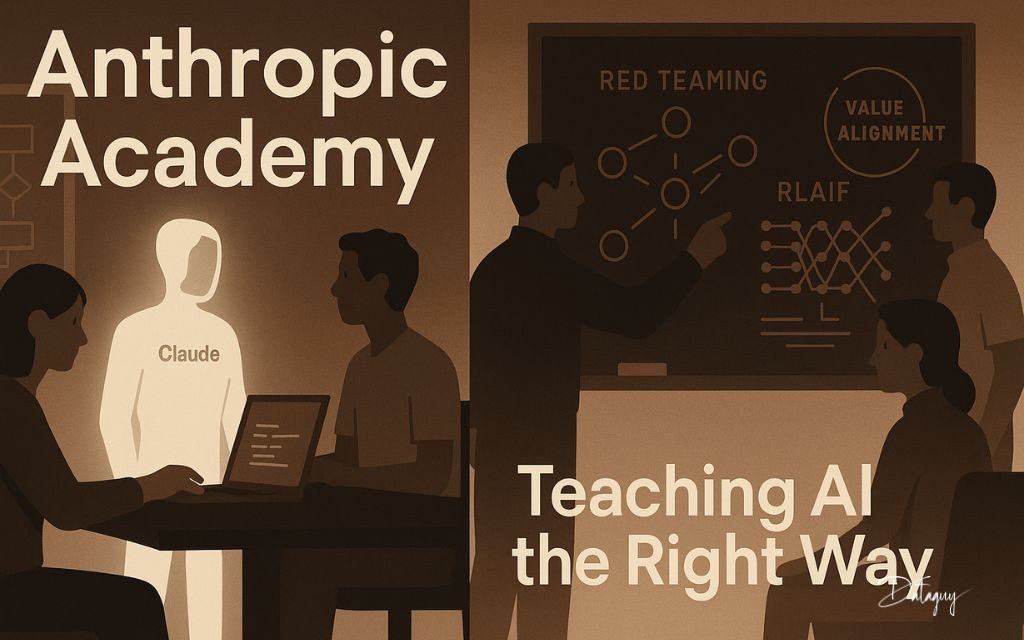
AI education shouldn’t be an afterthought — it should be designed with safety from the start. Anthropic Academy is doing just that. Here's how.
Kling 2.1 and Veo 3 are redefining AI video creation. Learn which model fits your creative workflow—whether you're focused on control, realism, or audio-rich storytelling.
What if you could direct a cinematic short film — using nothing but a prompt? Kling 2.1 turns this into reality, redefining how creators think about motion, narrative, and visual control.
Google didn’t just launch an AI video generator — it launched a director’s assistant. Flow AI turns prompts into cinematic scenes with dialogue, camera movement, and continuity.

Most AI video tools promise realism—but fall short when sound enters the scene. Google Veo 3 changes that completely. With 4K resolution, built-in dialogue, ambient audio, and physics-consistent visuals, it isn’t an upgrade to AI video—it’s a complete rewrite of what’s possible in cinematic content creation.
Explore the three major AI types — Analytical, Generative, and Agentic AI — with real-world examples, technical details, and future applications in business and automation.

Understand how MCP, A2A, and AG-UI function in AI systems. Compare protocols for tool access, agent coordination, and real-time user interface integration.

Learn how the AG-UI Protocol enables real-time, interruptible, and collaborative workflows between AI agents and users through event-based UI integration.

Can an open-weight model like Qwen 3 really challenge GPT-4o, Claude, or Gemini? With MoE efficiency, deep reasoning, and full deployment freedom — it just might.

Qwen 3 introduces expert-routing, multilingual scale, and faster reasoning. See how it stacks up against Qwen 2.5 across architecture, training, benchmarks, and deployment.
In the rapidly evolving field of artificial intelligence, understanding the protocols that enable AI agents to interact and collaborate is crucial. This guide delves into Function Calling, MCP, A2A, and ADK, providing insights into how each protocol facilitates the development of sophisticated AI systems.
Tired of single-agent limitations? Google’s ADK is redefining how multi-agent AI systems are built — with modular design, seamless delegation, multimodal interaction, and enterprise-ready deployment via Vertex

OpenAI’s o3 and o4-mini set new benchmarks with agentic tool use, multimodal reasoning, and state-of-the-art coding, math, and visual problem-solving.

Master GPT-4.1 prompting with expert strategies for agent workflows, tool usage, chain-of-thought, and long-context handling. Ideal for developers and AI builders.
While the AI world debates the merits of GPT-4, Claude, and Gemini, a powerful new model is quietly setting benchmark records—without the subscription fees or walled gardens. Meet Kimi AI and its next-gen upgrade Kimi K1.5, built by China’s Moonshot AI.

If GPT-4o was smart, GPT-4.1 is strategic—built to think deeper, code better, and understand more, all while cutting latency and cost across the board.

What if Salesforce, SAP, and LangChain agents could seamlessly work together—with zero manual integration? Google’s A2A Protocol makes that future real.

Think you need a 100B model to do serious AI work? Think again. Google’s Gemma 3 brings multimodal power and long-context understanding to your GPU—without breaking the bank.

Explore Meta’s Llama 4 models powered by MoE architecture, multimodal AI, and a massive 10M-token context window. Discover how it’s redefining open-source AI.

Vibe coding is changing how developers code in 2025. Explore tools like Copilot & Cursor, new workflows, and how to write code by simply vibing.

The future of AI learning is here. OpenAI Academy provides cutting-edge AI training, expert mentorship, and hands-on projects—bridging the gap between theoretical AI knowledge and real-world applications.
Amazon Nova & Nova Act mark Amazon’s entry into agentic AI. Discover how Nova Act automates web-based tasks, outperforms competitors, and integrates seamlessly with Alexa+.
Discover how Baidu's ERNIE 4.5 & X1 outperform GPT-4.5 at just 1% of the cost. Explore multimodal capabilities, deep reasoning, and industry applications transforming AI.

GPT-4o Image Generation is more than just an AI upgrade—it’s a creative powerhouse. From ultra-realistic visuals to intuitive multimodal understanding, this breakthrough is reshaping industries. Are you ready to experience the next frontier of AI-driven design?

Speed or reasoning power? Gemini 2.5 Pro leads in complex problem-solving, while Gemini 2.0 Flash dominates in real-time AI tasks. Find out which AI model is the best fit for your needs.

Google’s Gemini 2.5 Pro pushes AI limits in coding, reasoning & long-context retention. Learn how it compares to Gemini 2.0 models & its real-world applications.

AI isn’t just answering questions anymore—it’s thinking, analyzing, and reshaping research. Meet Grok 3 AI, the model that’s setting new standards in scientific discovery, coding, and complex problem-solving.

What was meant to be a short test flight turned into an unprecedented 9-month mission in space! Sunita Williams not only tackled Boeing Starliner challenges but also set records and contributed to groundbreaking ISS research. Here’s a deep dive into her extraordinary journey!
AI research assistants are the future! But which one should you trust? We break down the strengths and weaknesses of ChatGPT, Gemini, Perplexity AI, and more to help you pick the perfect tool for your research needs.

Can DeepSeek AI revolutionize research, or does its security and censorship risk outweigh its benefits? Uncover the facts before you integrate it into your workflow.
GPT-4.5 enhances context retention (128K tokens), conversational warmth, and factual accuracy while addressing AI hallucinations. Learn how it’s reshaping AI-driven applications.

Discover the key improvements in Claude 3.7 Sonnet, from hybrid reasoning to superior coding proficiency, speed, and content generation.

AI models often work in silos, limiting their full potential. MCP (Model Context Protocol) is breaking these barriers by enabling seamless context sharing, AI collaboration, and real-time data integration.
Manus AI is a fully autonomous AI agent that thinks, acts, and delivers results without human intervention. Explore its impact on industries like finance, research, and e-commerce.
Discover how Grok 3, Elon Musk’s latest AI, outperforms GPT-4o, Gemini, and Claude 3.5 with real-time data, superior reasoning, and unmatched computational power.
OpenAI’s Deep Research is disrupting online research! This AI agent autonomously browses, synthesizes data, and generates detailed reports—faster than any human researcher.
Discover how OpenAI o3‑mini is revolutionizing AI reasoning. Learn about its advanced chain‑of‑thought, developer‑friendly features, and specialized STEM capabilities in this expert, conversational guide.
Discover Alibaba's Qwen 2.5 AI model and how it competes with GPT-4o & DeepSeek-V3. Learn about its features, performance, and enterprise applications.
Janus-Pro-7B combines cutting-edge AI innovation with affordability. Learn how its multimodal design outshines competitors like DALL-E 3 and Stable Diffusion while lowering financial barriers.
Discover OpenAI's latest advancements, including tasks, projects and Operator's autonomous task execution, revolutionizing AI interaction.
Imagine having access to an incredibly powerful AI model, comparable to OpenAI's 01, but completely free and open source? That's the reality with DeepSeek R1.

Curious about AI Agents? This comprehensive guide covers everything you need to know—what they are, how they work, real-world examples, and future trends. Explore the power of AI Agents today!

Discover how Retrieval-Augmented Generation (RAG) is revolutionizing AI—making machines smarter, more accurate, and incredibly human-like. Here’s everything you need to know!

Veo 2 and Sora redefine AI video generation. This guide compares their features, performance, and applications to help you decide the best tool for your creative goals.
Google unveils Gemini 2.0, a groundbreaking AI model with multimodal capabilities, faster performance, and agentic intelligence. Discover its key features and applications for the future of AI.
OpenAI introduces the o3 model and o3 Mini, redefining AI reasoning with superior performance in coding, math, and science. Set to release in 2025, these models mark a leap toward AGI.
Discover today's top AI research papers, including advancements in multimodal large language models, zero-shot image generation, AI safety, and spatial reasoning. Click to explore the latest innovations shaping the future of AI!
Discover how Generative AI, RAG, and AI Agents are reshaping industries. Learn about emerging AI technologies and stay ahead in the AI revolution with this in-depth guide.
Stay ahead with the latest AI breakthroughs! Explore research on state space models, facial forgery detection, JPEG AI robustness, medical image fusion, explainable AI, and multi-modal models. Dive into cutting-edge advancements driving AI's evolution today.
Calling all AI enthusiasts! The BuildwithAI Hackathon 2024 offers $25,000 in prizes, industry recognition, and networking with top tech giants. Sign up now and turn your AI ideas into reality!

Unlock creative possibilities with Midjourney, the AI-powered tool for generating high-quality visuals. Perfect for content creators, marketers, and hobbyists, Midjourney brings ideas to life with ease.
Curious about AI’s latest breakthroughs? Explore today’s top research in areas like reinforcement learning, medical imaging, and differential privacy—insights that are setting new standards for the future of AI!

Explore the best AI-driven tools to supercharge your creative projects, streamline productivity, and unlock new business insights.
Uncover today’s top 10 AI research papers showcasing novel methods in reinforcement learning, AI-driven panorama generation, optimization for deep learning, and the use of large language models in code translation for scientific computing.
Discover the top AI research papers advancing fields like 3D image processing, language modeling, and cognitive health monitoring. Learn how these innovations drive progress in AI, AR, healthcare, and digital content creation.
Explore the top 10 AI research papers from October 21, 2024, featuring advancements in language models, image generation, reinforcement learning, fake news detection, time series processing, and more. Stay informed on the latest breakthroughs in AI.
Stay informed with the top 10 recent AI research papers from our October 18th newsletter, featuring the latest developments in LLM precision, multimodal AI, speech synthesis, and reward optimization.
Explore the top 10 recent AI research papers from October 16, 2024. Explore innovative studies on multi-head attention, explainable AI, scaling laws, humanoid robotics, and more. Stay informed on the latest trends in AI research!
Discover the top 10 most recent AI research papers as of October 10, 2024. This edition covers significant advancements, including the optimization of LLMs, cross-modal alignment, embodied agent interfaces, mental-health therapy redirection, and innovations in vision-language models. Stay informed with the latest AI trends and applications.
Discover the top 10 most recent AI research papers as of October 10, 2024. This edition covers significant advancements, including the optimization of LLMs, cross-modal alignment, embodied agent interfaces, mental-health therapy redirection, and innovations in vision-language models. Stay informed with the latest AI trends and applications.

Effective UI and UX design are the backbone of successful data-centric products, enhancing usability, engagement, and data interpretation. Discover how UI and UX design play a pivotal role in developing data-centric products that drive user engagement, usability, and business success.
Stay updated with the most recent AI research as of October 7, 2024. Read about new advancements in AI reasoning, language models, robotics, and molecule generation in this top 10 list.
Read the latest AI research papers from October 3, 2024. Explore innovations in areas like synchronized object tracking, texture transfer, reinforcement learning, and retrieval-augmented reasoning. Stay ahead with the newest developments in AI.
Discover the latest AI research on October 1, 2024. Learn about advancements in enterprise AI, healthcare applications, secure data handling in LLMs, finance models, and telecommunications.
Dive into the latest AI research papers curated for September 30, 2024. Uncover cutting-edge advancements in healthcare AI, LLM-powered applications, and domain-specific retrieval augmentation shaping modern medical practices.
Read the most recent AI research papers handpicked for September 27, 2024. Discover leading work in NLP, Machine learning, Multimodal Models, Vision Models, Speech Foundation Models and more from around the world.
Discover the latest AI research papers in our September 26, 2024, edition. This selection covers innovative work in AI Agents, Vision Models, Attention Prompting and more.
Stay updated with the top 10 AI research papers released on 9.25.2024. This curated list includes breakthroughs in NLP, Machine Learning, and AI Ethics. Dive in!

Discover the key data roles—Data Analysts, Data Engineers, Scientists, and more—through a poetic exploration. Learn how each role contributes to the data world.
OpenAI O1-Preview, the groundbreaking AI model excelling in coding, math, and science with superior reasoning abilities. Learn how it outperforms GPT-4o and human experts.
Curious how database technologies have evolved? Explore the advancements from relational databases to NoSQL and in-memory solutions to find the best fit for your data needs.

Data management has transformed drastically. Discover how modern data architectures like Data Mesh are replacing traditional models like Data Warehouses, revolutionizing how businesses handle data.
Discover the essential steps to becoming an AI Engineer. Learn the key skills, tools, and technologies you need to master in this complete AI Engineer Roadmap. Start your AI career now!
Learn about the emerging role of a Prompt Engineer, key skills needed, and why mastering AI prompts is crucial for improving AI performance and user experience.
Learn how to parse HTML inside a string object using Python. Discover techniques with regex, BeautifulSoup, and lxml for effective web scraping and data extraction.
Explore Phoenix AI's game-changing observability platform. Enhance ML model performance, detect drift, and optimize LLMs with advanced visualization and analysis tools.

Discover how Flower AI is transforming the landscape of privacy-conscious machine learning. Learn about its game-changing approach to federated learning that's reshaping AI development across industries.
Discover the strengths and applications of AutoGen and CrewAI, two leading multi-agent AI frameworks transforming workflow automation and intelligent collaboration.
Explore the transformative power of AI agents in technology and daily life. Learn about their evolution, types, real-world applications, and the exciting future they promise.
Learn about the Haystack AI framework by deepset, designed for advanced NLP, multimodal applications, and scalable deployments. Explore its key features, real-world use cases, and best practices for optimal performance.

Explore Mistral AI's rapid rise, innovative language models, and the game-changing Mistral Large 2. Learn how this French startup is reshaping the AI landscape.

Discover how Groq AI's revolutionary chip design is transforming the AI landscape. Unparalleled speed meets efficiency in machine learning and high-performance computing.

Meta's Llama 3.1 shatters boundaries with its 405B parameter model, ushering in a new era of accessible, high-performance AI. Click to Explore more!
OpenAI's GPT-4o Mini shatters cost barriers, offering high-performance AI at just 15 cents per million input tokens. Discover how this revolutionary model is democratizing artificial intelligence.
Discover how Claude by Anthropic offers unparalleled performance, security, and scalability for enterprise AI applications. Learn about its capabilities, model options, and implementation strategies.

Discover Claude 3.5 Sonnet by Anthropic, the latest AI model offering industry-leading intelligence, speed, and cost-efficiency. Learn about its advanced capabilities, new features, and commitment to safety and privacy.

Explore Ollama, the open-source platform revolutionizing local AI deployment. Learn how to run powerful language models securely on your own hardware.

Discover Claude AI, Anthropic's cutting-edge language model family. Learn about its capabilities, ethical framework, and applications in various industries.

Explore the comprehensive comparison of LangChain and LlamaIndex. Understand their focus, key features, use cases, and main differences to choose the right framework for your large language model applications. Find out how these tools can be integrated for optimal performance.

Discover how LlamaIndex revolutionizes data integration with large language models like GPT-4. Learn about its key features, benefits, and best practices for real-time data updates.

Explore how LangChain and Retrieval-Augmented Generation (RAG) are revolutionizing Natural Language Processing (NLP). Learn about their applications, benefits, and impact on AI-driven solutions.

Discover how Retrieval-Augmented Generation (RAG), GraphRAG, and Large Language Models (LLMs) revolutionize AI by enhancing knowledge retrieval, improving answer quality, and scaling efficiently for large datasets.

As Generative AI continues to revolutionize various sectors, familiarity with its terminology becomes increasingly important. This article provides an authoritative guide to essential GenAI terms, helping readers to grasp the fundamentals and advanced concepts alike.

Discover the key differences and benefits of LLMOps and MLOps in AI operations. Learn how to manage large language models and traditional machine learning models effectively.

Learn the key differences between GPT-4, GPT-4 Turbo, and GPT-4o. Understand their features, benefits, and which model is the best fit for your AI projects.

Uncover the transformative potential of GPT-4o, the latest innovation in AI technology. With its unparalleled ability to process text, audio, image, and video seamlessly, GPT-4o is reshaping the landscape of data-driven intelligence.

Dive into the future of artificial intelligence with Gemini 1.5 Pro, Google's groundbreaking next-generation model. From enhanced performance to advanced long-context understanding, explore how Gemini 1.5 Pro is reshaping the landscape of AI technology.

Step into the future of content creation with SORA, OpenAI's groundbreaking text-to-video model. Explore how SORA transforms text prompts into lifelike videos, its advanced features, and robust safety measures.
Unlock the secrets of effective project management with our comprehensive guide - from planning like a pro to navigating unexpected twists and turns. Learn the best practices, tools, and strategies to navigate your projects to success.

Unravel the secrets of product management! This guide is your roadmap to navigating the exhilarating realm of product management, from ideation to launch and beyond. Get ready to unlock the secrets to building products that solve real problems, delight users, and dominate the market.
Explore the art of business strategy in today's dynamic landscape. From traditional wisdom to innovative trends, master the strategies that drive sustainable growth and competitive advantage.

Unleash the power of digital marketing! Learn essential strategies to reach your target audience, build brand awareness, and drive conversions. This comprehensive guide covers everything from SEO and content to social media and paid advertising.

Explore expert insights in academic research writing, citation management, and ethical practices. Enhance your writing skills for impactful and ethically sound research papers.

Explore the dawn of Web3, the revolutionary phase reshaping the internet with decentralization and blockchain. Uncover its features, benefits, and challenges for a glimpse into the future.
Explore the realm of Prompt Engineering to unleash the full prowess of your Large Language Model (LLM). Craft precise prompts, automate tasks, and create compelling content across various domains, elevating your AI's performance and productivity.
Explore the hidden potential of Large Language Models (LLMs) with effective prompt engineering. Learn techniques to shape prompts, optimize outcomes, and harness the true power of AI in this comprehensive guide.

Imagine a world where transactions are secure, transparent, and accessible to everyone. A world where data is immutable and trust is guaranteed. This is the promise of blockchain technology, a revolutionary innovation that is reshaping industries and transforming the way we live.

Discover the power of Big Data: its definition, characteristics, value, challenges, and future trends. Learn how Big Data is transforming businesses and shaping the world around us.

Discover the transformative power of cloud computing with this comprehensive guide. Learn about different models, benefits, and challenges, and get started with your cloud journey today.

Data Engineering - the backbone of actionable insights. Uncover its significance, best practices, technological advancements, and pivotal role in the data-driven landscape.
Discover GEMINI, Google's latest multimodal AI breakthrough - its unmatched capabilities, impact across sectors, and commitment to responsible deployment.

Delve into the interdisciplinary world of Data Science, from foundational concepts to ethical considerations. Master key techniques, tools, and the data lifecycle for insightful analysis.

Delve into the intricate realm of Artificial Intelligence (AI) - its transformative potential in technology, ethical concerns, and the imperative balance between innovation and societal impact.
Discover the potential of Machine Learning! Dive deep into its applications in healthcare, finance, marketing, and more. Explore ethical implications and stay ahead with continuous learning.

Dive into the world of Generative AI—where algorithms redefine creativity in art, music, design, and more. Explore its applications, ethical considerations, and the exciting future it holds for human-machine synergy.

Embark on a journey into the realm of analytics, where data holds the key to informed decisions and strategic success. Here's your comprehensive guide to navigating the dynamic landscape of data-driven insights.
Explore the comprehensive guide to mastering app analytics, unraveling the key components, tools, and strategic applications that pave the path to mobile success. Delve into user engagement, technical insights, and ethical considerations to optimize app performance and user experiences.

Explore the transformative power of Social Media Analytics, leveraging its key aspects for effective content optimization, audience engagement, strategic growth, and shaping brand perception.

Dive into the comprehensive guide on Web Analytics, unlocking insights to enhance user interactions, optimize digital strategies, and elevate business online.

Empower your decision-making process by embracing 15 fundamental pillars of data analytics, guiding you toward informed insights and strategic choices.

Explore the fundamentals of Marketing Analytics through 15 critical points, encompassing key metrics, data sources, segmentation, and ethical considerations, empowering strategic decisions for business growth.

Delve into Product Analytics and its diverse applications, from enhancing user experience to crafting tailored marketing strategies. Understand its components and ethical implications for informed decision-making.
GPT-4 Turbo: OpenAI's Breakthrough in AI Technology. Experience Unmatched Efficiency and Affordability. Explore the World of Smart Computing with GPT-4 Turbo Today!
Discover the power of OpenAI's GPTs - custom versions of ChatGPT designed for specific tasks. No coding required! Explore how GPTs empower users, foster community-driven AI development, and offer limitless applications.

Grok AI: Experience intelligent conversations with humor, wit, and real-time insights. Discover the revolutionary digital companion developed by xAI, reshaping interactions and empowering users.

Optimize your business strategies with vector databases. This article delves into what vector databases are, how they work, and their diverse applications across industries with special emphasis on the symbiotic relationship between vector databases and AI, particularly in the realm of Large Language Models (LLMs) like GPT-3, which rely heavily on vector databases to efficiently manage vast and complex data.

Discover how Prompt Engineering isn't limited to boardrooms; it's transforming business units like marketing, finance, and sales. Explore the strategies that are reshaping performance across the organization.

Prompt Engineering isn't just a buzzword; it's a game-changer for CEOs, CFOs, CMOs, and CSOs. Dive into our article to uncover how it's transforming business strategy and driving success.
Explore the transformative world of Prompt Engineering and supercharge your AI conversations with 90 ground-breaking frameworks. Elevate your AI interactions to new heights of excellence.

Discover the synergy of Python and Excel for advanced data insights. Explore step-by-step guides, library recommendations, and real-world applications.

ChatGPT custom instructions represent a groundbreaking feature that allows users to tailor their AI interactions. By providing explicit instructions, users can guide ChatGPT's responses, ensuring the AI understands context and delivers more relevant outputs.

Dive into the world of advanced language technologies as we explore the capabilities of LLMs, LangChain, and Diffusion Models. Discover how these groundbreaking technologies are transforming language processing and revolutionizing image generation.
Take your career to new heights as you navigate the ML Engineer roadmap. From foundational mathematics to advanced algorithms and real-world applications, this guide empowers you to make an impact in the rapidly evolving world of AI.
Accelerate Your Data Science Journey with our Roadmap and Become a Recognized Expert. Discover how the Data Scientist Roadmap can be tailored to solve complex challenges in various industries, from retail to gaming and beyond.
Discover the progressive stages of the Data Engineer roadmap, which will provide you with the necessary tools and expertise to excel in this dynamic field. Gain insights into the application of roadmaps in different domains.
Explore OpenAI's function calling and API updates: steerable API models, expanded context capabilities, and accessible function calling, elevating the AI landscape to unprecedented heights.
Explore data analyst roadmap tailored to different levels; beginners, intermediate and advanced editions along with real-world examples and applications of the roadmap across various domains, from ecommerce to healthcare, and from sports to gaming.
OpenAI’s ChatGPT has introduced plugins that allow the language model to access current information, perform computations, and use third-party services, while prioritizing safety. Plugins enable users to add more tools and functionalities to the platform.

GPT-4, a multimodal large language model (LLM) that can process image and text inputs and produce text output. It is more reliable, creative, and can handle nuanced instructions than its predecessor, GPT-3.5.

This comprehensive guide provides a 360-degree view of ChatGPT, from its architecture and training process to real-world applications and potential future developments.
ChatGPT and Whisper APIs are offering cutting-edge language and speech-to-text capabilities to developers. Explore the features, benefits, and real-world applications of these APIs in this comprehensive guide.
Discover the key differences between GPT-3 and InstructGPT, two powerful AI language models developed by OpenAI, and understand how they can be applied in various industries.
InstructGPT is a new language model that uses reinforcement learning from human feedback to improve its safety, helpfulness, and alignment. Explore its use cases, business applications, and how to leverage it through API.

GPT-3 is a powerful language model that can be leveraged for various use cases. This article explores the different versions of GPT-3, its API, applications, and business impact.

BARD, a new AI-powered search function from Google, will up your search game. It enables you to quickly find more relevant and accurate search results. By examining the connections between words and phrases in a query, it can determine the context and purpose of your search.
Learn how to boost your business growth by mastering customer retention and churn rates. Discover the key metrics and strategies to ensure long-term success.